Blog
Long Lasting Model: The Case for Boring, Reliable Hardware
Introduction
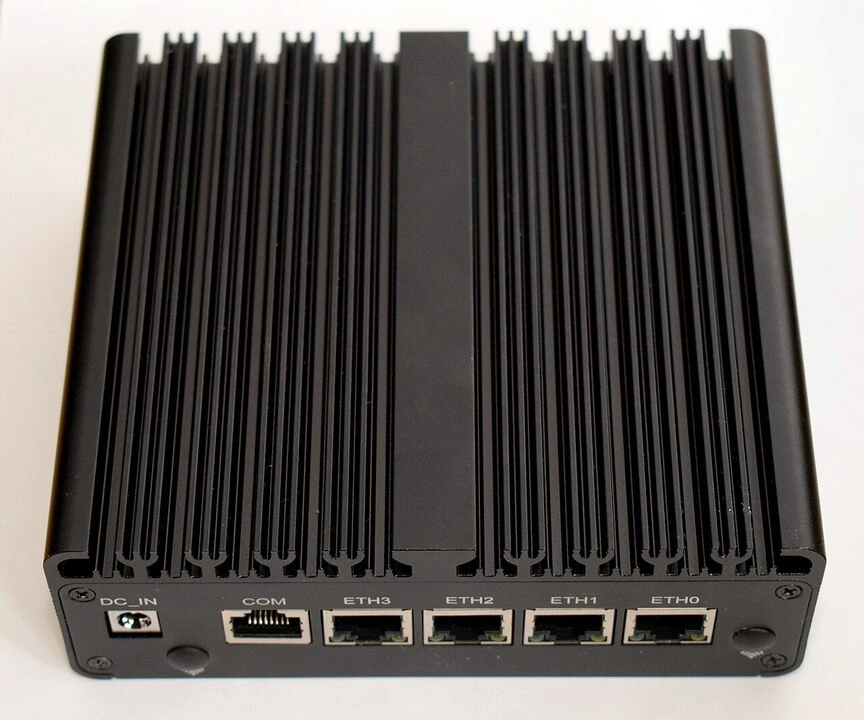
In the past few years, AI has been omnipresent in news sites’ headlines and in vendor roadmaps. It’s getting harder to hear about a new computer that isn’t marketed as AI-capable in some form. At the same time, the global memory shortage has made the components behind all the hardware the world relies on more expensive than they’ve been in decades.
These developments create a strange situation for anyone shopping for new hardware. Today’s computers seem more capable than ever, but they’re also expensive. What makes the current hardware landscape even stranger is that a large portion of those looking to buy are not overly concerned with capability in the first place. Countless everyday devices such as point-of-sale terminals, school computers, and factory floor controllers mainly need to keep working for as long as possible without breaking the bank.
In this article, we’ll summarize the hardware trends of recent years, how different kinds of devices are designed to be replaced, and where our open standard for modular, serviceable small form factor systems fits into the picture.
The memory pricing crisis
Due to the incredible demand from AI data centers, DRAM and NAND makers are prioritizing higher-margin HBM, server RAM, and enterprise SSDs over consumer-grade parts. For the past 2 years, this scarcity has manifested as price increases across the board, from off-the-shelf components to complete systems.
Major research firm Gartner expects memory to be worth up to 23% of the total bill of materials (BOM) of a PC in 2026, up from 16% last year. HP recently revealed that their BOM change is even more drastic, with RAM accounting for around 35% of its PC’s BOM this year compared to just 15% to 18% in the fourth quarter of 2025.
Another research firm, IDC, warns that the memory shortage will continue well into 2027, and that hardware pricing “is unlikely to return to 2025 levels” even as memory makers expand capacity. Gartner went so far as to predict that the sub-$500 PC segment will be gone by 2028.
It’s no surprise that many customers are opting to hold off on new purchases. A June 2026 survey by the consultancy firm Omdia found that over half of B2B buyers are delaying their plans to refresh hardware due to the price increases.
The rise of AI-capable computers
Alongside hyperscalers’ rapid expansion due to AI, hardware vendors are also intent on releasing products that can take on AI workloads locally. Research firm Canalys estimates that 60% of PCs shipped in 2027 will be “AI-capable”— that is, they will have on-device hardware for AI—with 60% of those PCs going to businesses.
However, what vendors are shipping isn’t necessarily what customers are looking to purchase. Speaking to The Register in late 2024, Gartner senior director Ranjit Atwal said that vendors are pushing AI PCs at a premium. However, Atwal pointed out that businesses don’t want to pay extra for the AI capabilities “as there are no compelling business cases” for them. The bigger motivation for many businesses’ hardware refresh has been Microsoft’s end of support for Windows 10. So while a business’ new Windows 11 PC may also be AI-capable, it could simply be because that configuration was the only option.
How hardware is typically built
Windows 10’s deadline coinciding with the flood of AI-capable PCs illustrates that hardware refreshes are not always triggered because what customers have on hand is no longer powerful or capable enough. We can also look at hardware based on how it’s designed to be replaced.
Rapidly replaced
Some hardware is designed to last only a few years, even if their vendor won’t admit it upfront. Entry-level machines such as Chromebooks and budget mini PCs do get replaced because of the reasons we just discussed. Their performance falls off relatively quickly or the OS and software they use no longer supports their generation.
Sealed and long-lasting
These are the unseen systems that businesses and societies rely on. Ruggedized devices, embedded computers, network appliances, storage servers, and other systems that are not designed to be opened up and repaired piecemeal. They’re built to run continuously for a long period before being replaced as a whole unit.
Modular and serviceable
Finally, there’s hardware designed so that its modules or individual components can be swapped independently. Desktop PCs and enterprise servers come to mind. Laptops are also starting to evolve into this sustainable form, thanks to the efforts of right-to-repair advocates such as Framework and MNT.
These categories are not hierarchical. Long-lasting hardware doesn’t automatically need to be modular, nor is it possible to do so in some cases. Sometimes, it’s perfectly fine for a router to sit in an office closet and keep doing its job for a decade before being replaced with an entirely new device. Modularity is sensible when we can consistently see that a core component such as compute, memory, or storage will fail or become obsolete long before the rest of the system does.
How OpenSFF can help
Whether it’s processing, connectivity, or an entirely new capability, hardware progress tends to be measured through performance-related metrics. More processor cores, faster memory, higher TOPS counts, and ultimately better benchmark scores. It’s easy to understand this perspective from a marketing or enthusiast standpoint, but new hardware can push other boundaries without immediately being more “valuable” to every customer who buys it.
It’s true that AI has created a legitimate demand for new kinds of hardware or categories of hardware. At the same time, there will always be computers whose main job is to keep running as reliably and as affordably as possible.
Our open standard focuses on this kind of innovation. The kind where compact systems can be partially replaced or upgraded instead of the whole system, where sourcing and node management isn’t locked to a single vendor, and where less hardware ends up in landfills. Our hardware specifications define three components. The Enclosure is an electronic housing that provides power, cooling, and networking to one or more processing modules called Compute Nodes. The Management Module is an optional unit that enables KVM redirection and power control.
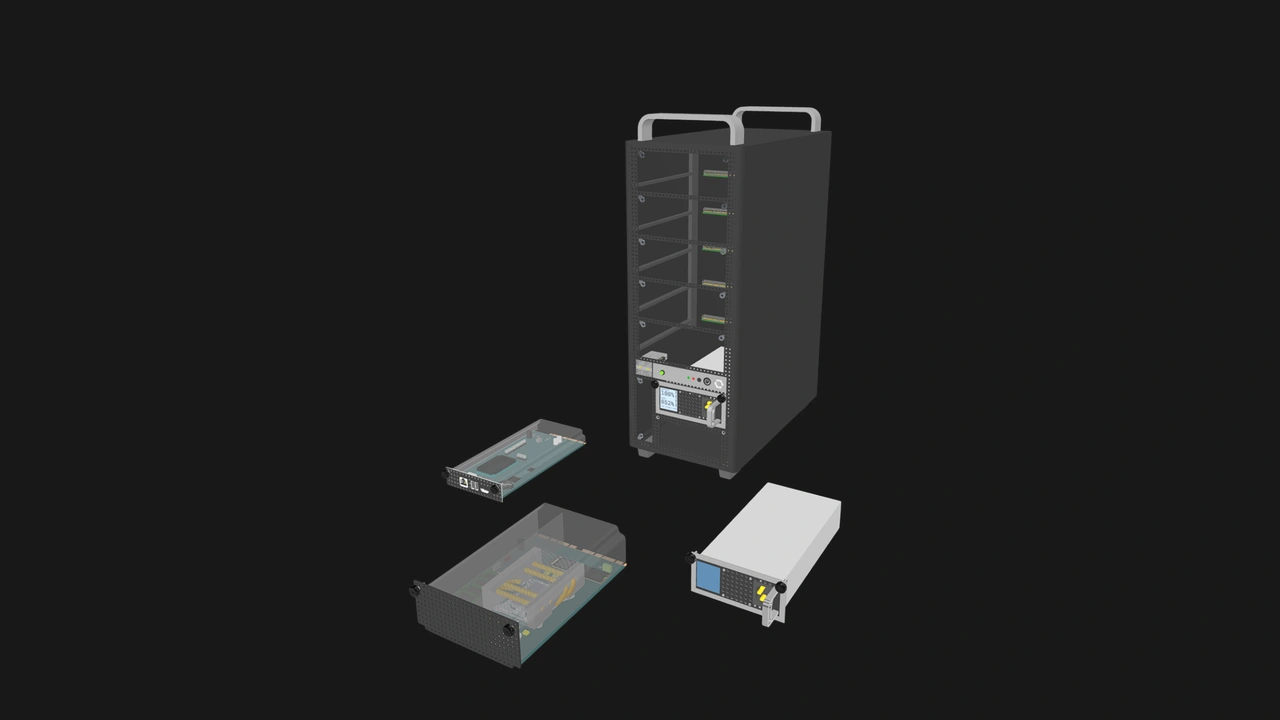
The two modules connect to Enclosures using SFF-TA-1002 connectors and are secured via a pair of captive M4 thumbscrews. These three components can be combined to create a variety of single- or multi-node systems, from servers to edge devices, regardless of their vendors.
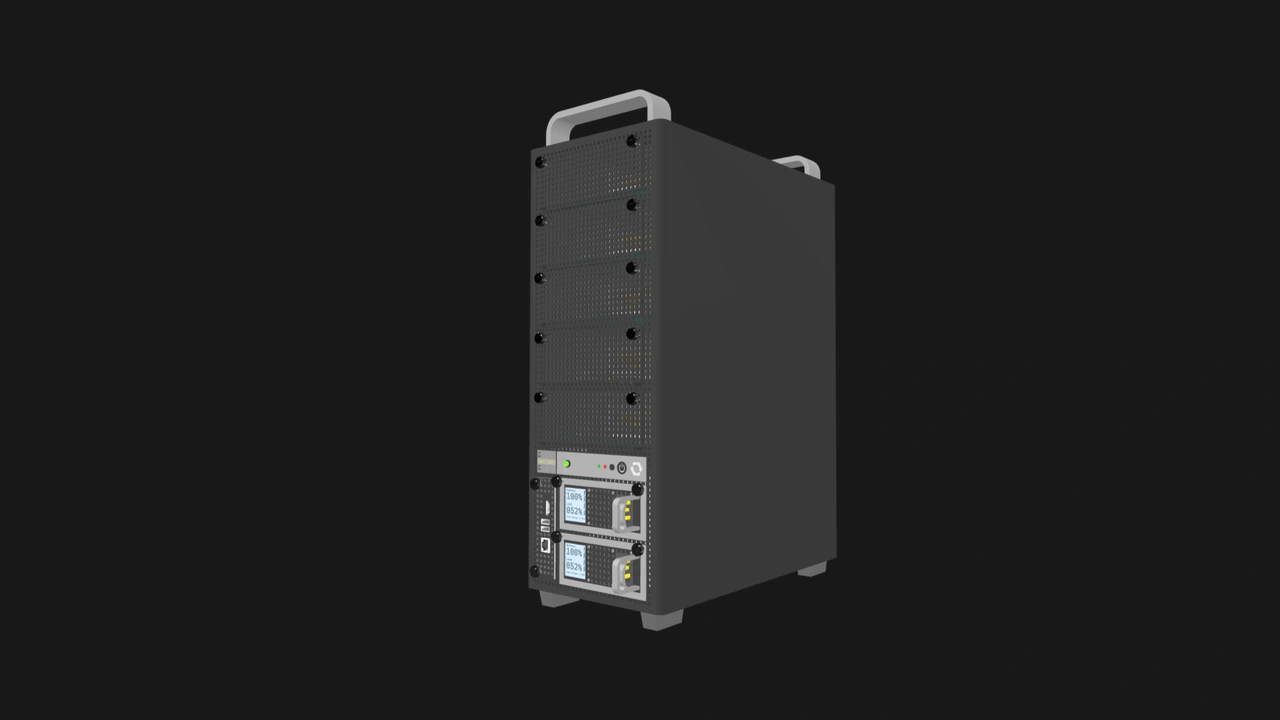
Our standard will allow vendors to create systems that are serviceable by design and can reduce the total cost of ownership through modular replacement. Its interoperability can help free customers from any single vendor’s roadmap, pricing, or end-of-life policy.
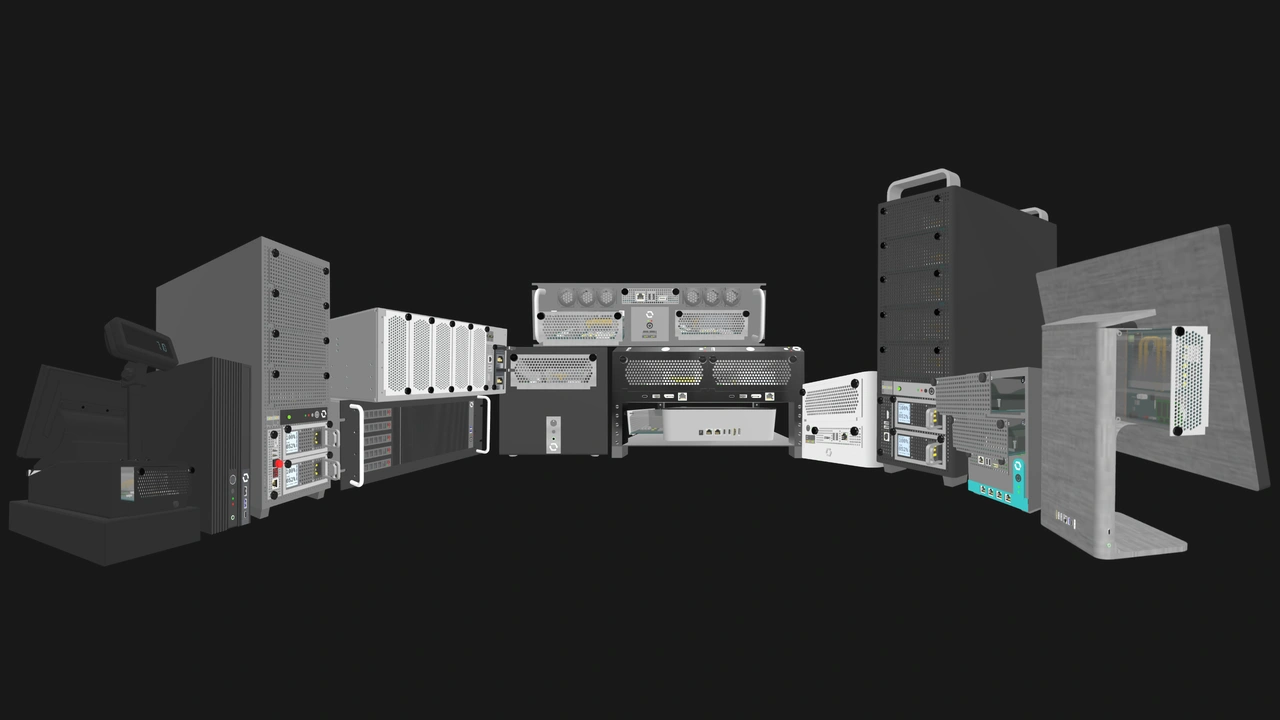
We designed our standard for industries that already lean on, or would greatly benefit from, long-lasting and serviceable systems: manufacturing and industrial automation, healthcare, education, retail, server providers, and many other edge deployments.
ATX and its resulting ecosystem is one of the strongest examples of this kind of innovation. While it did lead to more powerful successors to IBM-compatible PCs, Intel and Astec also created ATX to reduce manufacturing costs and make PCs safer and more futureproof.
Build with OpenSFF
Modularity isn’t the right answer for every device. Sometimes a sealed device is already the optimal solution due to economics, space and portability constraints, durability requirements, or certification standards.
But hardware eventually needs to be replaced, and sometimes the best replacement isn’t necessarily the one with the newest features or the highest benchmark scores. Sometimes it’s the one that’s easier to service and outlasts its predecessor. For many deployments, no news is good news, and being boring is the point.
Help us work toward modular, serviceable, and vendor-neutral hardware by spreading the word about OpenSFF. We would also be grateful if you could encourage vendors to read our specifications. For technical clarifications, partnerships, and other inquiries, reach out to our development team at [email protected].
Other Articles

Meet OpenSFF: an open hardware standard that enables cross-vendor compatibility, modular systems, and sustainable hardware reuse.
August 11, 2025
We go over the rise of virtualization and the open software adopted by home server enthusiasts, as well as the current challenges and the future of the hobby.
September 06, 2025

Learn why OpenSFF adopted the SFF-TA-1002 connector standard and how it enables our vision.
September 18, 2025