Blog
OpenSFF Management Module: A Standardized and Integrated Server Manager
Introduction

Console access and server management are fundamental operations in running multi-node systems. Yet they are still far from optimized. They often involve a mess of cables, external KVM switches, and proprietary platforms. Large organizations typically resort to vendor-specific management suites with expensive subscriptions and hardware. Affordable IP-KVM devices have emerged, but they don’t solve cable clutter and are not scalable.
The Management Module specification preserves the modularity and interoperability of OpenSFF in multi-node systems. It is a streamlined and more accessible alternative to server management. Together with supplementary requirements in the Compute Node and Enclosure specifications, the Management Module specification defines a standardized device that can provide local console access, full IP-KVM, remote management, and potentially everything in between.
How the Management Module works
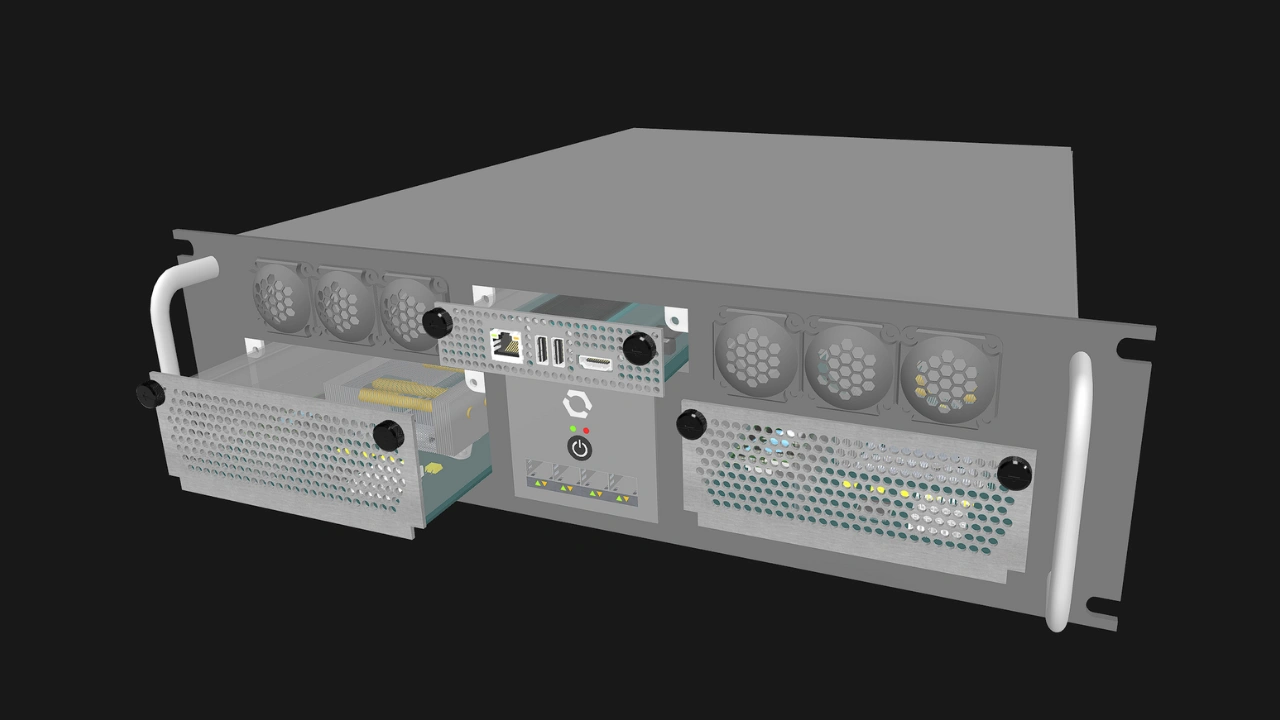
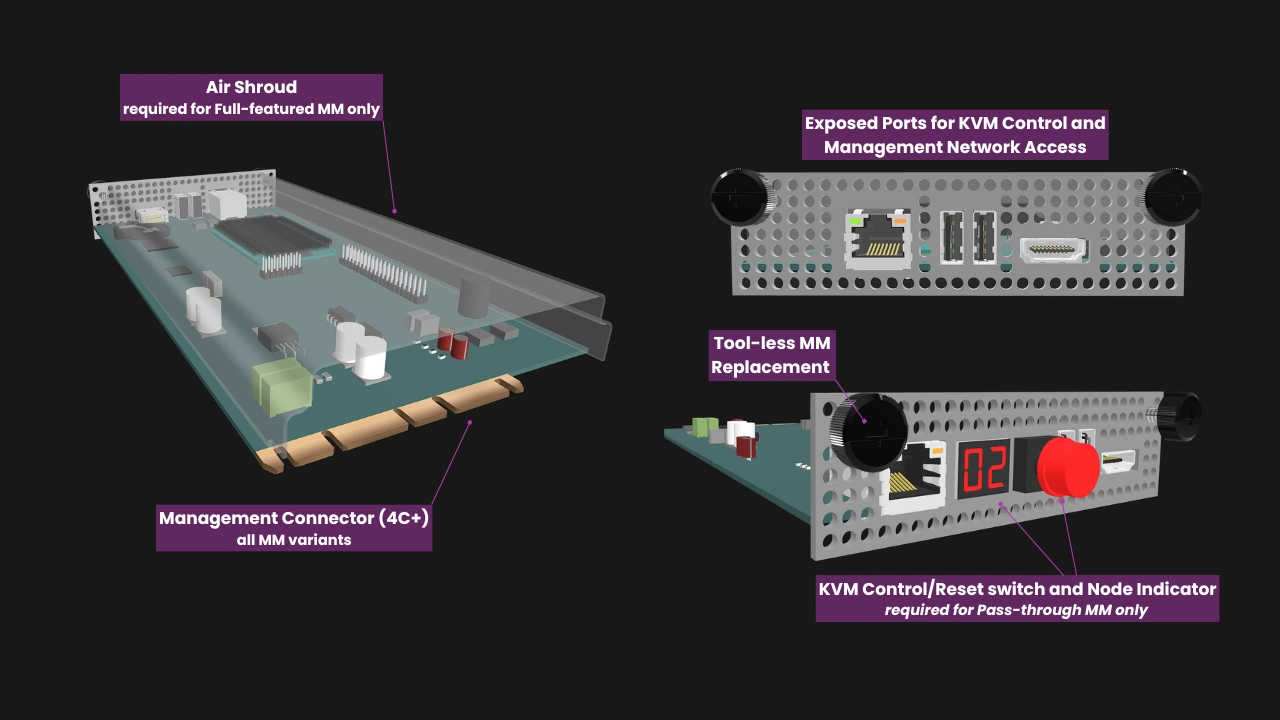
The Management Module occupies a dedicated slot in compatible Enclosures. It is secured using two captive M4 thumbscrews integrated into its I/O shield. Enterprise Enclosures must support the Management Module, while it is an optional feature in Core Enclosures. The Management Connector adopts the SFF-TA-1002 4C+ connector standard for power and data, with a unique pinout optimized for management functions. Compatible Enclosures provide at least 50W of power to the module.
The Management Module’s primary role is to provide unified access to the keyboard, video, and mouse (KVM) interfaces of installed Compute Nodes. Compatible Enclosures provide the passive signal routing infrastructure, multiplexing USB 2.0 signals and video output from each Compute Node to the Management Module slot.
The Management Module drives this multiplexer to access one node at any given time. Signals from the selected node are either routed directly to the module’s external ports for local access or processed for IP-KVM functionality.
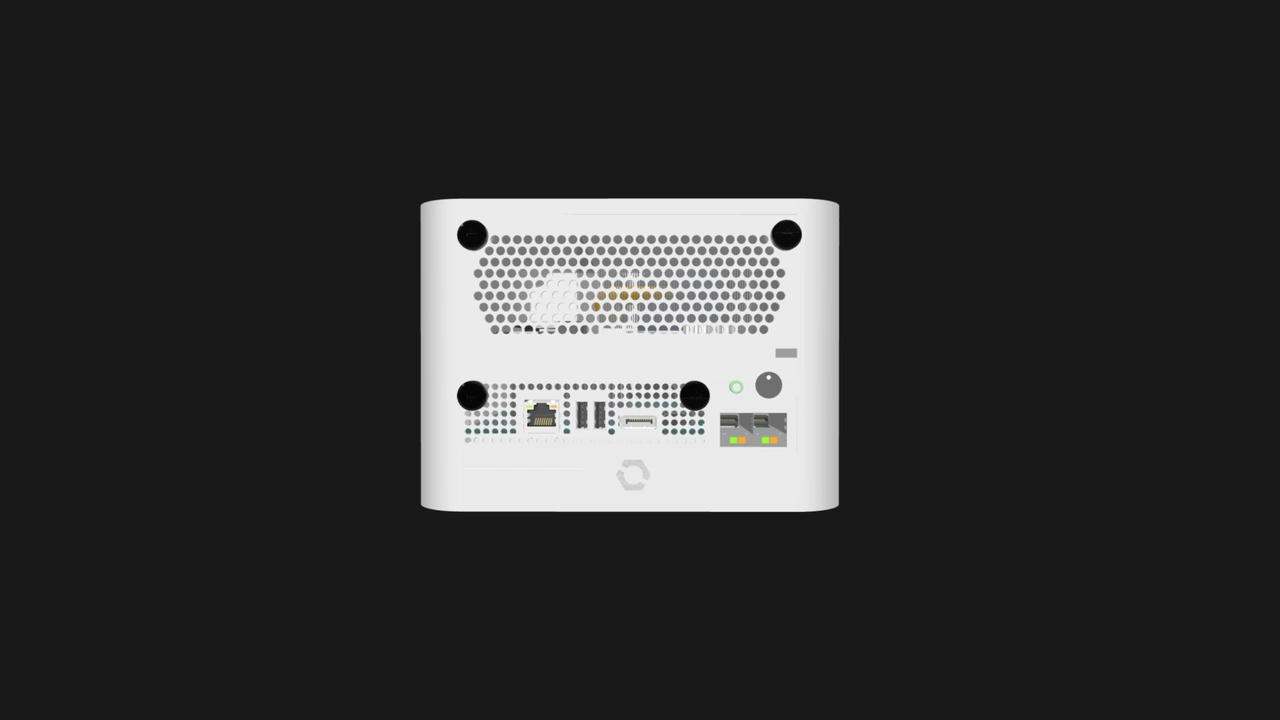
This approach simplifies hardware and cable management, eliminating the need for external KVM devices, switches, and connections. The Management Module can be installed or replaced without disassembling the Enclosure or interfering with installed Compute Nodes.
Beyond KVM functionality, the Management Module also interfaces with the Private Enclosure Network (PEN) of compatible Enclosures. The PEN is an out-of-band Ethernet fabric that connects installed Compute Nodes to the Management Module through dedicated USB-to-Ethernet bridges and a dedicated internal network switch, all of which are on the Enclosure backplane. This network allows the Management Module to identify nodes, manage firmware updates, and perform other management and monitoring tasks.
The reference designs of the Management Module
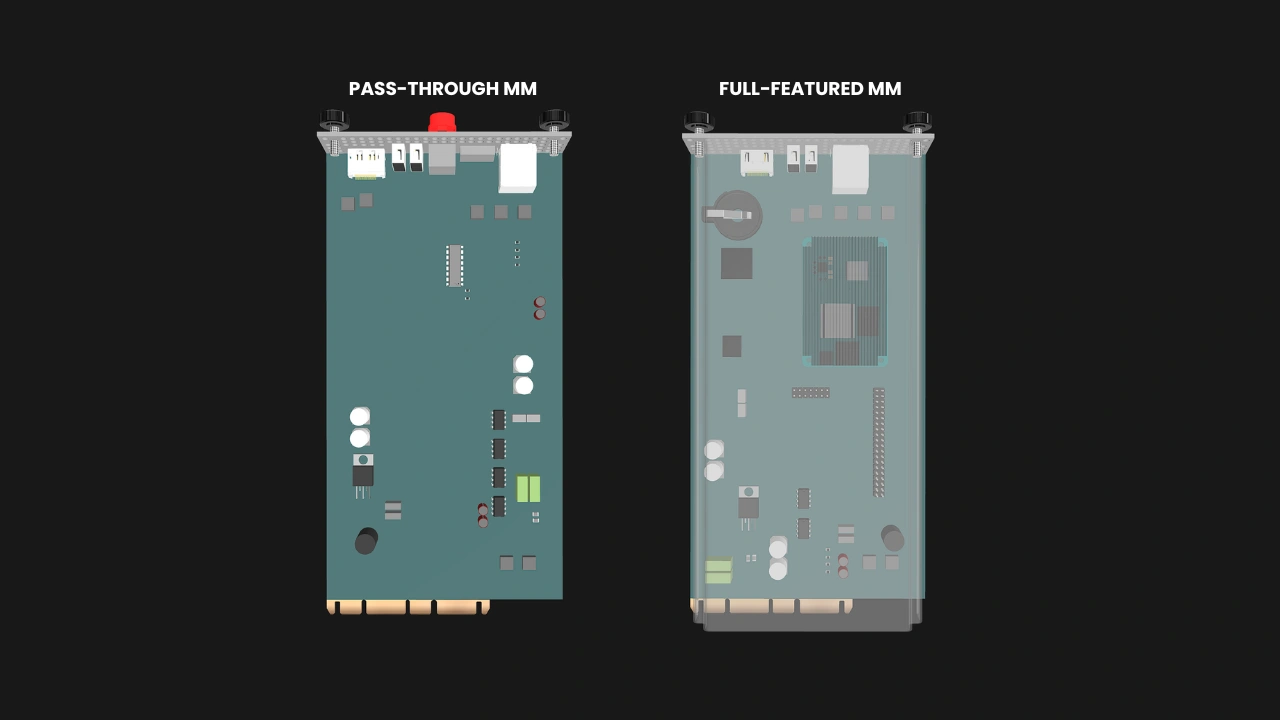
OpenSFF defines two reference implementations of the Management Module: one for local access and one for remote management.
Pass-through Management Module
This variant contains no CPU or operating system. It is a purely hardware device that routes the aforementioned USB and video signals directly to its external ports. It must have:
- One Ethernet port connected directly to the PEN
- Two USB Type-A ports to connect peripherals
- One DisplayPort output
- A physical control element (e.g. a button or rotary switch) to select a node to access
- A visual indicator of the currently selected node
The Pass-through Management Module is meant to be a straightforward and affordable solution for use cases where only local access is required, such as test benches and simple home servers.
Full-featured Management Module
This variant incorporates a computer based on the Raspberry Pi Compute Module 5. The Management Module software will run on Raspberry Pi OS and handle inter-node communication, IP-KVM, and other remote management features.
OpenSFF members can use the management software for free in OpenSFF-compatible Management Module implementations. Vendors are also free to configure a different software stack for their Full-featured Management Module, as long as they adopt the Node API and respect the hardware interface rules.
In addition, compatible Enclosures must have a microSD card mounted onto their backplane. The Enclosure microSD Card (ESDC) contains chassis metadata, which can be imported by Full-featured Management Modules. This variant of the Management Module can also back up and restore its configuration data using the ESDC.
A Full-featured Management Module must have:
- The same Ethernet and USB connections as in the Pass-through variant
- An HDMI out port
- A Raspberry Pi Compute Module 5
- 8GB RAM
- At least 64GB of persistent storage (EMMC, SD card, or M.2 NVMe via PCIe)
- A complementary management software with interfaces for active node selection and indication
- Support for synchronization with the ESDC
Alternative variants
Manufacturers are free to deviate from these reference designs, as long as they adhere to the physical, electrical, and connector requirements defined in the specification. Compatible implementations of the Management Module with features or functions that require a computer must be based on Compute Module 5 and run Raspberry Pi OS.
For instance, there could be a variant that does not provide IP-KVM functionality but can backup and restore configuration data to the ESDC. We also believe that it is possible to develop a Management Module that can daisy-chain Enclosures, which would allow users to manage dozens of nodes from one console.
Advantages over existing KVM devices and management platforms
Interoperable
All Management Modules work with all compatible Enclosures, regardless of their manufacturers. Users would not be reliant on one vendor or proprietary management suite for procurement or support. This should foster a competitive market and extend the lifecycle of OpenSFF components. This should also help reduce training and operational complexity, as there is no need to relearn a different platform or hardware ecosystem from scratch when switching vendors or module variants.
Standardized interface
Because of the integration between the Management Module, compatible Enclosures, and Compute Nodes, users do not need to account for fitment, power, or compatibility.
Reliable
Management Modules and compatible Enclosures have consistent thermal and dust-resistance requirements, making it easier to standardize deployments and service workflows.
Scalable
Regardless of their features, all Management Modules connect to the same dedicated slot in compatible Enclosures. Users can start with an affordable module then switch to more advanced variants without replacing or modifying their Enclosure.
Streamlined
The necessary connections are built into compatible Enclosures, eliminating the need to connect and fit external KVM devices and switches. This makes for cleaner and more space-efficient setups and reduces failure points during installation and servicing.
Benefits
Businesses and edge deployers
- More competitive pricing and wider options for procurement
- No need for a service contract since modules from any vendor can be used
- Reduced training and operational overhead
Enthusiasts and homelabbers
- Affordable access to enterprise-grade management features
- Easier to repurpose and maintain used enterprise hardware
- Toolless mounting and integrated connections reduce clutter and fitment issues
Vendors and system integrators
- Reduced software development costs
- Interoperability widens potential addressable market
- Focus on differentiation without worrying about compatibility
Build with OpenSFF
Access and management are essential aspects of multi-node systems. The Management Module ensures that servers built with OpenSFF components will be as modular and interoperable as possible.
Just as the Raspberry Pi has a wide variety of HATs and other accessories, vendors can also specialize in Management Modules and compatible Enclosures. There could be security-focused modules, variants suited for high-density deployments, and more. These innovations would be accessible to all OpenSFF users.
We invite you to read the Management Module specification and help us create an open future for multi-node computing. For technical clarifications and other inquiries, reach out to our development team at [email protected].
Other Articles

Meet OpenSFF: an open hardware standard that enables cross-vendor compatibility, modular systems, and sustainable hardware reuse.
August 11, 2025
We go over the rise of virtualization and the open software adopted by home server enthusiasts, as well as the current challenges and the future of the hobby.
September 06, 2025

Learn why OpenSFF adopted the SFF-TA-1002 connector standard and how it enables our vision.
September 18, 2025