Blog
Current Affairs: Power Delivery Design Options in OpenSFF
Introduction
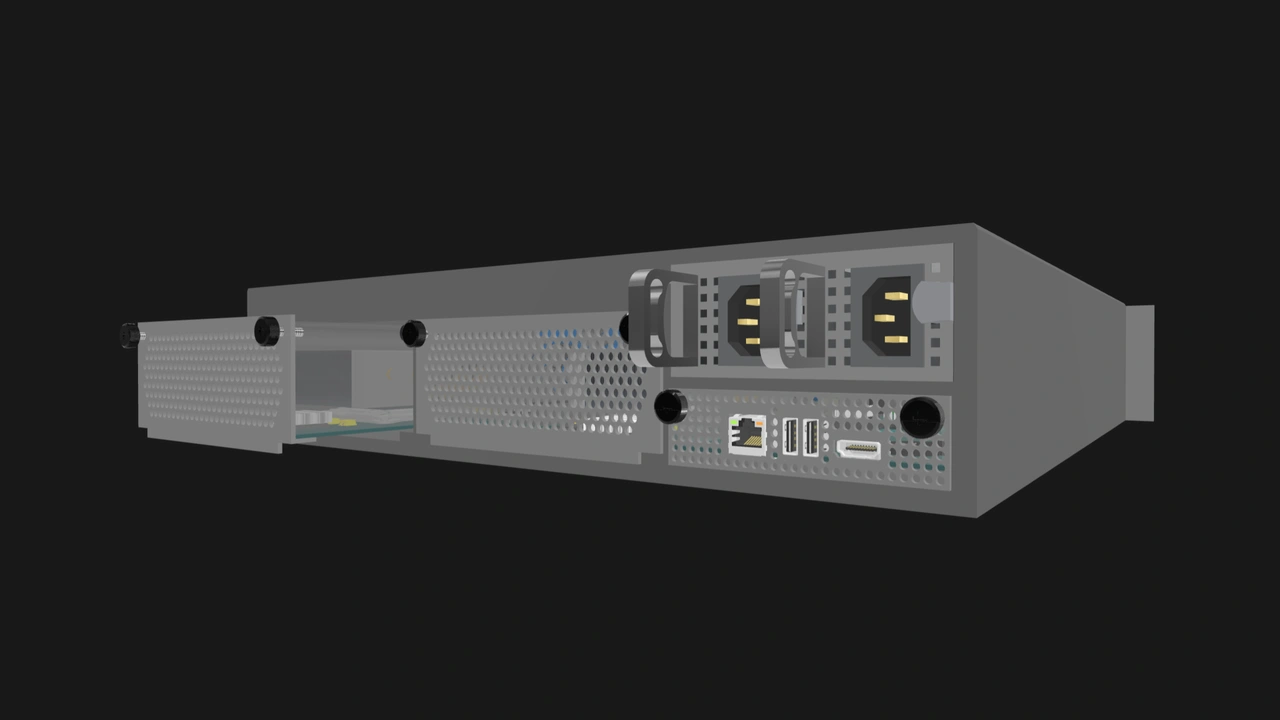
For most computers, power delivery is typically a consequence of the system board. The PSU, input voltage, and connector type are often decided by the board designer, and the vendor simply takes what they are given.
OpenSFF gives vendors the freedom to make real architectural choices, to innovate, and to respond to customer demands. Compute Nodes operate on a single, standardized voltage. The node decides what it does with that voltage, and the Enclosure decides how to supply it.
In this article, we are going to walk through some of the choices that vendors can make regarding input, redundancy, and backup power. We will then close by touching on our standard’s potential to lift that voltage ceiling.
The 12V boundary
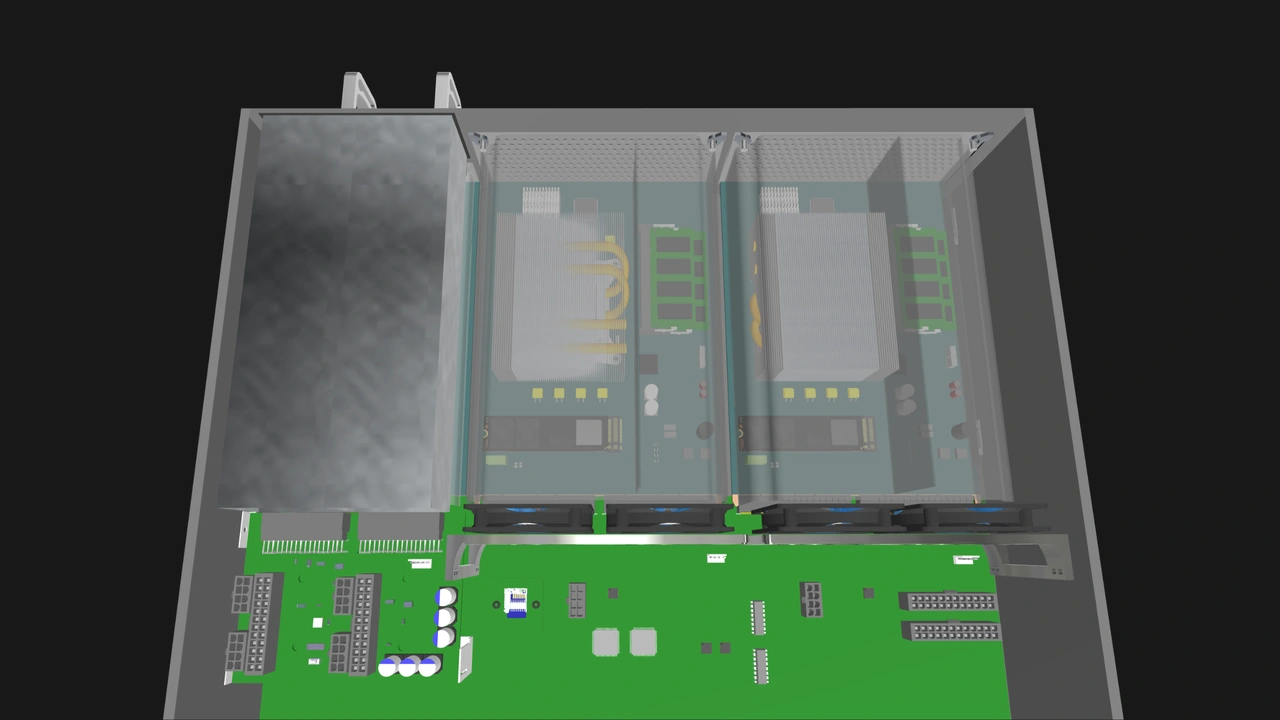
As we covered in a previous article, Compute Nodes receive 12V DC through the Core Connector (SFF-TA-1002 4C+). The Compute Node Specification sets a 120W Maximum Power Target (MPT) per node slot, with transient headroom beyond that. Conversion for the lower-voltage rails that the CPU, RAM, and other components require happens on the node itself.
This provides Enclosure designers with a clear scope: to deliver stable 12V DC to each slot. The power source, its form factor, and any redundancies are the designers’ call.
AC power options
While they fulfill our power delivery requirement, traditional ATX PSUs are a poor fit for our standard. They are bulky and were designed with single-board systems in mind. While ATX PSUs have voltage rails that could power backplane components that use 3.3 and 5V, distributing these across the Enclosure is generally less-efficient and scalable than generating them locally from a 12V supply using a PDU. The more natural fit would be ATX12VO, Intel’s variant of the form factor that supplies only 12V.
For multi-node systems, vendors may go with compact server-style PSUs based on CRPS or M-CRPS. There are models that output 12V, they are sized for dense systems, and some of them support hot-swap configurations. OpenSFF vendors already have a variety of existing 12V PSU products to choose from.
DC power options
Enclosure designers can also tap into the power supplies used in portable devices, SBCs, and other compact systems. It can be something as simple as a high-current 12V input, such as a terminal block or barrel connector wired directly to the internal 12V bus. This would be a great option for edge devices, which are typically deployed in industrial settings, vehicles, and other environments with existing 12V infrastructure.
USB PD is an interesting and evolving DC power option. USB-C PD power bricks rated at 180W or even 240W are becoming more available. An Enclosure would need an internal DC-to-DC converter to regulate USB PD output to a stable 12V rail, but that conversion is well understood. This means it is possible for an OpenSFF-compatible system to be powered by the same type of chargers that laptops and mobile devices use. This opens up use cases that are not practical with AC-only designs: a portable minilab, a temporary installation, or deployments in locations without high power infrastructure.
The Enclosure Specification does not restrict designs to a single input type, and DC power adapters lend themselves to hybrid inputs. USB-C PD and a barrel connector can coexist in an Enclosure, just as they do in certain laptops and mini PCs. A terminal block option would be a great addition on an edge appliance.
Multi-node power distribution and redundancy
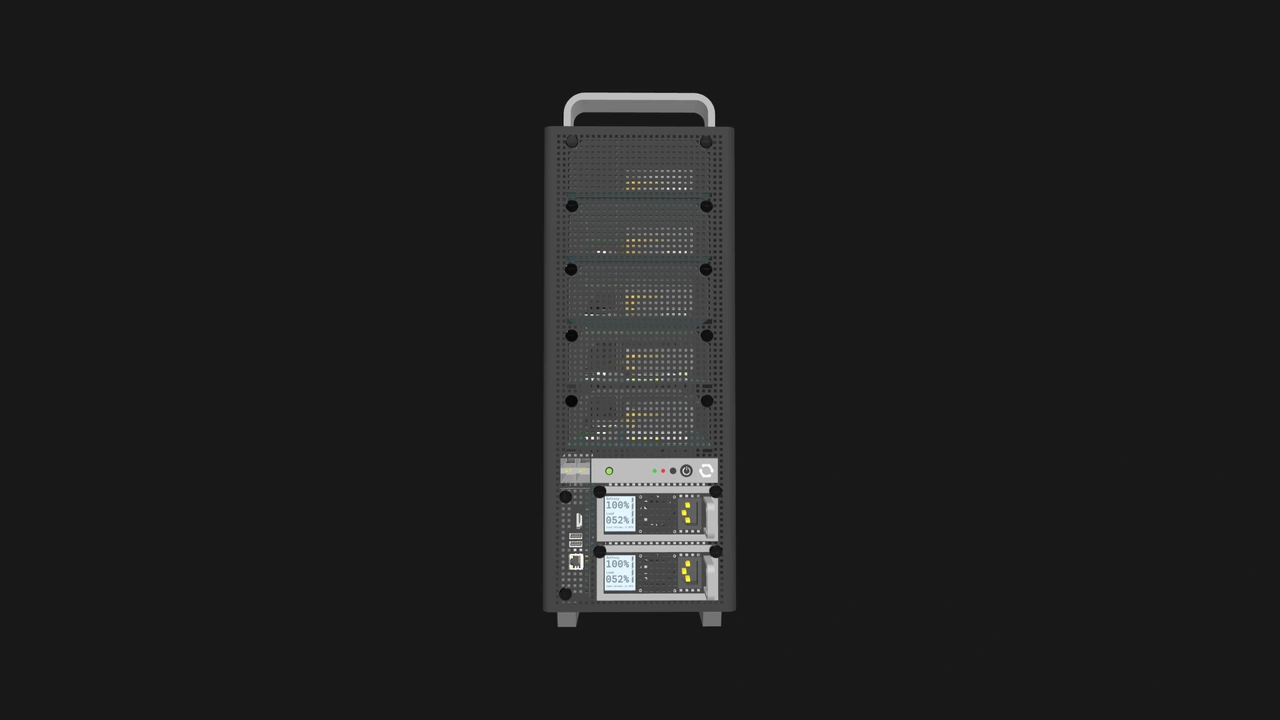
Once a designer settles on a 12V source for their Enclosure, they then have the freedom to decide how that power reaches individual slots. The most common approach will likely be a shared 12V bus, with the backplane distributing power from one or more PSUs to all slots. But that would require redundancy, otherwise a PSU failure would affect the whole system.
Rail segmentation presents a more robust alternative. Dividing slots into independently-powered groups is more complex than a shared bus, but it also prevents a fault in one segment from affecting the others. Designers can go the extra mile by providing a built-in power monitoring system for each segment or slot that shows real-time statistics on a display built into the Enclosure.
Parallel PSUs feeding a shared 12V bus is a common architecture in traditional servers, and it is no different with Enterprise Enclosures. They must have two or more hot-swap PSU bays and support N+1 or N+N redundancy when those bays are fully populated.
Core Enclosures may also adopt this redundancy, giving designers more flexibility. A Core Enclosure that has two PSU bays but supports only Core Connectors could be a suitable middle ground for small businesses or edge deployments that do not require the additional signals provided by the Enterprise Connector.
UPS integration
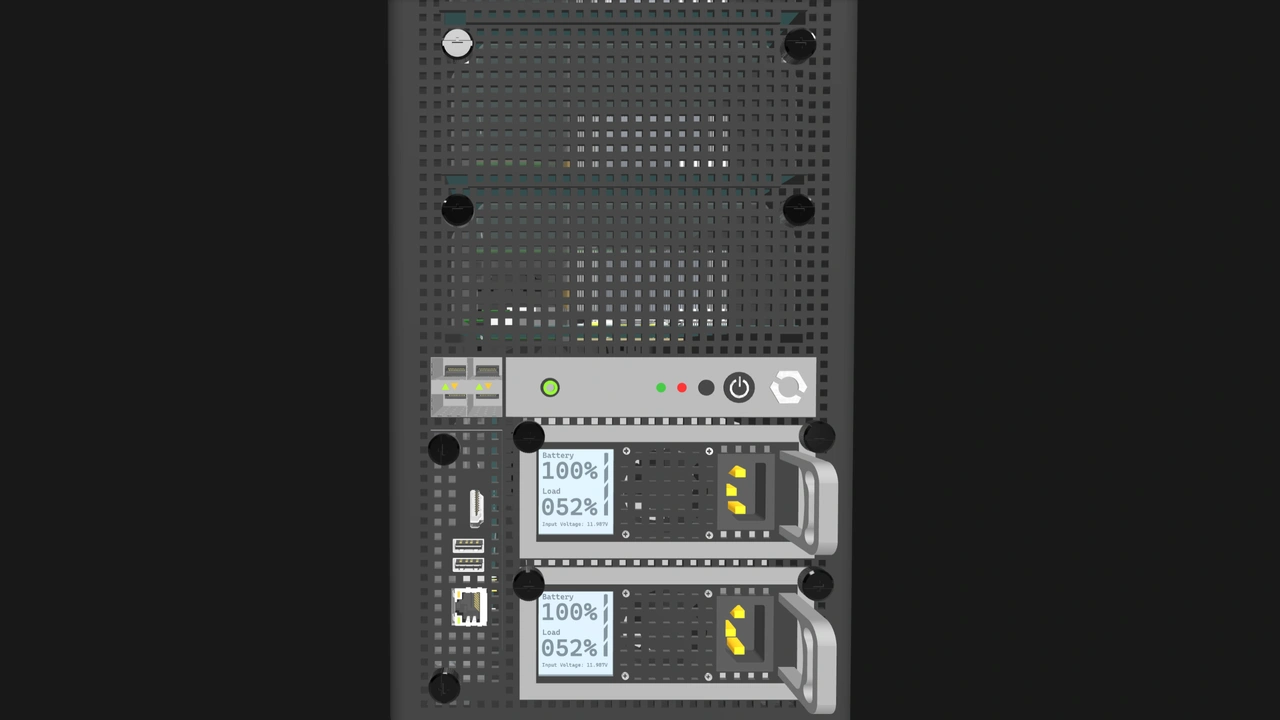
Thanks to our 12V DC requirement, integrating a UPS into an OpenSFF-compatible system is relatively straightforward. A conventional UPS has to convert the power from its battery to stable AC before it reaches the hardware. With our 12V-only design, a battery pack with a voltage regulator would be sufficient. The resulting UPS would be smaller, cheaper, and more efficient than one that has an AC inverter.
An Enclosure with an integrated battery bay would have a more streamlined and consistent form factor than a system that is paired with an external UPS, which may be a significant differentiator for customers with space-constrained environments or compliance requirements.
Stepping up to 48V
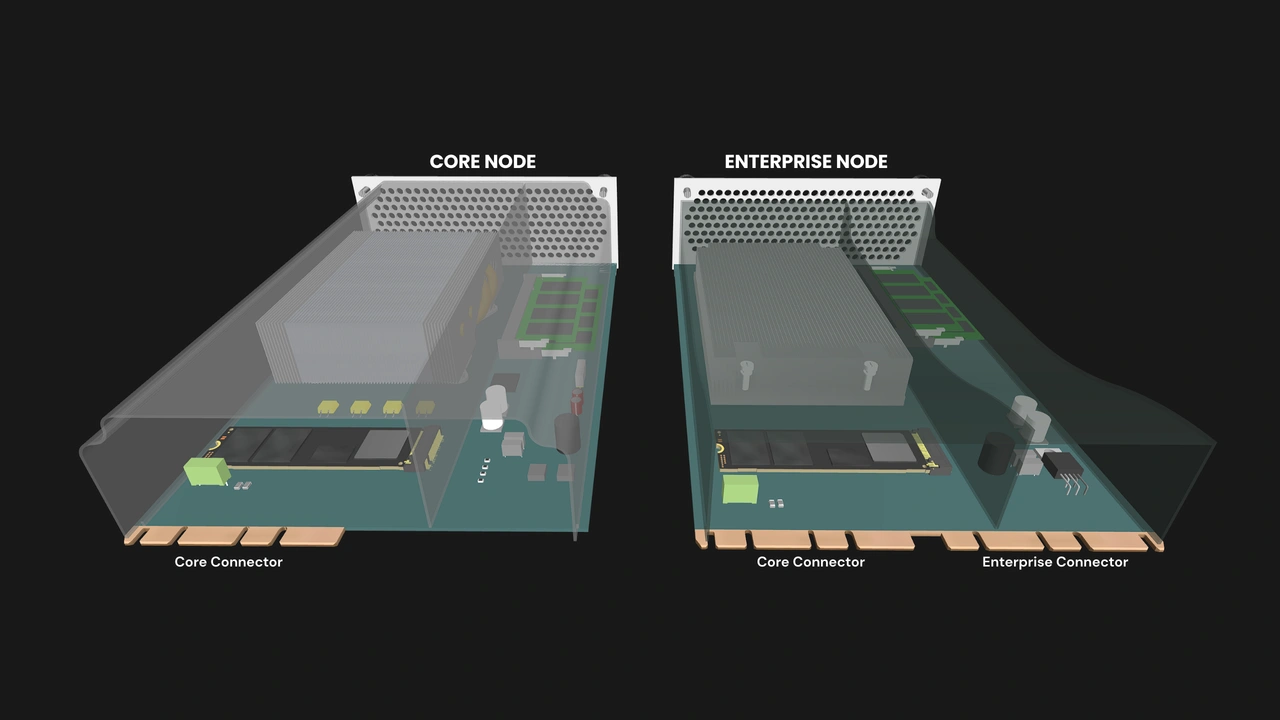
SFF-TA-1002 and related SNIA specifications open the doors for Compute Nodes that support 48V power delivery. That would drastically reduce the required current, meaning thinner copper, less heat, and a more scalable path to higher aggregate power in dense multi-node Enclosures.
Enclosures can pass 48V directly to Compute Node slots, enabling nodes that can run more power-hungry components such as server-grade CPUs and NICs. Alternatively, an Enclosure can accept 48V as input and step it down to 12V to maintain compatibility with 12V Compute Nodes. It may also be viable for an Enclosure to have some slots running at 12V and others at 48V.
The higher voltage does have tradeoffs to keep in mind. Compute Nodes that require 48V would also require more complex VRMs to precisely step down the incoming power. Maintaining interoperability between nodes and Enclosures may also become more difficult, particularly if both node variants end up coexisting.
Build with OpenSFF
Our standard’s power architecture gives vendors more design flexibility while also providing practical benefits, from compatibility with a wide range of PSUs to simpler UPS integration. OpenSFF implementations can range from a compact device powered via USB-C PD to a dense multi-node server with integrated UPS and multiple hot-swappable PSUs, all without breaking compatibility with Compute Nodes.
We encourage you to read our specifications, and we would be grateful if you spread the word about our open hardware standard. For technical clarifications, partnerships, and other inquiries, reach out to our development team at [email protected].
Other Articles

Meet OpenSFF: an open hardware standard that enables cross-vendor compatibility, modular systems, and sustainable hardware reuse.
August 11, 2025
We go over the rise of virtualization and the open software adopted by home server enthusiasts, as well as the current challenges and the future of the hobby.
September 06, 2025

Learn why OpenSFF adopted the SFF-TA-1002 connector standard and how it enables our vision.
September 18, 2025