Blog
Elephants in Other Rooms: Why OpenSFF Will Co-exist with Existing Standards, Part 1
Introduction
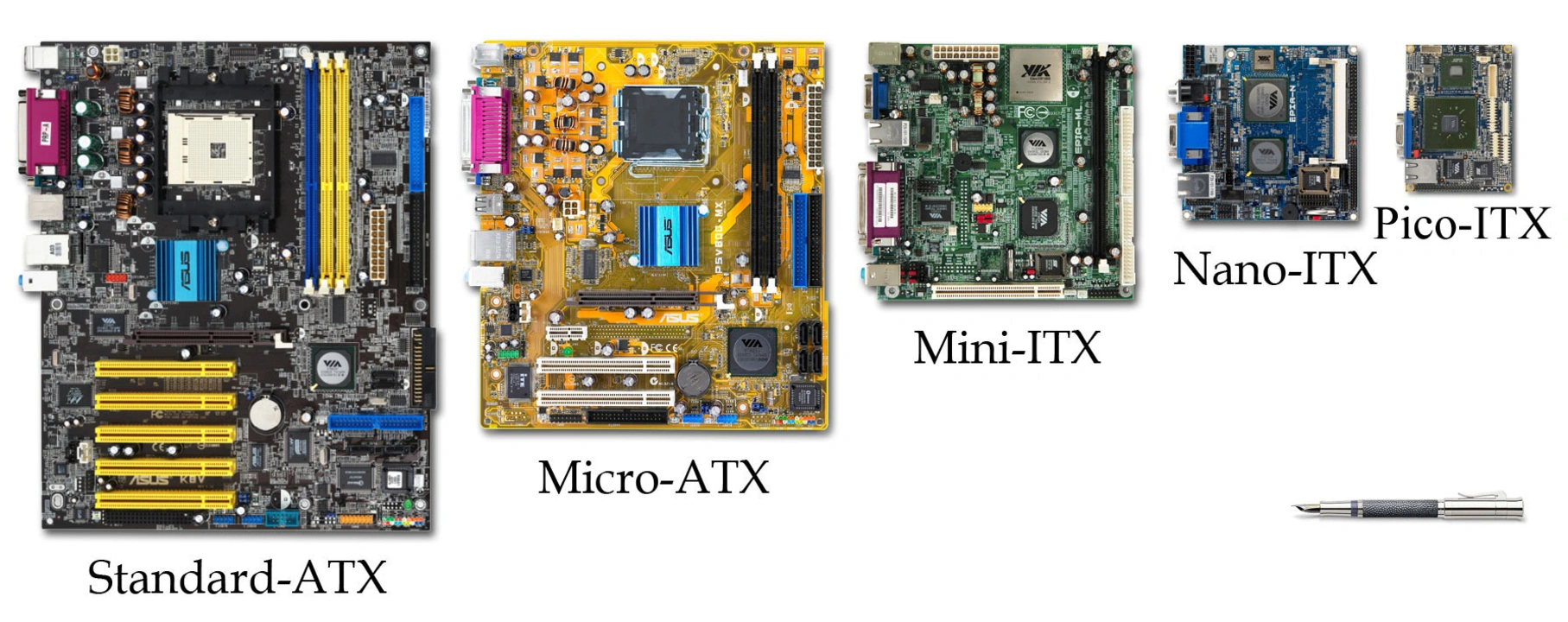
2025 marks the 30th anniversary of the ATX form factor. Its specifications remain influential despite the emergence of numerous small form factors (SFF): microATX (mATX), Mini-ITX, Thin Mini-ITX, COM, the nebulous mini PC, and more. These SFF standards and conventions now dominate the market as technology and user demands evolve.
According to Mordor Intelligence, mATX motherboards generated the largest revenue in 2024, accounting for over 46% of motherboard sales. Mini-ITX boards accounted for nearly 20%, a figure that is expected to grow significantly as demand from DIY builders and edge solutions surge.
With this seeming overabundance of established options, you may be wondering if OpenSFF needs to exist. Not only did we create yet another SFF standard, we also made it incompatible with all widely adopted standards.
But the histories of ATX and other widely adopted form factors paint an encouraging picture. They were adopted because they solved fundamental and persistent issues that their predecessors did not address. In this context, OpenSFF is long overdue. We created our specifications primarily for multi-node implementations, which no existing standard seeks to serve.
In this two-part overview, we will go over the motivations and legacies of notable computing form factors, as they exemplify how different sets of problems call for different solutions.
Why ATX was created
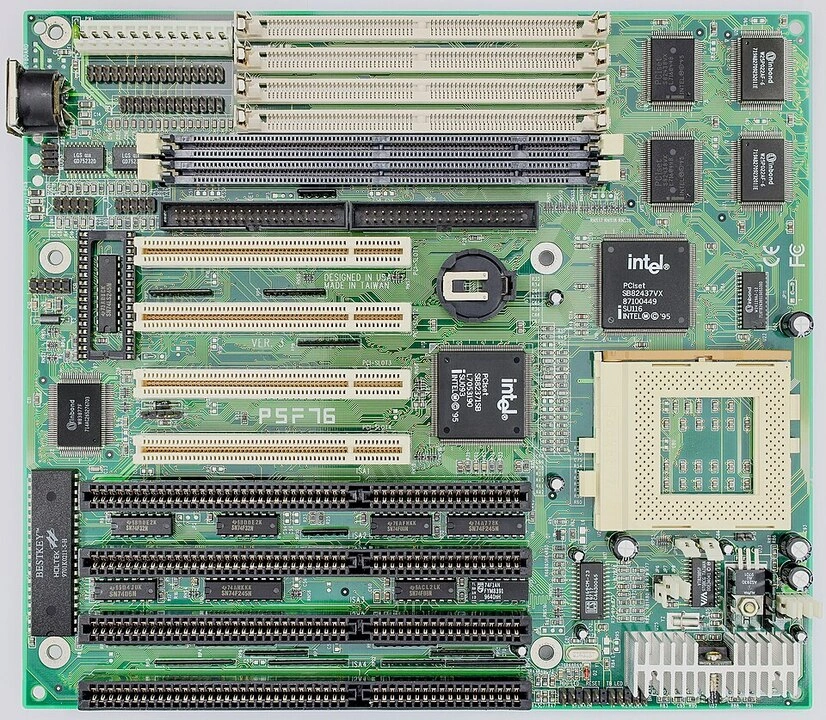
The first ATX specifications were released in July 1995. They were co-developed by Intel and power supply (PSU) maker Astec America to address numerous flaws in IBM’s AT and Baby AT standards.
ATX rotated the general layout of Baby AT by 90 degrees, creating more space for the CPU and expansion slots. This allowed larger and more capable CPU coolers to be installed without blocking the slots. ATX boards also require shorter connectors for storage drives and consolidated ports into the I/O shield, resulting in more built-in connectivity than Baby AT boards. These changes reduced cable clutter as well as manufacturing costs.
Meanwhile, the ATX PSU specification took significant leaps in safety and futureproofing. It replaced the hazardous reversible motherboard connectors of AT PSUs with a single one-way connector. ATX also introduced the electronic switch that allowed operating systems to shutdown properly before instructing the PSU to turn off, whereas the power button in AT cases was mechanically connected to the PSU. Finally, the ATX PSU added a 3.3V rail to power a wider variety of accessories and components.
The first generation of ATX-compatible hardware became available in 1996. By the early 2000s, ATX had all but supplanted its predecessors. Intel would go on to define more form factors, but it has yet to replicate the dominance of ATX and its smaller derivatives.
Other open standards that ATX outlasted
BTX
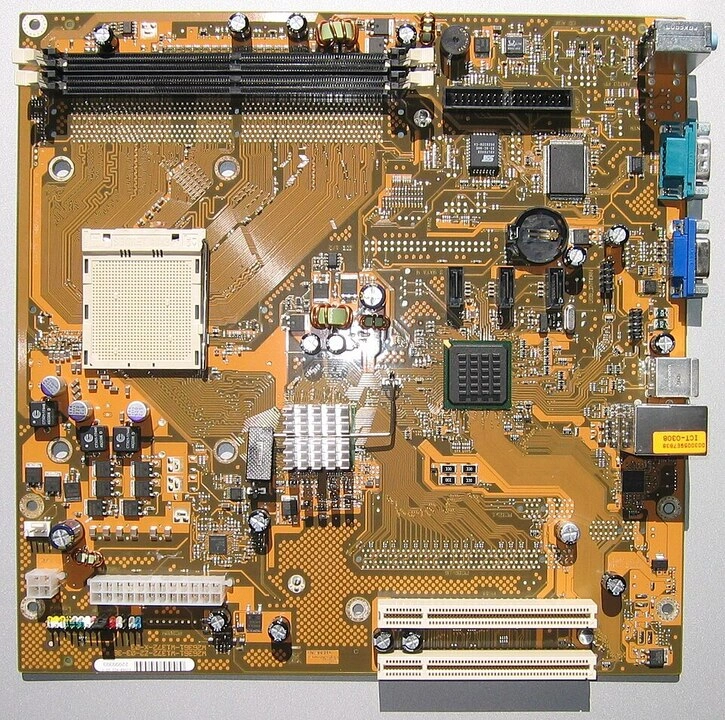
Intel itself tried to replace ATX less than a decade after making it the de facto standard. The chip maker released the BTX standard in 2003. BTX called for a more airflow-optimized motherboard and case, and defined smaller variants in the same specification.
BTX required CPU coolers to be secured directly on the case instead of on the board to safely accommodate larger and heavier solutions. Intel once again rearranged the motherboard components, this time to create a more sensible airflow path. BTX cases must also have a shroud that directs incoming air to the CPU cooler.
However, experts and enthusiasts believed that BTX was primarily a workaround for the thermal challenges of Intel’s Pentium CPUs and the suboptimal fan configuration of ATX cases at the time.
Curiously, the issue that BTX addressed was promptly and more directly solved by Intel itself. The Core series of CPUs, the successor to the Pentium line, started the trend of increasingly power-efficient and cooler CPUs that largely continues to this day.
There were also misgivings that Intel weaponized BTX against AMD. Its layout was suboptimal for AMD CPUs given their on-die memory controller. Coupled with the fact that AMD’s chips had no overwhelming need for better cooling, and it was easy to understand why Intel’s rival did not do much to support the standard.
While Dell and a few other OEMs adopted BTX, the industry as a whole ultimately had no compelling reason to buy new motherboards, cases, and power supplies at once to make the switch. Intel abandoned BTX only 3 years after releasing it.
DTX
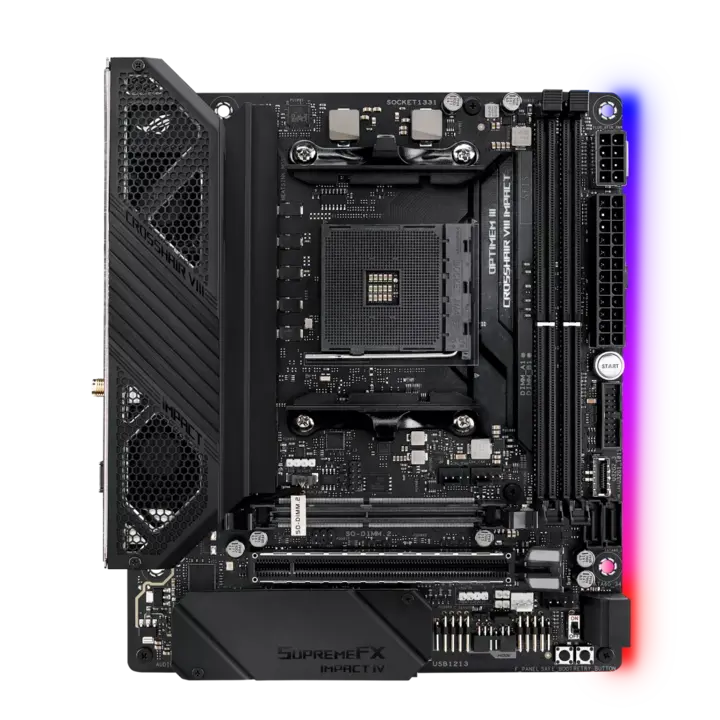
Less than a year after Intel gave up on BTX, it would be AMD that tried its hand at a new standard. The company created DTX as an alternative to mATX and Mini-ITX.
Unlike BTX, DTX was partially backward-compatible. DTX boards fit in ATX and mATX cases, while Mini-ITX boards could be installed in DTX cases.
AMD believed that there was a significant opportunity for a form factor that sat right between the two established ATX derivatives, as reflected in the dimensions and maximum PCI/PCIe expansion slots of DTX and Mini-DTX.
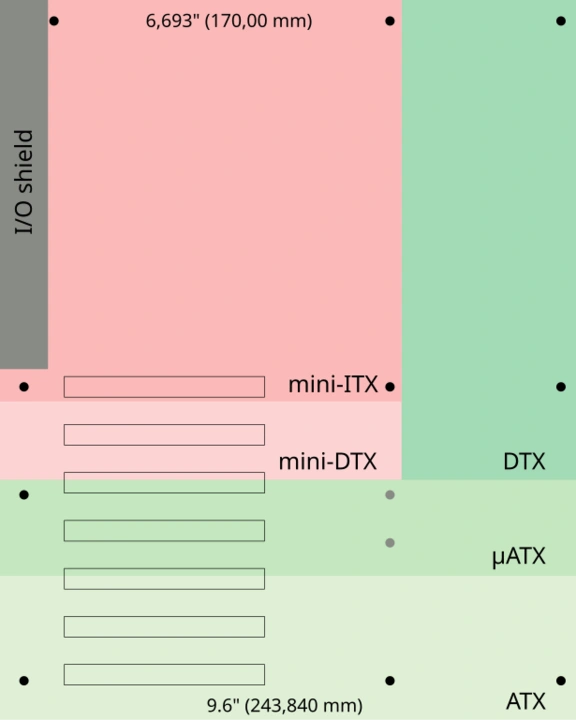
However, AMD’s bet has not paid off. DTX is simply too similar to the two form factors that it squeezed between. Micro-ATX has gone from strength to strength, while Mini-ITX eventually diversified from being an edge-friendly form factor into a DIY favorite as compute and cooling become more efficient and capable.
Keys to ATX’s sustained adoption
While sales of ATX hardware peaked in the 2000s, not even Intel imagined that the standard would remain influential three decades after its release. Several key factors within and around ATX contribute to its hardy entrenchment.
Intel’s partnership with Astec America was crucial during the early years of ATX. It ensured that ATX PSUs were readily available alongside ATX motherboards and cases. In addition, some of the first ATX cases were compatible with Baby AT boards. These measures, along with Intel’s dominant position at the time, eased the world’s migration from Baby AT and built trust in the new standard.
The efforts of Intel and AMD to create more power-efficient CPUs bought more time for the ATX ecosystem to optimize thermal solutions. Fans became quieter and more powerful, and case makers gradually refined the airflow in their products.
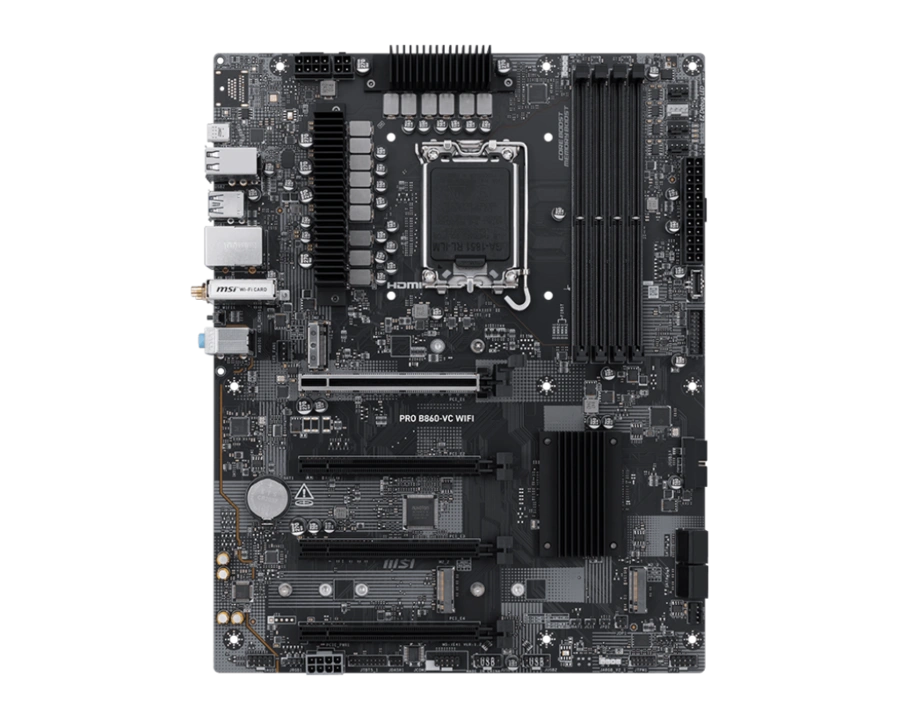
The longer ATX anchors desktop computing, the more sensible it becomes for related technologies to be compatible with the standard. ATX never ran out of space for connectivity like Baby-AT did. USB, Bluetooth, and Wi-Fi rendered a number of specialized interfaces obsolete and comfortably fit on the I/O shield. PCIe allowed modern GPUs and storage drives to fit within the ATX layout. The components that connect to ATX motherboards have drastically changed and improved over the past 30 years, yet a modern ATX board will be recognizable to someone from 1996.
The ATX PSU specification also kept up with the times. The 24-pin connector, introduced in 2003 through the ATX 2.0 specification, has a higher current output, supports higher wattages, and is more efficient than the original 20-pin connector. Yet it can easily be designed to be backward compatible with 20-pin motherboards.
The SFF standards that now dominate the market succeeded precisely because they were based on ATX. Micro-ATX boards are more affordable and allow for significantly smaller cases. But these benefits were achieved simply by reducing the maximum number of PCI/PCIe slots from ATX’s seven down to four. Otherwise, mATX boards are fully interoperable with the ATX ecosystem. The same can largely be said for Mini-ITX, even though it was originally developed by VIA Technologies for its CPUs.
But the most important factor behind ATX’s longevity is that it solved significant and persistent issues that its predecessors could not, while no alternative has accomplished that feat. Intel, AMD, and OEMs that tried to push proprietary form factors learned this the hard way.
Why OpenSFF will co-exist with ATX
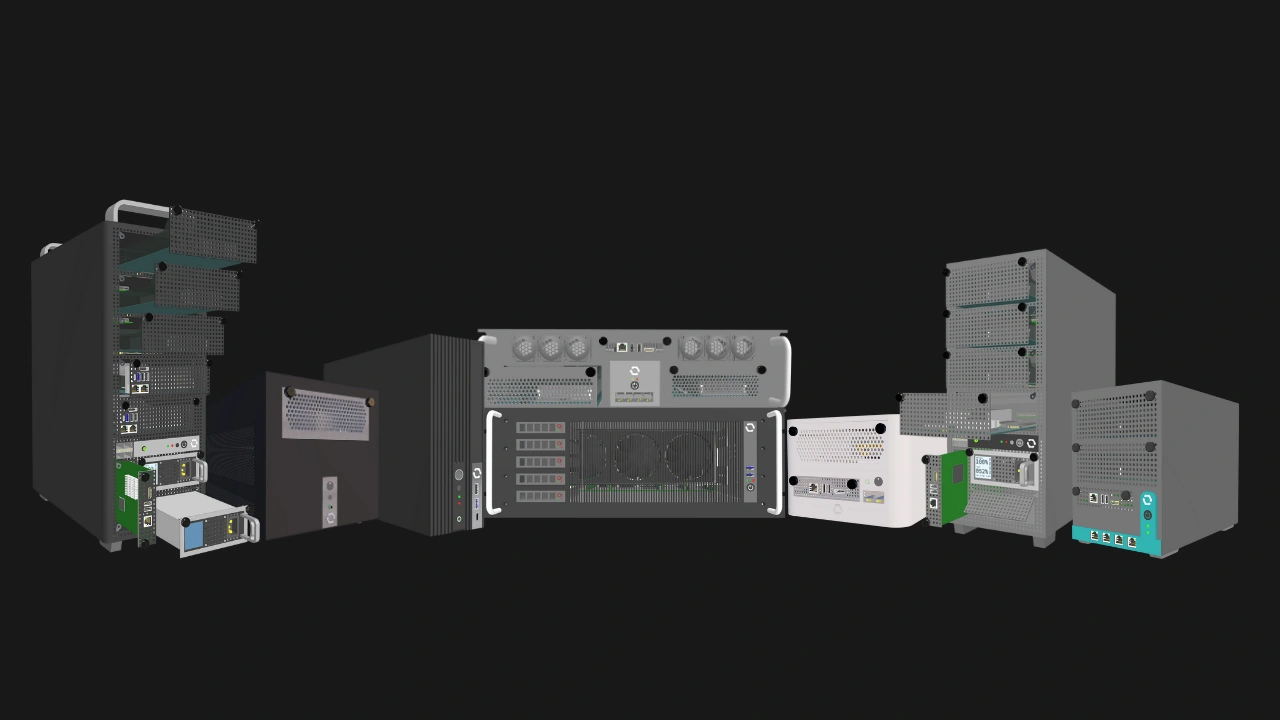
Our standard defines new computing solutions, not just a system board or case. Yet we believe that our target audiences will be willing to undergo this transition, because OpenSFF solves a problem that ATX and its derivatives were not meant to address: scalability.
Single-node implementations make our standard more cost-efficient for manufacturers, and more convenient and sustainable for users. But we primarily seek to end the inefficient, confusing, and fragmented state of multi-node systems.
The timing also favors our standard. Components are smaller and more power-efficient than ever. Our target use cases such as edge computing, enterprise servers, and self-hosting are expected to grow significantly. Last but not least, customers are rightly becoming more conscious about sustainability.
Build with OpenSFF
ATX preserved interoperability in desktop computers; OpenSFF seeks to bring it to multi-node systems, along with serviceability and sustainability. In the second part of our form factor overview, we will take a look at established SFF standards and demonstrate why OpenSFF stands out even in our niche.
If you enjoyed reading this, we invite you to learn more about OpenSFF and our specifications. For technical clarifications, partnerships, and other inquiries, reach out to our development team at [email protected].
Other Articles

Meet OpenSFF: an open hardware standard that enables cross-vendor compatibility, modular systems, and sustainable hardware reuse.
August 11, 2025
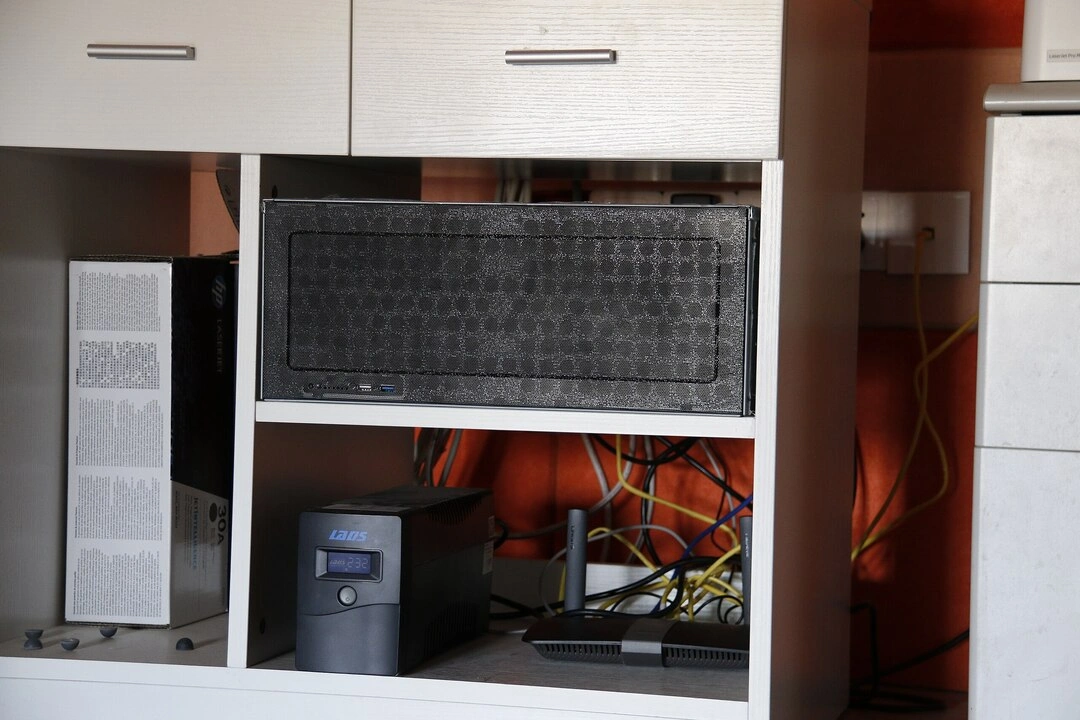
We go over the rise of virtualization and the open software adopted by home server enthusiasts, as well as the current challenges and the future of the hobby.
September 06, 2025

Learn why OpenSFF adopted the SFF-TA-1002 connector standard and how it enables our vision.
September 18, 2025