Blog
Introducing OpenSFF: An Interoperable, Serviceable, and Scalable Small Form Factor Computer Standard
Introduction

The modern world relies on compact and modular computers as much as it does on shelf-sized systems and traditional desktop workstations. More and more devices, vehicles, businesses, and even infrastructure are controlled and managed through small computing solutions.
In personal computing, mini PCs are now a default solution instead of an alternative option, from casual users to businesses, and even enthusiasts running home servers.
Advances in computing power and networking, along with cloud services being able to do the heavy lifting, have pushed the boundaries of small and modular computers. But they are also saddled with significant challenges that cannot be fixed by more powerful hardware or smarter software alone.
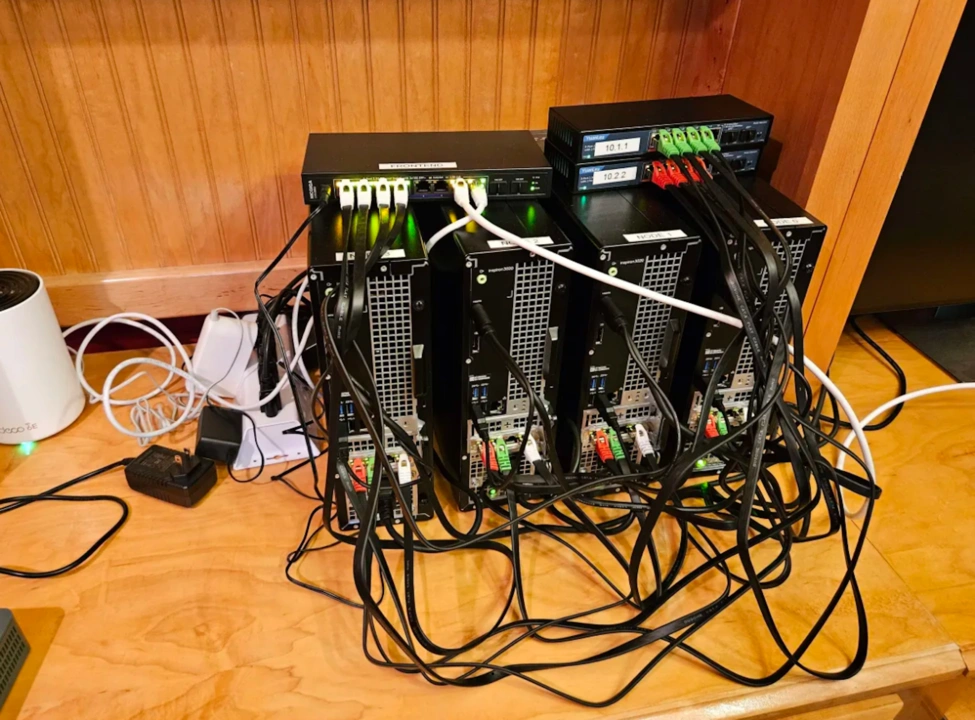
Manufacturers and vendors cater to customers with diverse needs and priorities. The common answer is a proprietary or custom-built solution that is hard to replicate or market to a wider audience. A board designed for one client cannot be easily repurposed. Ruggedized solutions add more cost yet are bound to specific clients or use cases. Custom solutions are also a nightmare for deployment teams to repair or upgrade, with only a handful of options for components and sources. Some systems cannot even be opened without risking damage or violating terms.
Scalability is also a major challenge. Some systems or vendors work great when starting out, but “scaling up” actually means switching to a different platform entirely. Multi-node servers are constrained by the size and design of their chassis. Servicing sometimes requires partial disassembly and dealing with a gamut of cables and connections.
Maximizing efficiency and space can also be troublesome. Homelabbers and IT teams can attest to the trickiness of wrangling different computers to work as one system.
These restrictions extract costs at all levels of the industry. Not least of which is the environmental impact of a system that is not built for reuse, longevity, and interoperability.
Meet OpenSFF
OpenSFF addresses these challenges by defining a license-free set of specifications for modular small form factor computing solutions. While we have more to discuss in the future, for now, we will go over the foundational hardware of our standard: the Compute Node and the Enclosure.
Compute Nodes are self-contained computing units that provide the CPU, memory, storage, and essential I/O interfaces in a compact board equivalent to the size of a mid-range graphics card. While the specification outlines minimum capabilities, vendors are free to create more powerful and versatile Compute Nodes.
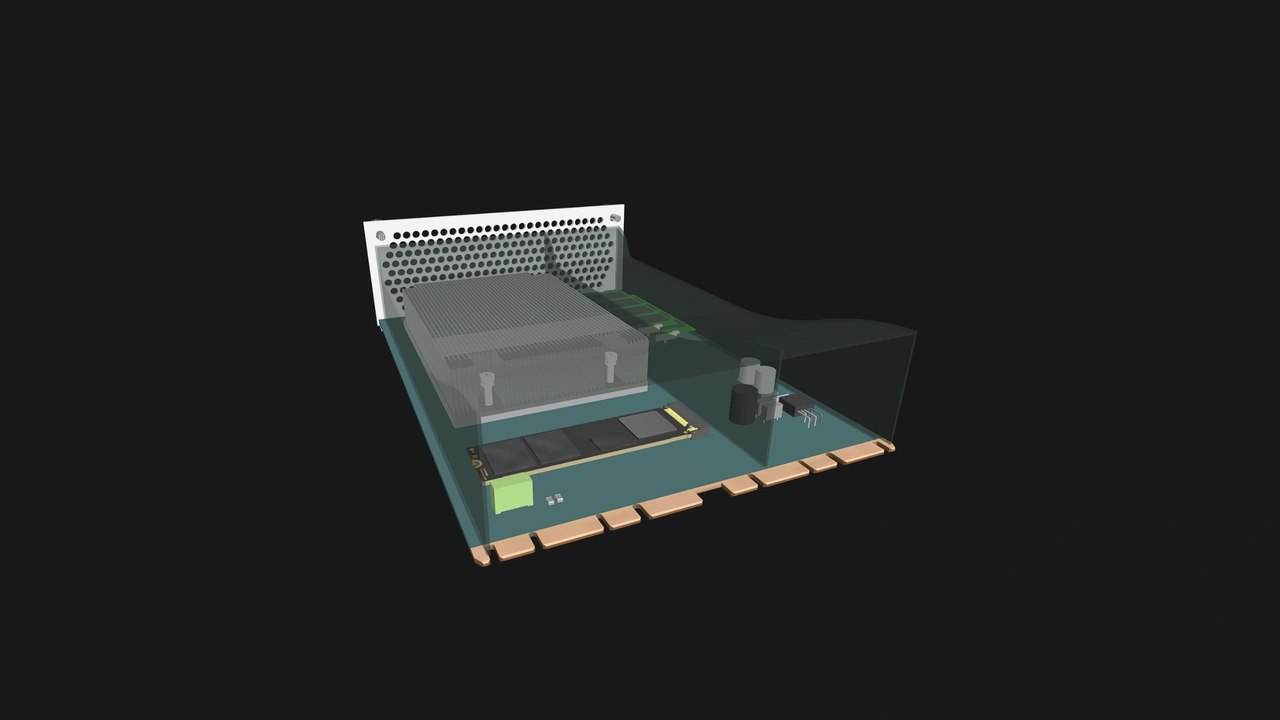
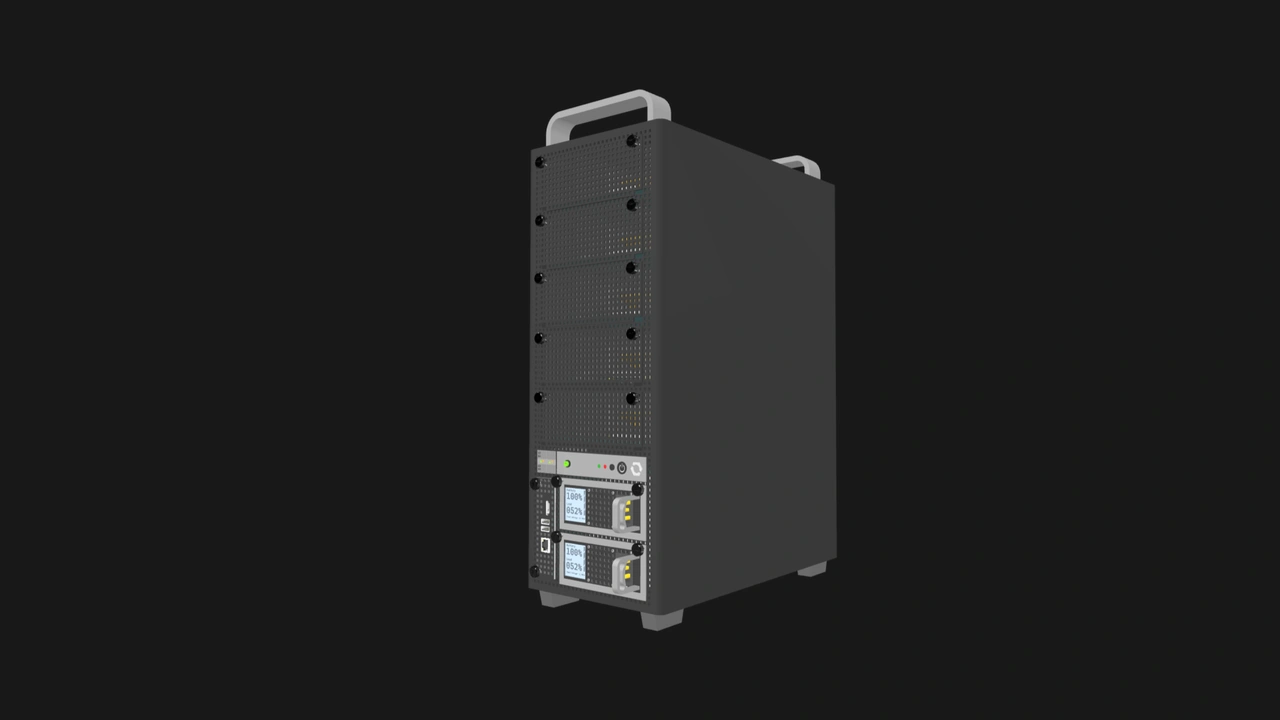
Those familiar with blade servers will no doubt recognize the inspiration behind our modular design. However, our open standard defines several significant differences from traditional blades and blade enclosures. Enclosures house one or more Compute Nodes, and can be anything from a traditional mini PC case to a server rack. Beyond ensuring compatibility with Compute Nodes, the specification does not constrain the physical dimensions of an Enclosure. This not only allows for modular and multi-node chassis, but even ones that are more transformative in both dimensions and function, such as a weatherproof case or an all-in-one monitor.
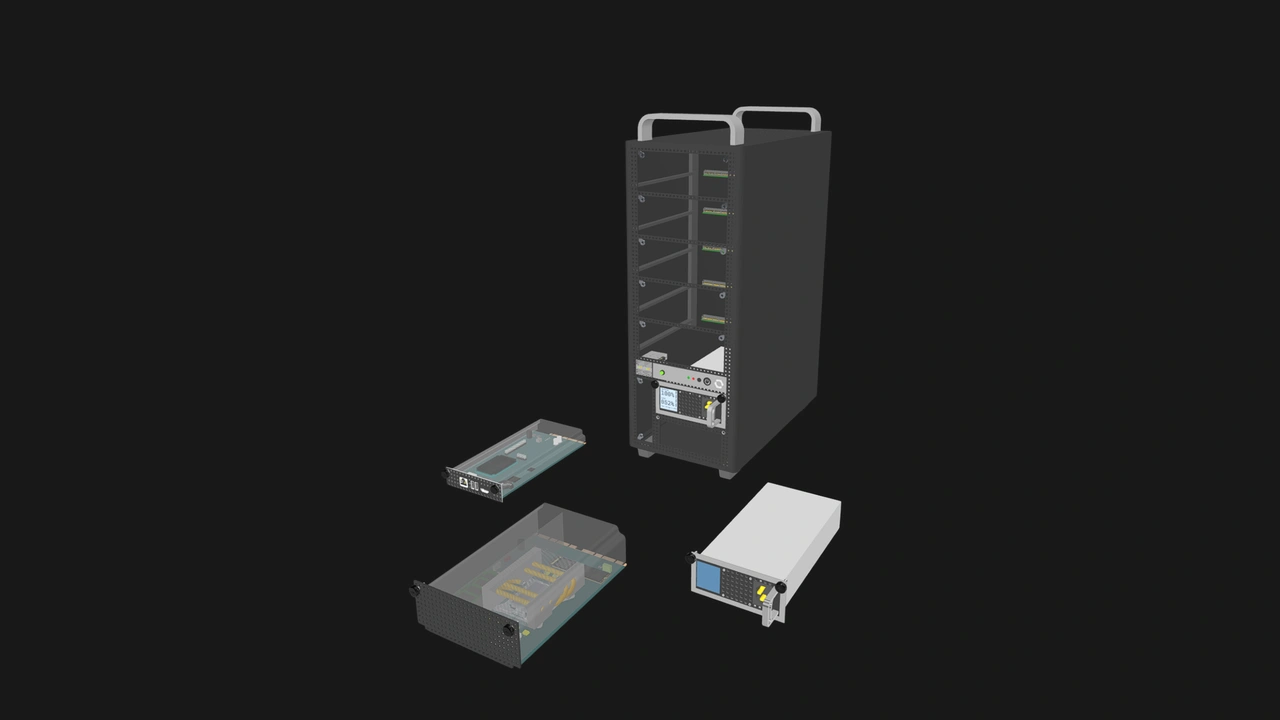
To support both consumer and business needs, OpenSFF defines two classes for both components: Core and Enterprise.
- Core Compute Nodes call for the interfaces and capabilities expected of modern computers. The minimum requirements include dual Ethernet, DisplayPort 1.4, and USB-C.
- Enterprise Compute Nodes provide additional Ethernet and USB interfaces on top of the minimum requirements for Core Compute Nodes.
- Core Enclosures provide the power, mounting, and I/O passthrough necessary for Core Compute Nodes, making them ideal for homelabs or compact desktop systems.
- Enterprise Enclosures are designed for edge or remote-managed environments. As such, they have more advanced requirements such as a shared power architecture, internal Ethernet switches, and out-of-band management.
All Compute Nodes are mechanically and electrically compatible with all Enclosures. Naturally, both components must be Enterprise-class to access the full functionality of that variant. Compute Nodes connect to Enclosures using one or two SFF-TA-1002 connectors and are secured with captive M4 thumbscrews.
The Core Pillars of OpenSFF
Through its hardware specifications, OpenSFF aims to establish an ecosystem of small form factor computers, components, and accessories that are interoperable, scalable, and serviceable.
Interoperability
The mechanical and electrical compatibility of all Compute Nodes with all Enclosures eliminates vendor lock-in at the hardware level. It also guarantees that hardware can be reused and repurposed for longer periods and more diverse use cases.
Scalability
The OpenSFF specifications support deployments from single-node systems to multi-node server configurations. It has provisions that recognize the need for shared networking and power, and provides minimum requirements to reduce clutter and streamline both internal and external components.
Serviceability
Compute Nodes use off-the-shelf components, including standard memory and storage form factors. They are secured with captive M4 thumbscrews for toolless access. Enclosures all have the same mounting points and connector alignments.
Open SFF Benefits
For Enthusiasts
- Interoperable hardware provides more affordable solutions for smaller systems without sacrificing scalability
- Standardized interfaces facilitate DIY and experimental configurations
- Multi-node designs reduce cable clutter and make it possible to service, upgrade, or reconfigure individual compute nodes without dismantling the entire system
For Edge Computing Deployments
- Cross-vendor compatibility leads to reduced inventory complexity across different regions or sites
- User-replaceable components empower clients and reduce service calls
- Full Enterprise-class systems ensure remote management capabilities regardless of component vendor
For Enterprise IT
- Interoperable hardware simplifies procurement, allocation, and support
- Full Enterprise-class systems include both a general-purpose internal Ethernet switch fabric and dedicated out-of-band management hardware regardless of vendor
- Scalable solutions with more generous and futureproof upgrade options
For Vendors
- Standardized interfaces lead to reduced development costs
- Enclosures provide freedom to innovate, strengthen market position and brand identity, and reach new audiences
- More efficient production workflows, interoperable hardware, and serviceable systems support environmental sustainability
Build with OpenSFF
We are excited to create an accessible, diverse, and sustainable small form factor computing ecosystem with you. We invite you to read our specifications, and we would be grateful if you help spread the word about OpenSFF.
For technical clarifications, partnerships, and other inquiries, reach out to our development team at [email protected].
Other Articles
Meet OpenSFF: an open hardware standard that enables cross-vendor compatibility, modular systems, and sustainable hardware reuse.
August 11, 2025
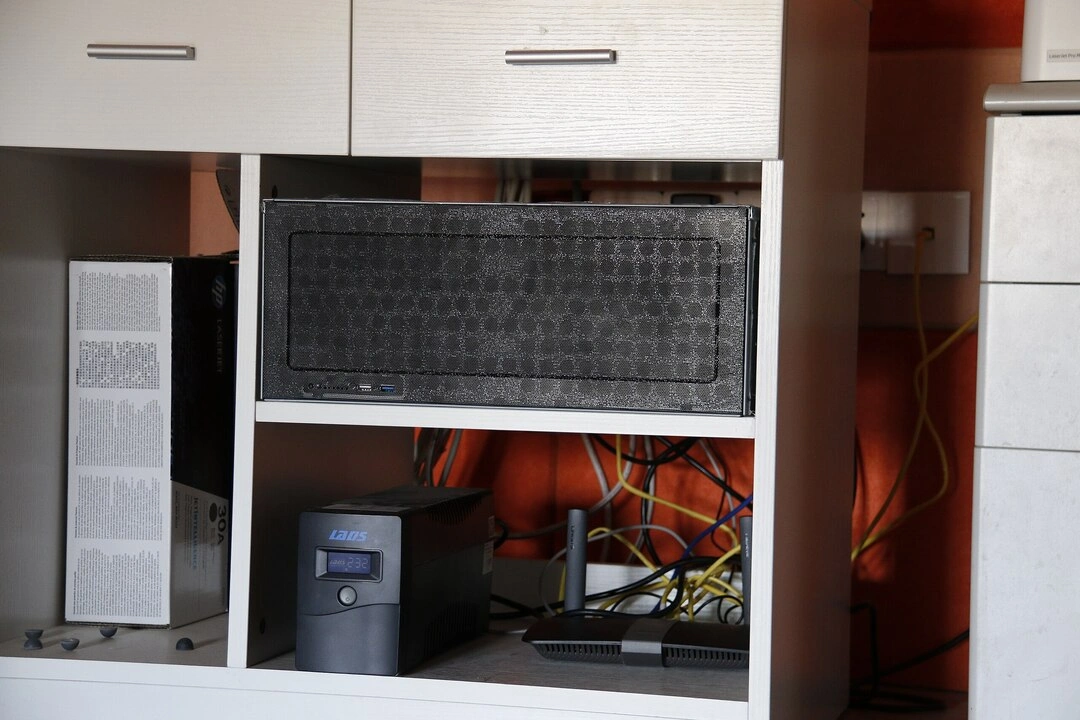
We go over the rise of virtualization and the open software adopted by home server enthusiasts, as well as the current challenges and the future of the hobby.
September 06, 2025

Learn why OpenSFF adopted the SFF-TA-1002 connector standard and how it enables our vision.
September 18, 2025