Blog
New Year, New Solutions: How OpenSFF's Interoperability Solves Real-World Problems
Introduction
Happy New Year! Now is a perfect time to look forward and envision a better future. For us, that means a future with computers that are more flexible, consistent, and sustainable. We have been hard at work developing our standard, which enables true interoperability between its three main components: the Compute Node, the Enclosure, and the Management Module.
We have talked about interoperability in previous posts, including the introduction to our standard, our look at e-waste, and our overviews of mini PCs and edge devices. This post is a dedicated look at what is possible when hardware is designed to work together from the ground up.
The multi-vendor system
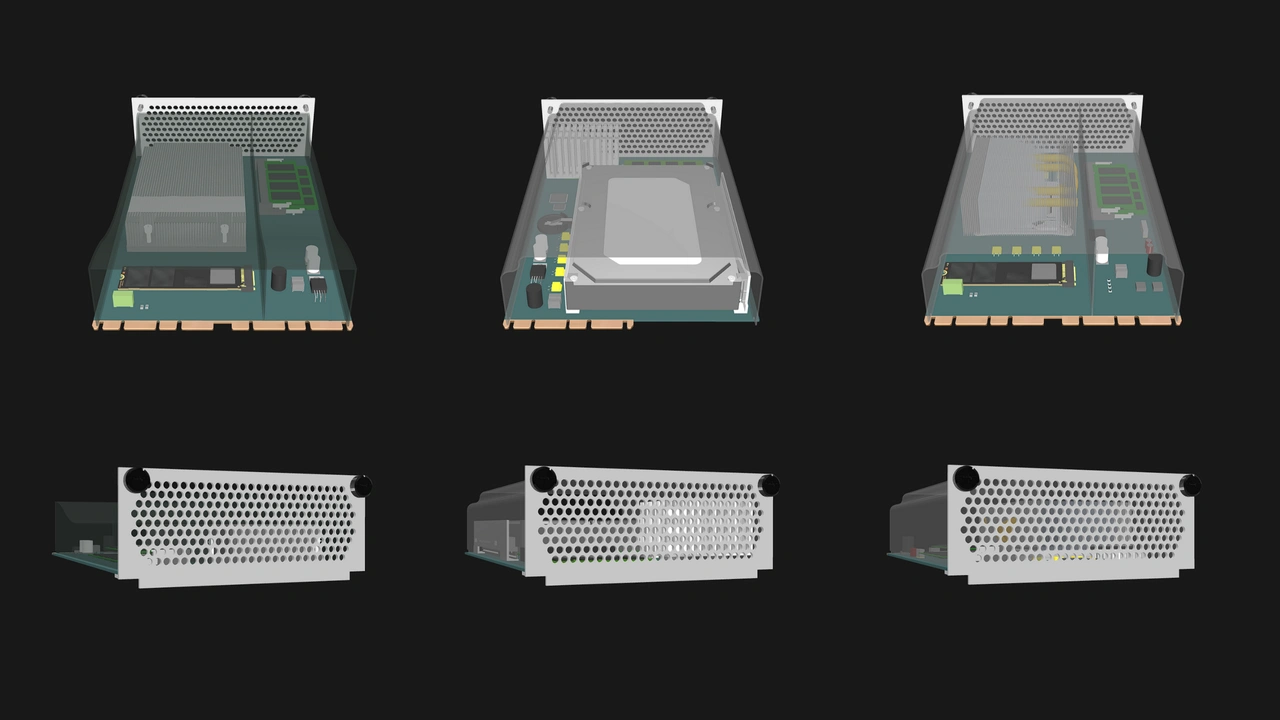
A managed service provider (MSP) is building an edge deployment for a client. The MSP sources Compute Nodes from Vendor A, who specializes in the low-power processors that are suited for the client’s workload. They then select an Enterprise Enclosure from Vendor B due to its superior thermal design. Finally, they pick a Management Module from Vendor C for its advanced remote management capabilities and competitive price.
Those three vendors did not coordinate with each other, yet the three components work seamlessly as one system. The Compute Nodes slide into the Enclosure’s slots and the system boots with no issues. The Management Module detects all installed Compute Nodes and allows remote access through the management interface.
This best-of-breed procurement would be impossible with a proprietary approach. OpenSFF enabled the MSP to optimize each component independently without worrying about compatibility. The result is a system tailored exactly to the client’s needs and budget.
The modular upgrade
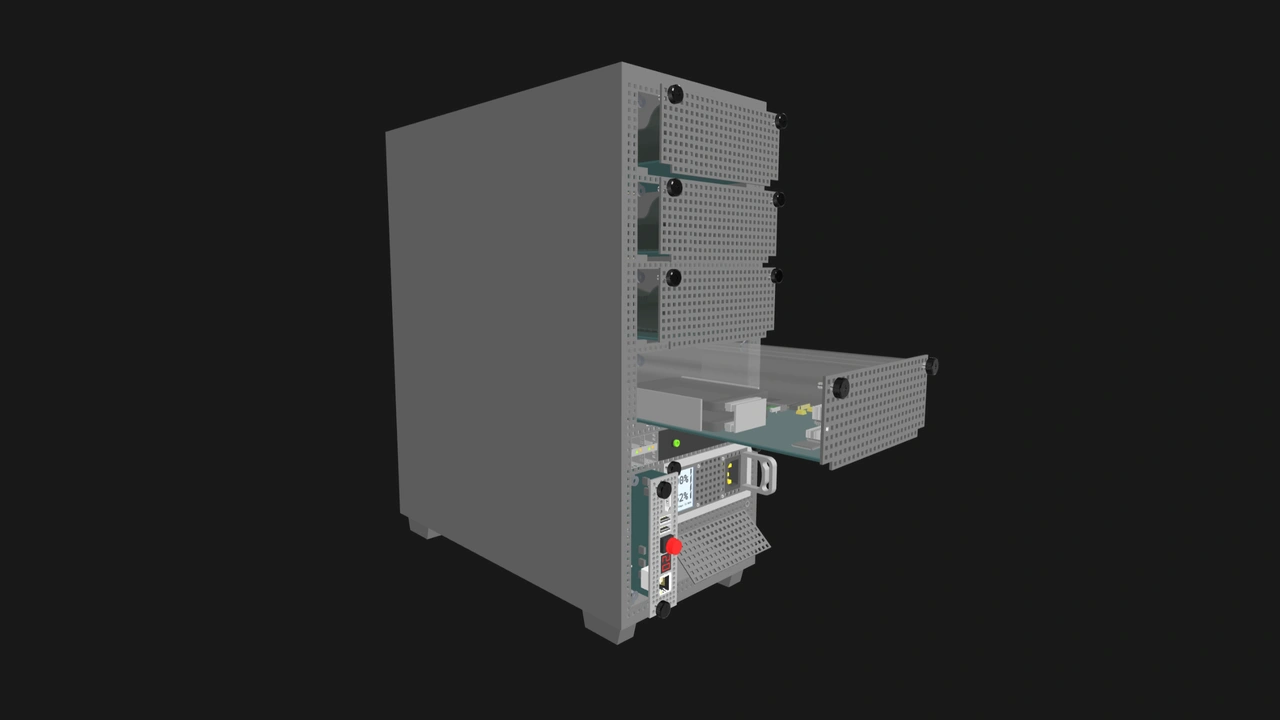
A small business has been running an OpenSFF cluster for 4 years. The Enclosure has served them well during that period. But now its primary power supply is failing, replacement parts are not available in the business’ region, and it lacks several features that are in many newer designs.
Instead of replacing the entire system, the business owner simply purchases a new Enclosure that has all the features they need. Both Enclosures have the same blind-mate connector alignment and retention mechanisms, resulting in a painless upgrade.
The IT admin powers down the existing cluster, transfers the Compute Nodes and Management Module to the new Enclosure, and turns the power on. The upgraded cluster boots normally, retains its network configurations, and resumes working as if nothing had changed.
The OpenSFF components’ independent lifecycles work hand-in-hand with their interoperability, allowing the business to upgrade based on their actual needs. They did not need to migrate their data, reinstall operating systems, or reconfigure their network. Their Compute Nodes’ entire software stack persisted across the physical transfer, significantly reducing downtime and the risk of errors in reconfiguration.
The field spare
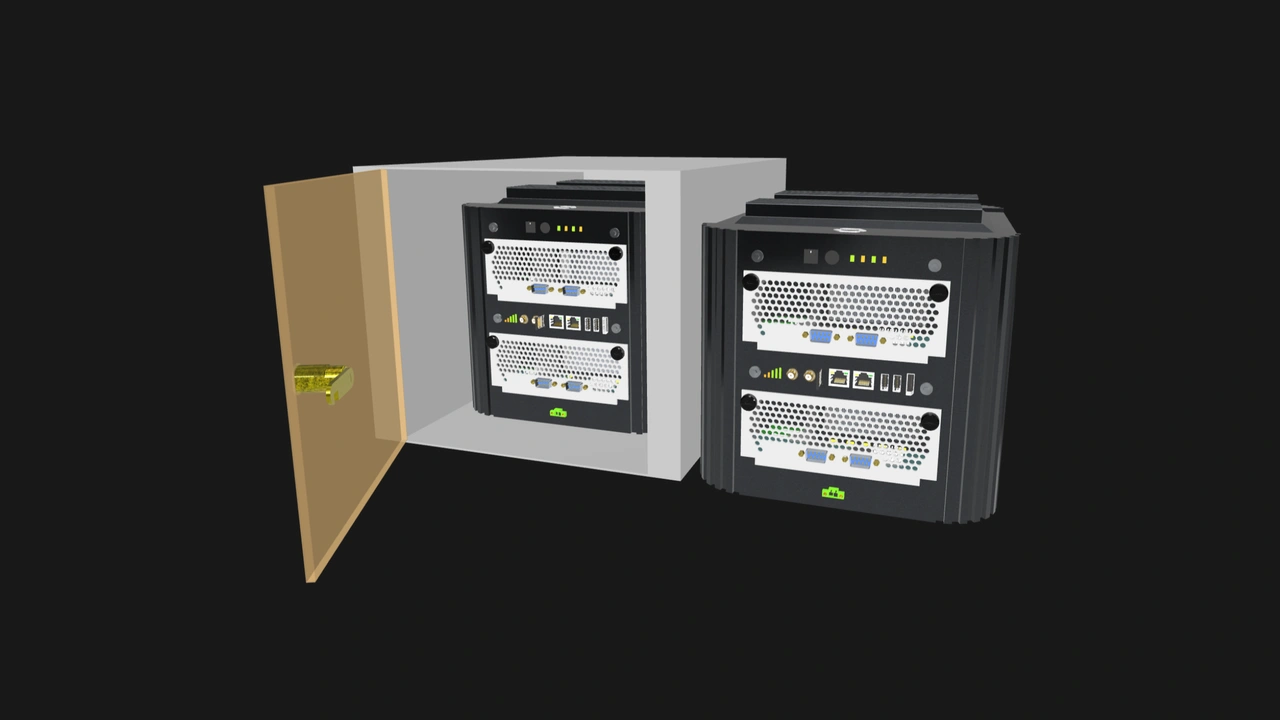
A retail company operates edge computing devices across dozens of locations. The company maintains a central inventory of spare Compute Nodes from various vendors, which they selected based on availability and price at the time of purchase.
When a Compute Node fails at a remote location, the field technician does not need to wait for a vendor-specific replacement to be shipped. They simply grab the next available spare from the stock, even though it came from a different vendor than the failed node.
The technician did not have to check the replacement node’s dimensions, mounting points, or its thermal and power requirements, because those aspects are standardized across all Compute Nodes. Before switching to OpenSFF, the company had to maintain a variety of spare parts for each specific system, increasing the cost and complexity of managing their inventory. Now, they have a simpler, more responsive, and more cost-effective approach.
Instead of service windows taking one or two days, mostly involving waiting for the replacement part to arrive, repairs can be done in minutes.
The second life
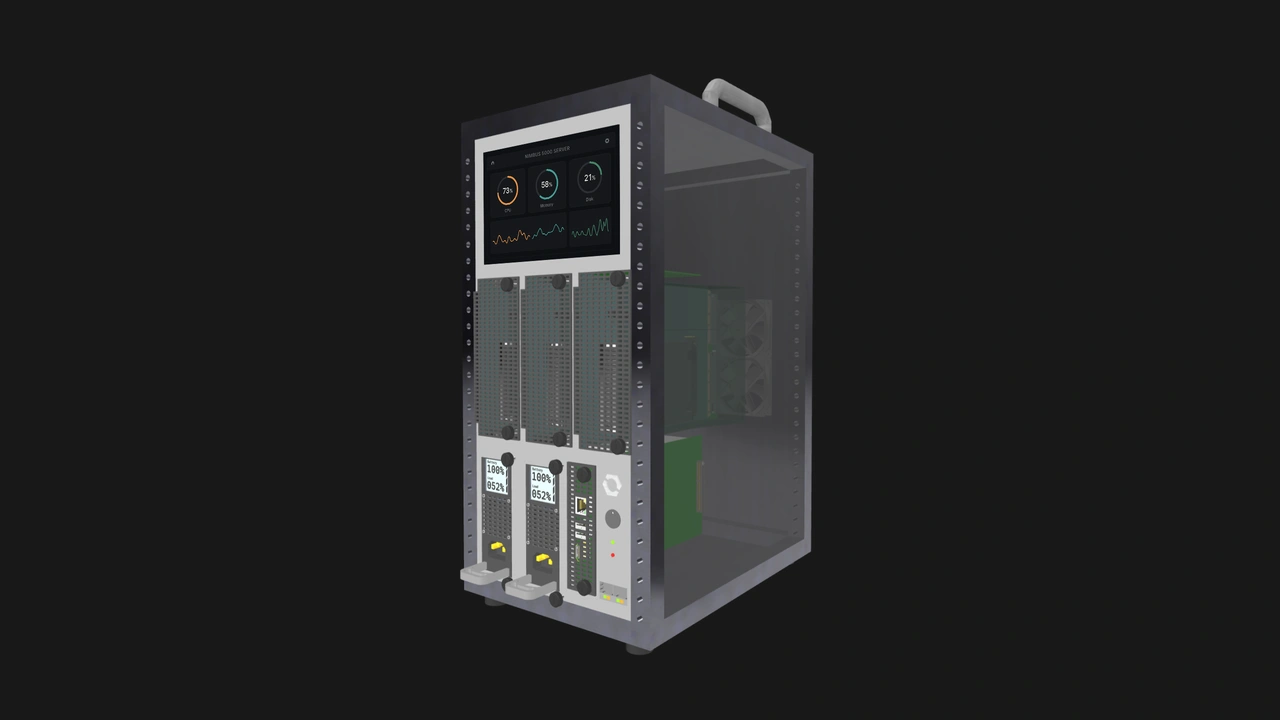
After 5 years as an office server, a perfectly usable OpenSFF system is being replaced. The company has begun consolidating workloads into newer and denser systems to keep up with their growing needs.
The company arranges an internal sale for all its retired hardware, allowing an employee to purchase the server at a significant discount. At home, the new owner removes two of the three installed Compute Nodes and 3D prints blanking panels to keep the airflow optimized. The employee also replaces one of the redundant power supplies but keeps the old unit as a spare. They then sell the Management Module to a fellow enthusiast and buy a cheaper one that fits their needs.
The employee reconfigures the remaining (and still powerful) Compute Node as a NAS and media server. The same system that once handled heavy database workloads now serves the employee’s family, providing the same cool and quiet operation that made it valuable for the company. It also gives the employee plenty of room to expand when their budget and needs align once more.
We believe that this scenario will be a common outcome of our standard. Each OpenSFF component has value independent of their original use case. This can reduce the cost of ownership for both first and secondhand owners while keeping good hardware out of landfills.
The agnostic apprentices
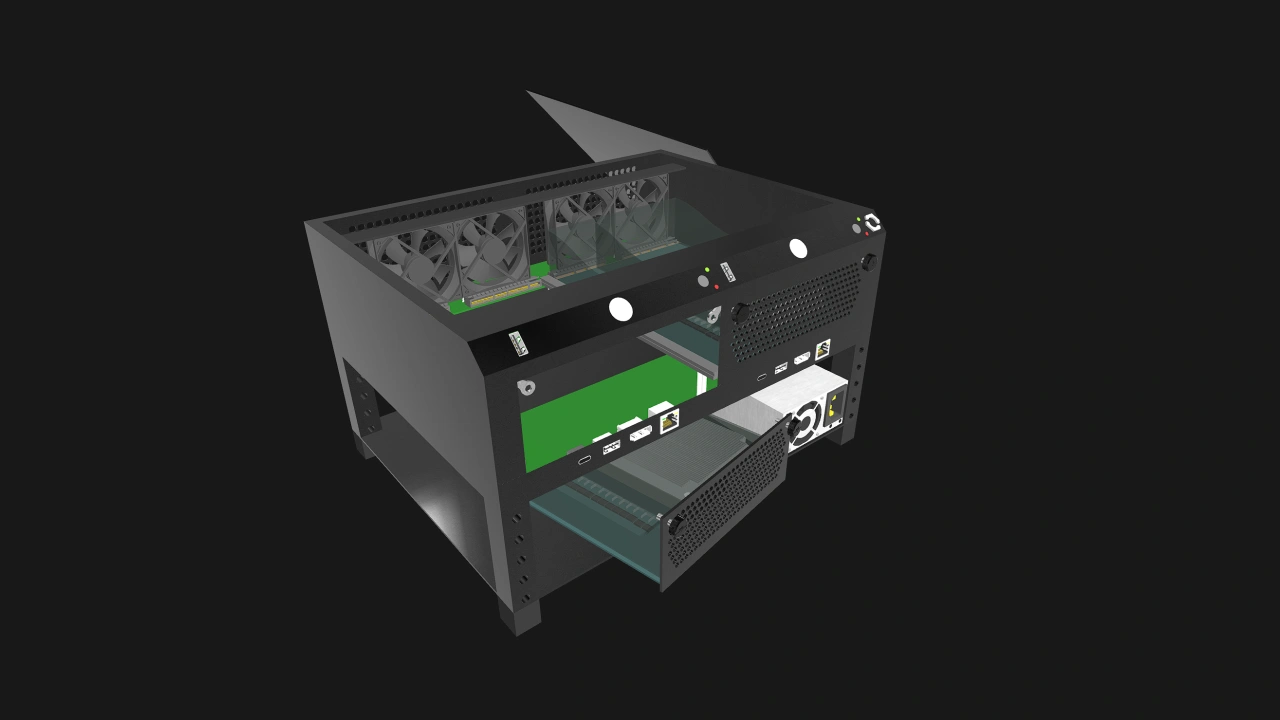
An IT services company maintained numerous programs and equipment to train new technicians. But as more of their clients switched to OpenSFF systems, their training overhead gradually became more manageable.
The company equips its training lab with used OpenSFF hardware from various client deployments. New technicians learn specifications and procedures that apply to an increasing number of their client’s systems, all from the same training program.
The retention systems are identical. The electrical and thermal characteristics are similar. The Management Module software is a logical template for vendor implementations. Technicians that practiced on three-year-old components from different vendors hit the ground running on brand-new client systems from completely different manufacturers.
The company saves on equipment and certifications. Trainers streamline their programs and cut down on their documentation. Technicians focus on a standardized skill set. Their clients see fewer errors and receive more timely assistance as technicians become more interchangeable and flexible.
The multi-architecture testbench

A lead software developer working remotely is tasked to compare the performance of their workloads between Intel and AMD CPUs. Instead of procuring separate systems and management devices, their company decided to go with one OpenSFF system.
The first slot of the Enclosure has a Compute Node with an Intel CPU, while the second slot has the AMD-powered Compute Node. The third slot has a low-powered Intel CPU to handle CI/CD.
Despite its diverse node configurations, the entire system is controlled through a single Management Module. The developer has KVM access to any installed Compute Node. They do not have to worry about one node or the entire system overheating or being fed insufficient power.
Thanks to the SFF-TA-1002 connector, the developer’s machine is architecture-agnostic. The Core and Enterprise Connectors as well as the Management Module Connector provide the same electrical interface, mechanical mounting and signal integrity regardless of the CPU.
The machine easily fits in the developer’s home office. It can be managed through a single set of peripherals and has only two cables to manage: the power plug and the Ethernet cable.
The thriving secondary market
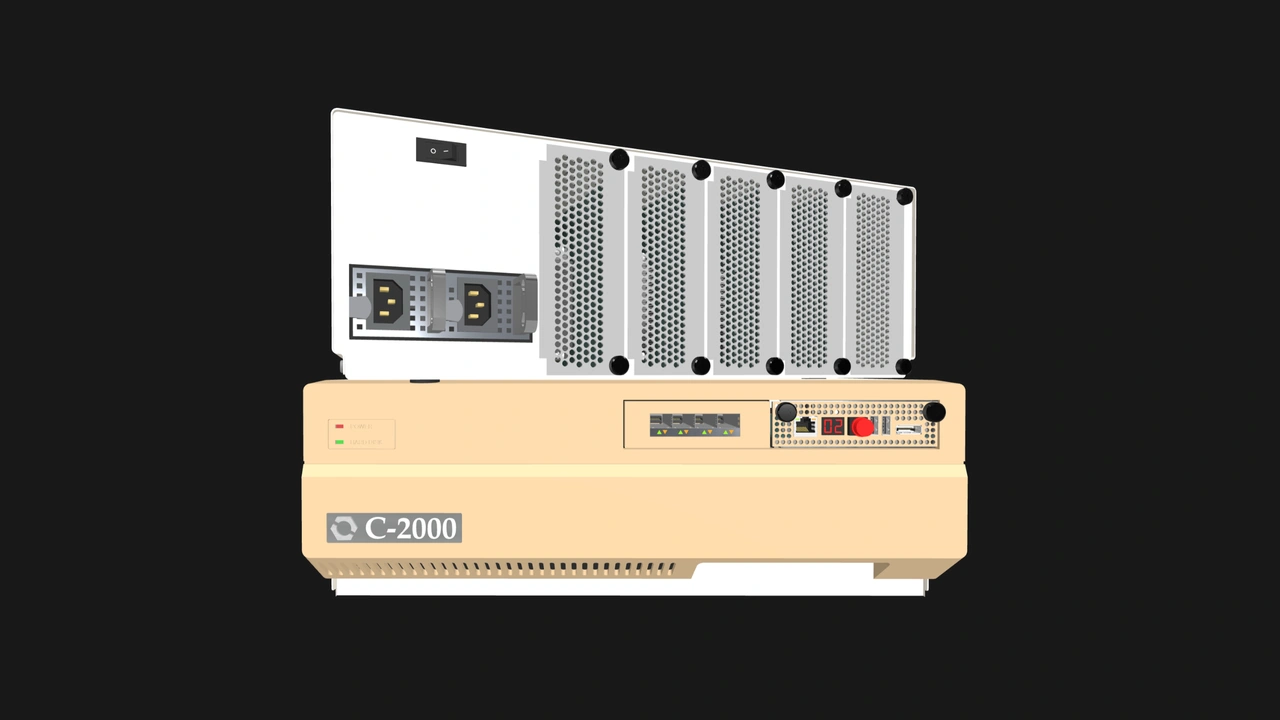
The year is 2036. OpenSFF has become widely adopted, and used and refurbished components are starting to emerge. Some of them once worked together in the same system, but they all circulate independently. They find new homes a couple more times after their first deployments.
Enterprise Enclosures find new purpose as small business servers, training equipment, or homelabs. Management Modules that were once cutting edge become IT admins’ personal tools for experimentation. Compute Nodes are transferred across multiple Enclosures, and some even end up on custom cases for DIY projects.
OpenSFF enables component-level secondhand markets that provide affordable entry points, flexible upgrades, and environmental benefits. The components’ interoperability can protect their first owners’ investment by helping maintain a healthy resale value and utility.
Build with OpenSFF
Our standard’s interoperability can lead to flexible purchases, modular upgrades, diverse systems, operational efficiency, and sustainability. As we welcome another year, we are excited to meet partners who share our vision for a better future. One where systems are based on their creators’ best efforts and their users’ circumstances rather than on a proprietary design.
We encourage you to read our specifications, and we would be grateful if you help spread the word about OpenSFF. For technical clarifications, partnerships, and other inquiries, reach out to our development team at [email protected].
Other Articles

Meet OpenSFF: an open hardware standard that enables cross-vendor compatibility, modular systems, and sustainable hardware reuse.
August 11, 2025
We go over the rise of virtualization and the open software adopted by home server enthusiasts, as well as the current challenges and the future of the hobby.
September 06, 2025

Learn why OpenSFF adopted the SFF-TA-1002 connector standard and how it enables our vision.
September 18, 2025