Blog
The Limitless Potential of OpenSFF Enclosures
Introduction
As part of our introduction to the OpenSFF standard, we revealed the Enclosure. We alluded that its specification sets a sustainable and user-friendly foundation while still providing plenty of room for innovation. In this article, we will pitch a few ideas for Enclosures to demonstrate just how much it redefines small form factor computing.
What is an OpenSFF Enclosure?
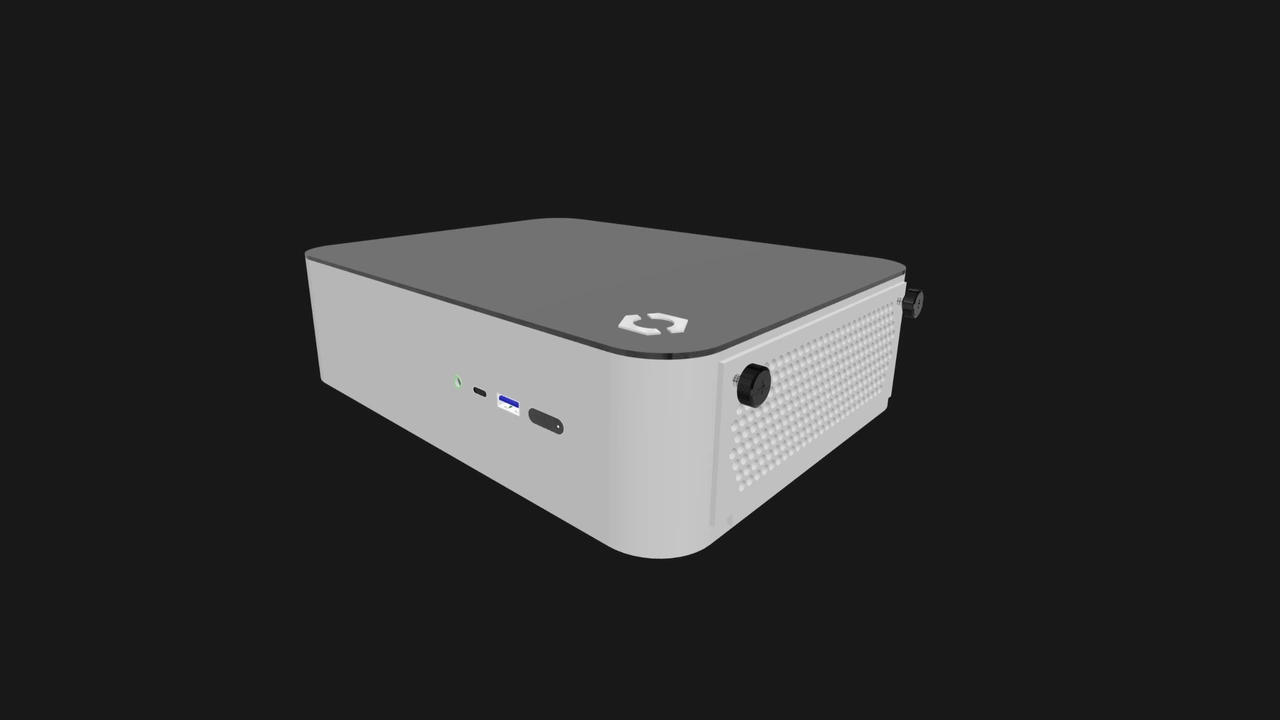
Before we explore the limitless possibilities of OpenSFF Enclosures, let us briefly go over some of its main requirements.
Connectors
Each Compute Node slot in a Core Enclosure must have a Core Connector (SFF-TA-1002 4C+). This port delivers high-speed signaling, power, and baseline interfaces in a compact and unified form factor.
Enterprise Enclosures must have both a Core Connector and an Enterprise Connector (also SFF-TA-1002 4C+) per Compute Node slot. The latter supports additional Ethernet and USB-C interfaces as well as room for other features.
Power delivery
Each Compute Node slot in an Enclosure must supply at least 120W of DC power.
Airflow and thermal management
Air must reach the Compute Node’s inlet shroud and must be exhausted through the I/O shield without obstruction. Any form of active cooling must be built into the Enclosure, not in Compute Nodes.
Serviceability
Enclosures must have guide rails for blind-mate insertion, thumbscrew-compatible retention points, and allow toolless access for user-facing servicing.
Management Module support (required in Enterprise Enclosures)
The Management Module is the third main component of the OpenSFF standard. It supports chassis-level functionality such as KVM redirection, out-of-band monitoring, and power management. As such, Enterprise Enclosures must have a dedicated slot for this component. Vendors also have the option to design Core Enclosures that work with the Management Module.
Going out-of-the-box
There are of course more minimum mechanical, electrical, and thermal requirements defined in the Enclosure specification to ensure interoperability, scalability, and serviceability. But beyond those, OpenSFF does not dictate the size, shape, or appearance of Enclosures.
With our baseline Enclosure established, it is time to see what is possible. Whether you are a field technician who prioritizes space and serviceability, a system builder looking to stand out from the competition, or a homelabber daydreaming about your next setup, let us imagine what SFF systems could be like in a world with OpenSFF.
Tower mini-server with front-accessible Compute Node bays
A mini-tower that combines multi-node support with user-friendly serviceability. Each Compute Node can be accessed without disassembling the Enclosure, and replaced simply by removing a couple of captive thumbscrews.
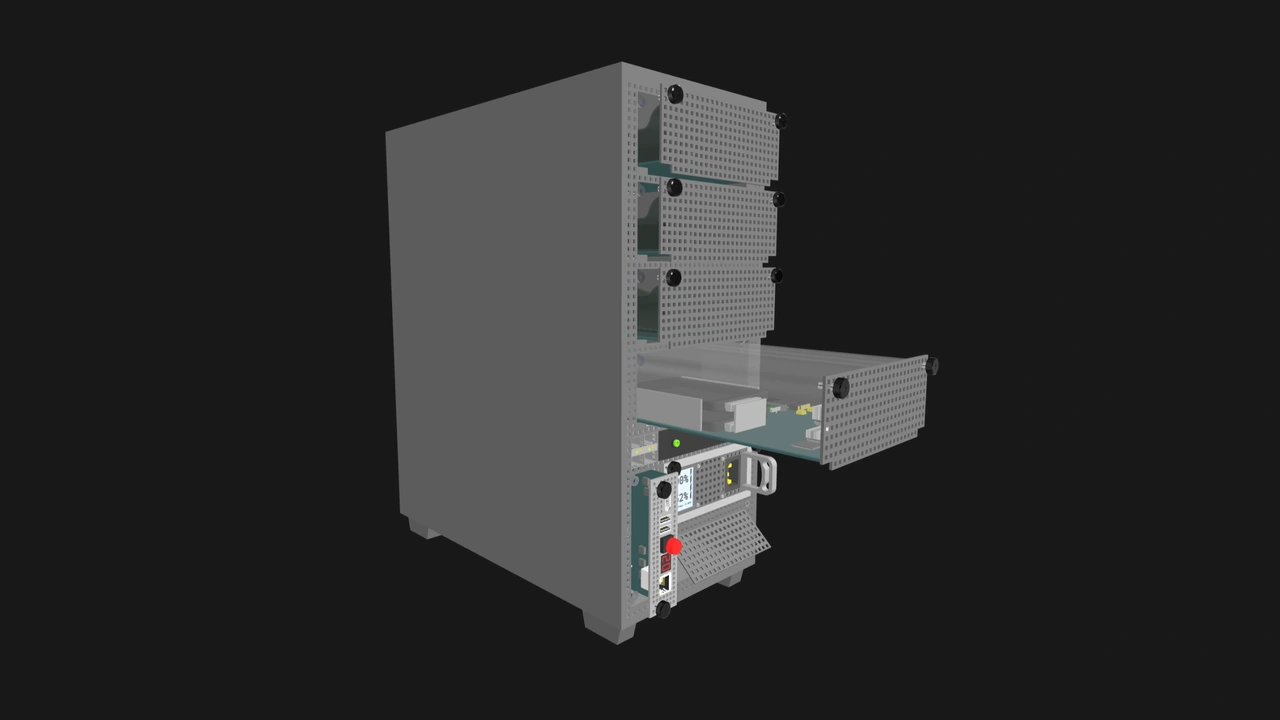
The tower also has room for two UPS units. When paired with the redundant and hot-swappable PSU configurations in Enterprise Enclosures, this mini-server is great for retail environments where downtime is costly. As with all Enterprise Enclosures, the tower would also have internal networking, and provide KVM routing and support for remote management with the help of a Management Module.
All-in-one (AIO) desktop workstation
AIO computers are nothing new, but practically none of the options available are serviceable. OpenSFF makes it possible to have a sleek, compact, and professional desktop PC where both the Compute Node and the AIO Enclosure can be swapped, upgraded, or reused easily, thanks to its vendor-agnostic and serviceable design.
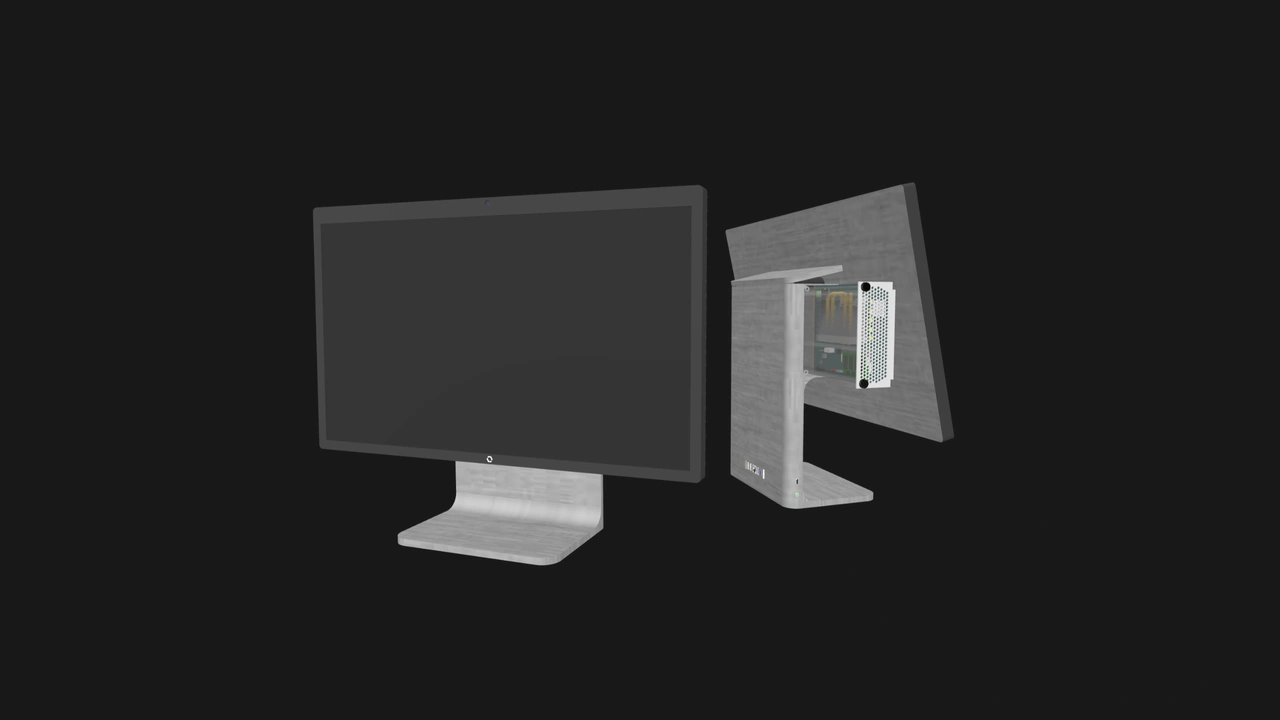
The AIO can be ready-to-use and full-featured with an integrated display and even speakers. It can also specced as a headless terminal with VESA-compatible mounting and I/O passthrough, but no screen included. The latter option is great for modular or bring your own display setups.
This Enclosure is great for kiosks, controlling digital signage, and our personal favorite: repurposing Compute Nodes originally acquired for enthusiast or business use as a home PC.
OPNsense redundant firewall appliance
This Enterprise-class Enclosure employs at least two Enterprise Compute Nodes as a redundant firewall group via the High Availability setup in OPNsense.
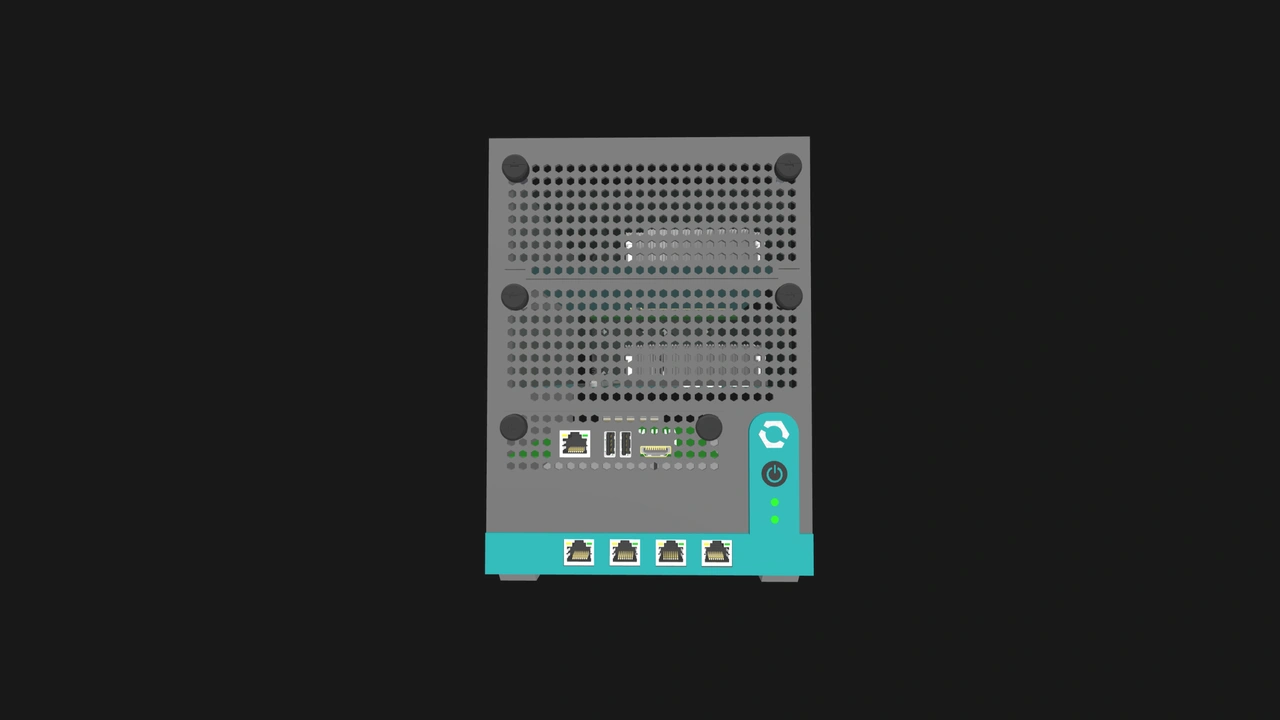
The internal 2.5GbE connections would allow the Compute Nodes to sync state and configurations. Meanwhile, the external Ethernet ports will take care of WAN and LAN connectivity. This separates the routing and firewall interfaces logically and physically, and minimizes cable clutter.
While affordable and compact third-party options already exist, this OpenSFF equivalent would be more serviceable and accessible, since the Compute Nodes and the Enclosure can be acquired separately alongside fully built solutions.
3U rackmount chassis with four Compute Node bays
Housing four nodes in rackmount servers typically requires at least as many units of space. But we believe it is possible to create a 3U chassis with space for four Compute Nodes: two in the front and two in the back.
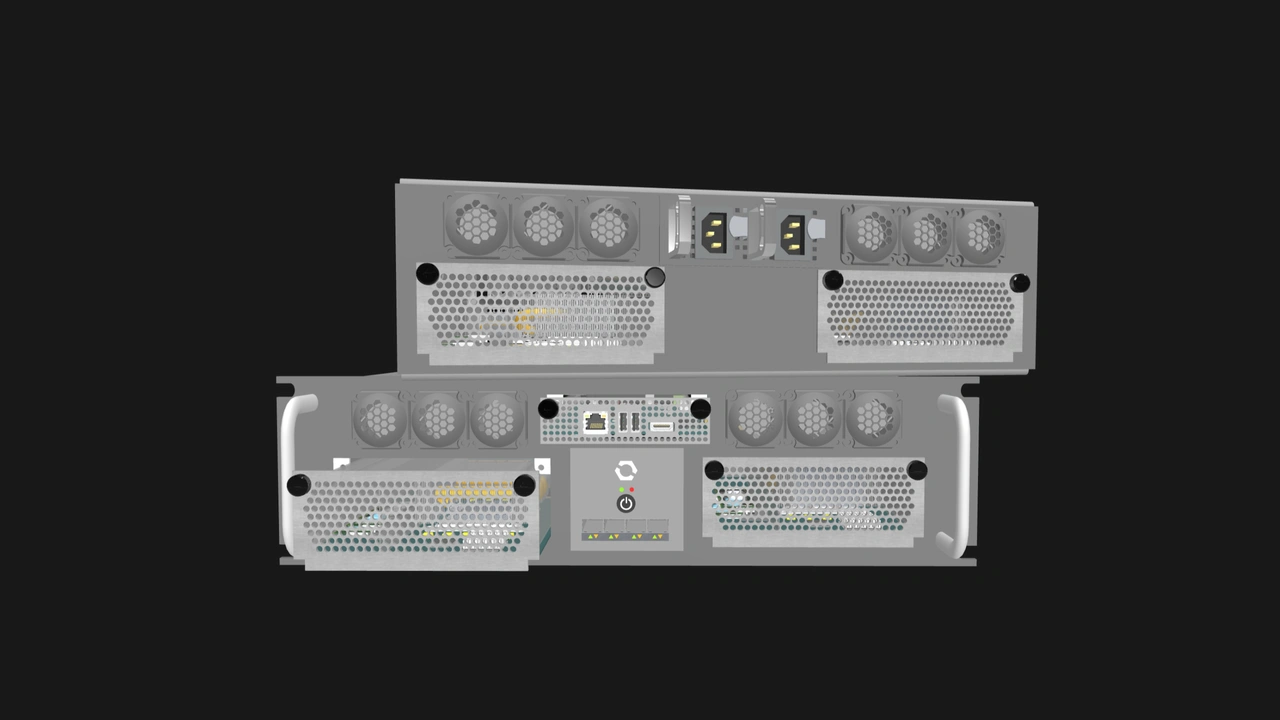
This Enclosure is a godsend for home labbers, edge deployments, and space-constrained businesses. We are well aware that this layout requires clever thermal engineering, perhaps involving side-to-side airflow or even crossflow fans.
Experimental components, designs, and materials
There are also plenty of opportunities for innovation in Enclosures besides their form factor or purpose.
Innovative thermal management
Enclosures can be equipped with more niche cooling solutions such as the aforementioned crossflow fans.
Security
Biometric or Bluetooth locks can be built-in or designed to be added as modules, particularly for Enclosures meant to be deployed in the field or wherever security is a prime concern.
Status display
A small display can be integrated in the Enclosure to show critical information such as node health, IP addresses, or temperature. It could be a particularly attractive feature for users looking to create headless or multi-node setups.
Ruggedized designs
OpenSFF makes it possible to design weatherproof and overall durable Enclosures that are not proprietary or one-off solutions. Its wide compatibility should not only make repairs easier but also lower costs.
Modular accessories
Accessories such as node blank panels, accessory attachment or mounting points, or stackable Enclosure designs would provide even more flexibility and customization options.
Aesthetics
Many homelabbers armed with 3D printers, creativity, and a healthy dose of humor have shown that small computers do not have to be indistinguishable boxes.
Imagine being able to turn your system into a sleeper server, a steampunk homelab, or anything in between simply by swapping Enclosures.
Build with OpenSFF
These ideas merely scratch the surface of what is possible with Enclosures. The flexibility integrated into its specification allows vendors to innovate and differentiate without worrying about compatibility.
In a healthy OpenSFF ecosystem, businesses will have more space-saving and serviceable options, while enthusiasts can customize, mix, and scale hardware without breaking the bank or sacrificing serviceability.
We invite you to read the Enclosure specification, and we would be grateful if you help spread the word about OpenSFF. For technical clarifications, partnerships, and other inquiries, reach out to our development team at [email protected].
Other Articles

Meet OpenSFF: an open hardware standard that enables cross-vendor compatibility, modular systems, and sustainable hardware reuse.
August 11, 2025
We go over the rise of virtualization and the open software adopted by home server enthusiasts, as well as the current challenges and the future of the hobby.
September 06, 2025

Learn why OpenSFF adopted the SFF-TA-1002 connector standard and how it enables our vision.
September 18, 2025