Blog
General Theory of Modularity: How OpenSFF can help scientists and researchers
Introduction
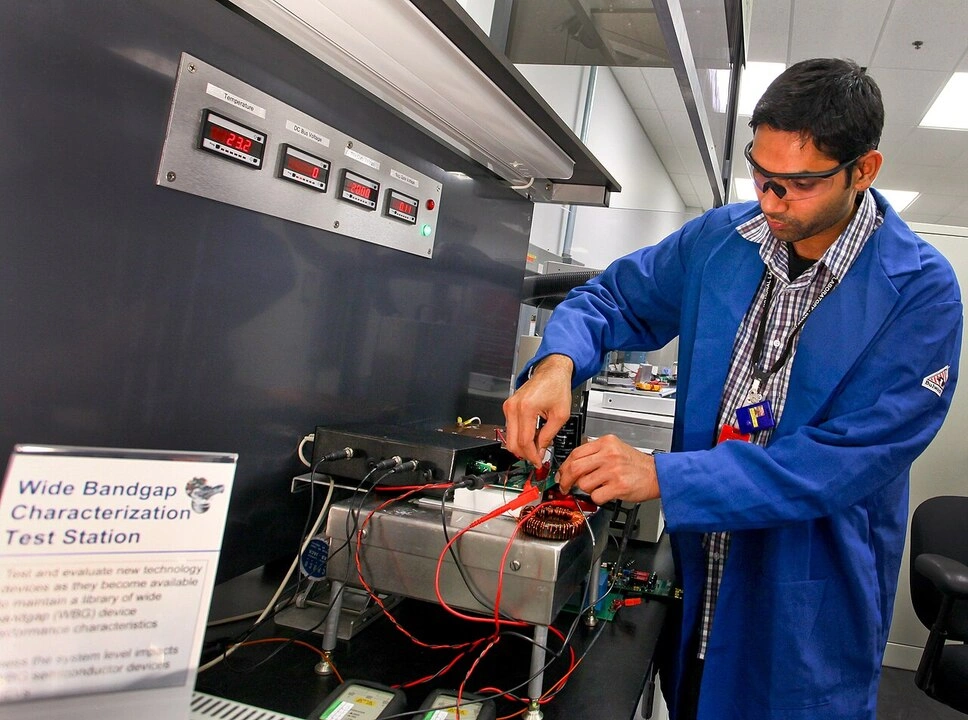
Single-board computers (SBCs) and other small form factor computers have democratized access to computing for scientific researchers and educators. The Raspberry Pi in particular is a popular platform for sensors and field devices. The SBC is used in everything from wildlife monitoring to earthquake detection. There are even projects involving large clusters of Raspberry Pi boards.
However, there comes a point where it becomes more sensible to cluster a few desktop-grade nodes or even one computer over using numerous SBCs. There are also many large systems that could use more performance or connectivity than SBCs can provide, such as machines that process local data, aggregate edge data, or control instruments.
Remote management is another significant gap in the scientific arena. Many researchers work in remote locations or have devices installed across wide distances. They may also collaborate with the general populace, who can alert researchers of system failures but cannot be expected to assist with maintenance. Enterprise servers easily provide performance and management capabilities, but they fail in every other criteria: cost, complexity, size, and energy consumption.
OpenSFF is developing open-source specifications for modular small form factor computers. Our standard prioritizes vendor-neutrality, modularity, and serviceability. Vendors, researchers, and open-source enthusiasts can use our standard to create scientific devices that balance cost with capability.
Why the scientific community builds its own devices
Science professionals, students, and the communities they work with have limited funds. They gravitate toward open-source solutions to create alternatives that are significantly cheaper than commercial options. Equally important, collaboration and community support are at the heart of open-source. Tapping into the work or experiences of their peers can help science professionals save more resources by reducing their reliance on vendor support or third-party service providers. It is no surprise that numerous open-source efforts on scientific devices centers on the Raspberry Pi.
The Pioreactor uses the Raspberry Pi as the foundation for a bioreactor—a device where microorganisms can be grown and observed in a controlled environment. The most affordable Pioreactor kit costs $329, while its creators claim that commercial alternatives can cost tens of thousands of dollars.
OpenFlexure is an open-source standard for easily reproducible laboratory-grade microscopes that can be powered by any Raspberry Pi. Its implementations and spinoffs are being used in over 50 countries. Several small businesses in the US, UK, Europe, and Africa use the standard to offer locally-made microscopes. Speaking with Global Innovation Gathering, OpenFlexure member Julian Stirling says their project’s open nature enables “others to build, adapt, and improve scientific tools.”
The Raspberry Pi’s affordability has also motivated a number of scientists and educators to create clusters of the SBC. In 2024, Elizabeth Shoop, Suzanne J. Matthews, Richard Brown, and Joel C. Adams published the results of a six-year study about using Raspberry Pi boards and clusters to enhance how computer science students learn about parallel and distributed computing (PDC). The researchers developed interactive learning modules as well as a software tool to create “self-organizing clusters” of Raspberry Pi boards.
Shoop et al noted that many academic institutions cannot afford to maintain multi-core clusters due to the cost of the hardware and the technicians that can build, maintain, and update the system. They also believe that it would be better for students to have hands-on experience with affordable hardware rather than learn about PDC through cloud providers. Renting cloud instances is initially cheaper than acquiring hardware, but students may accidentally exhaust their school’s limits or incur additional fees. The researchers also believe that interacting with hardware helps make students engaged and interested.
While their study had favorable results, Shoop et al did note that setting up and tearing down their DIY clusters took so much time that they found it better to conduct one long session instead of multiple short classes.
When it comes to using x86 hardware for scientific purposes, we recommend reading this enlightening report from members of the Uganda Virus Research Institute (UVRI). Published in April 2026, the report details how the institute set up and maintains its high performance computing (HPC) infrastructure in a budget-constrained context.
Similar to Shoop et al, the UVRI team did not want to rely on cloud computing despite the potential savings. They had an unreliable internet connection, limited access to local technical support, and research requirements that were difficult to implement with cloud providers.
The only reason UVRI was able to set up an HPC infrastructure was through donated hardware. The institute knew that it had to carefully plan for the infrastructure’s longevity. The UVRI members who published the report defined 10 rules for building and sustaining their infrastructure. The rules include scaling gradually by building a modular architecture. They also aim to maintain flexibility so that they would not have to overhaul their design to add or replace components.
There are only so many ways to work around the constraints of existing hardware options. Enterprise server components such as hard drives and power supplies are often vendor-locked. Even non-electronic accessories such as rail kits typically work only with one vendor’s product line. Meanwhile, Mini PCs and desktop workstations have varying dimensions and ports, complicating cluster assembly, maintenance, and scaling.
In addition, while it is easy to recognize the cost of proprietary hardware, even Raspberry Pi boards can run into supply chain or pricing challenges. In their study, Shoop et al point out that their clustering tool is compatible only with Raspberry Pi boards. They acknowledge that this can be a constraint should the SBC become hard to acquire, as it did during the COVID-19 pandemic. More recently, the global chip shortage has led to significant price increases for Raspberry Pi products.
Finally, there is one significant capability that is missing from affordable small form factor systems: node management.
Why scientific devices need remote management
Researchers often have devices and systems installed in multiple sites or remote locations. Shoop et al conducted their SBC cluster study in four schools located in three American states. Researcher Fernando Castro and his team deployed OpenFlexure microscopes in several farms in Argentina. Liam S. Taylor, Duncan J. Quincey, and Mark W. Smith tested a proof-of-concept Raspberry Pi imaging device by monitoring changes in a glacier in Iceland. For these deployments, rebooting a machine can go from a 30-second console session to a day’s journey.
Even when their deployments can have reliable internet connections, there is no affordable and standardized way for science professionals to remotely manage their systems. As we discussed in several other articles, management tools are vendor-locked, either from server vendors or through select CPUs from Intel and AMD. Even when we consider prebuilt x86 computers, it is hard to determine if a model supports those chipmakers’ management suites. Turing Pi makes Raspberry Pi cluster boards that have an integrated Baseboard Management Controller, but it is not a standard solution and still leaves users reliant on a single vendor.
OpenSFF can help science professionals access this essential piece of IT infrastructure in an open, modular, and serviceable hardware platform.
How OpenSFF can help scientists and researchers
Vendor-neutral and modular components
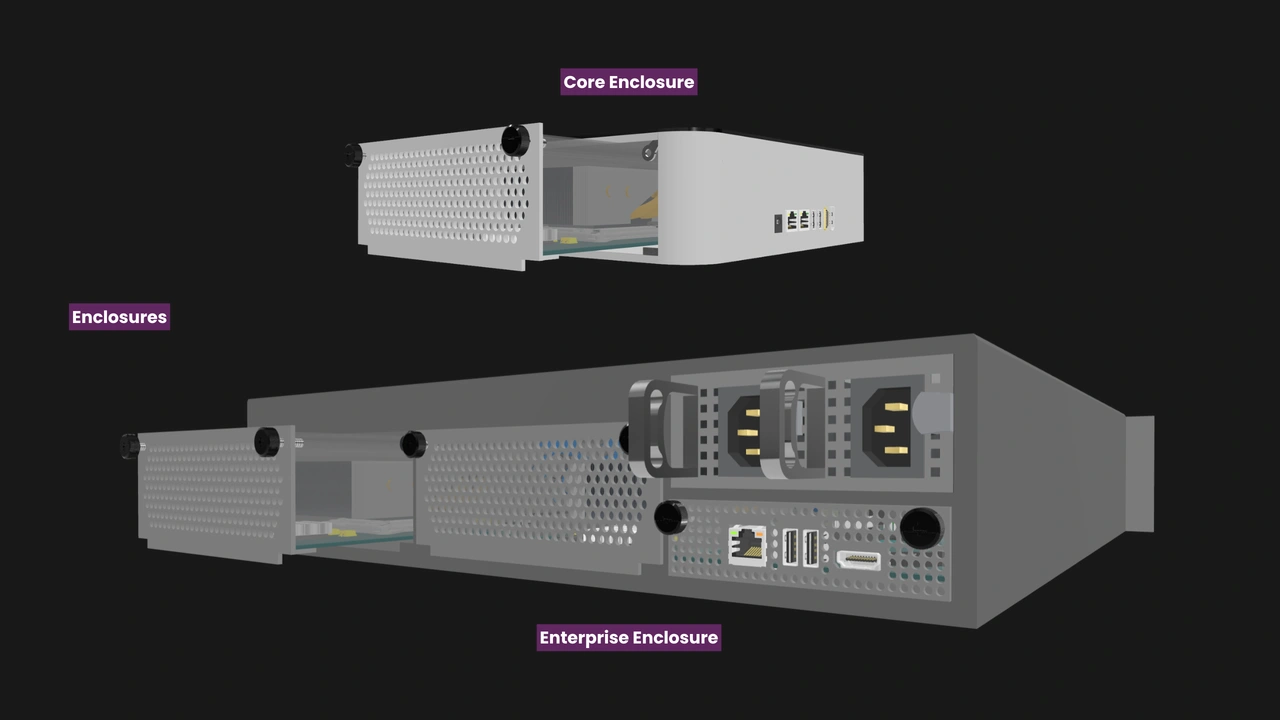
Our open standard adopts the general architecture of blade servers. We define three components that can be combined to create a wide range of small form factor computers. The Compute Node Specification defines a self-contained processing unit about the size of a mid-range graphics card. The Management Module Specification defines an optional management device that provides local KVM access and power control as baseline capabilities. The Enclosure Specification defines a housing that also provides power, active cooling, and optionally, networking. The Enclosure has no defined form factor or layout, and can be designed to host one or multiple Compute Nodes. It can be a rack-mountable server, a lab instrument, or a rugged edge device.
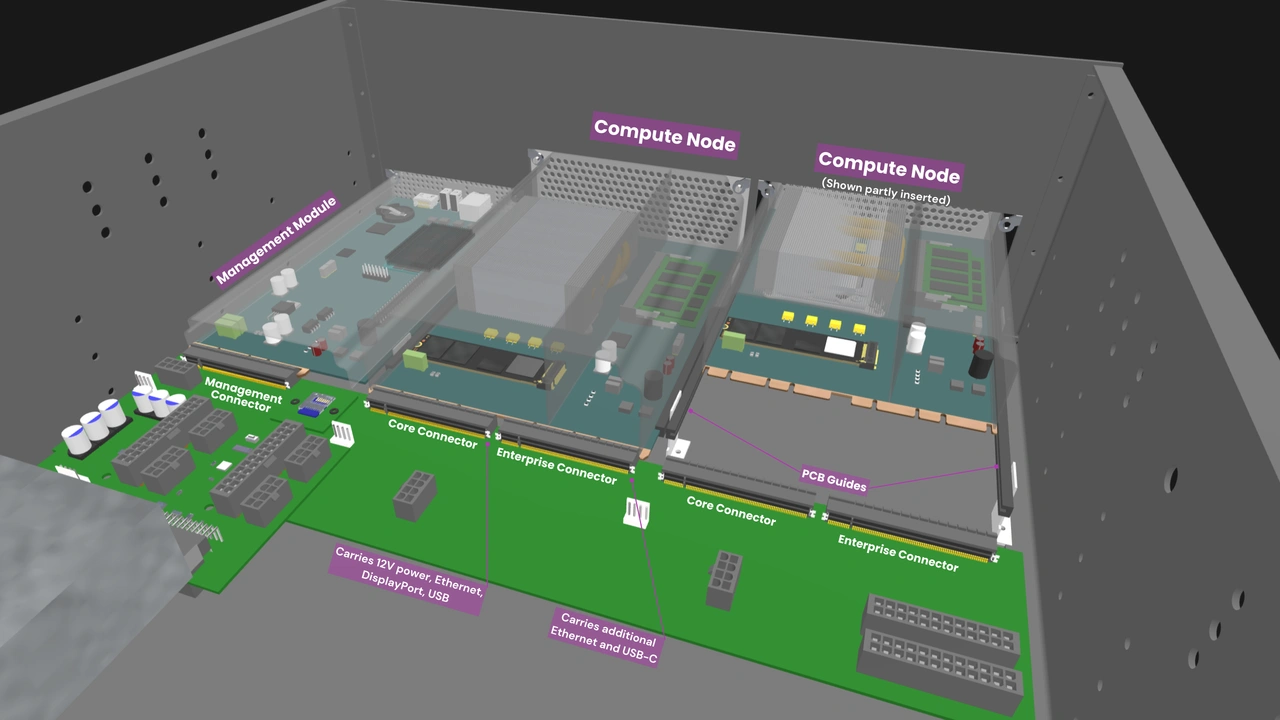
Similar to the ATX form factor, our standard enforces vendor-neutrality at the component level. Any Compute Node or Management Module will work with any compatible Enclosure, regardless of their vendors. For instance, there can be vendors who specialize in Enclosures for scientific instruments or weatherproof field devices. Vendors who create Compute Nodes or Management Modules do not have to account for all possible use cases of an OpenSFF-compatible system, yet their products will still work with scientific Enclosures.
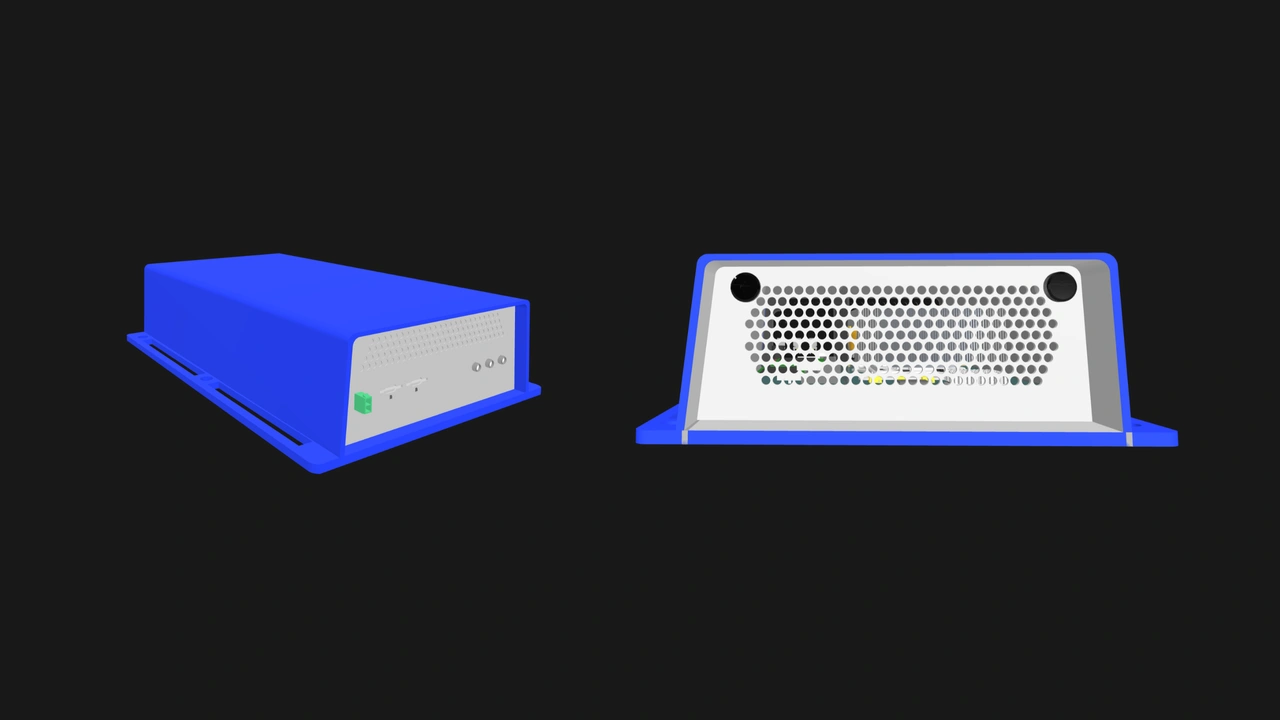
We believe that our standard’s versatility and self-reinforcing potential will incentivize numerous vendors to create OpenSFF-compatible components. This should foster healthy competition and allow users to choose components according to their budget. Our modular approach makes it easy to gradually scale or upgrade hardware, giving science professionals more flexibility when purchasing components or accepting donations. Researchers can also create custom Enclosures that work with OpenSFF-compatible components, without needing to redesign the compute or management infrastructure.
Standardized and affordable remote management
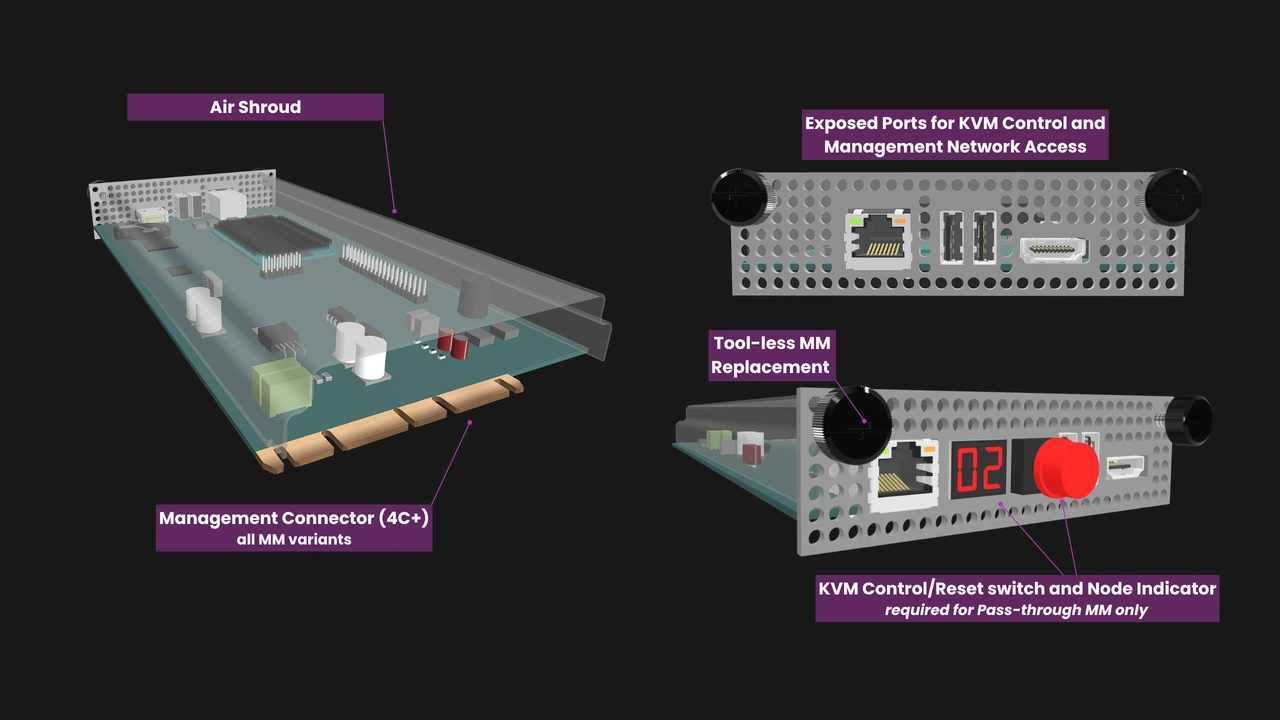
We would like to emphasize that our efforts to establish vendor-neutrality and standardization in small form factor computers extend to node management. Aside from our hardware specifications, we are also developing a default software for Management Module implementations that have their own CPUs, allowing them to support IP-KVM as well as remote node telemetry and power management.

Even Enclosures that have only a single Compute Node slot can be designed to support the Management Module. When our standard becomes widely adopted, perhaps projects where even an SBC would suffice may be more convenient as an OpenSFF implementation because of the Management Module. For instance, Taylor et al. noted that their glacier-monitoring camera could last for months as long as they turned it off when it was not in use. An OpenSFF equivalent of that device with a capable Management Module would allow the team to control the device’s power remotely, as well as monitor its health. Management signals do not require a high bandwidth connection and can easily be sent through a cellular modem, perhaps from a nearby base station.
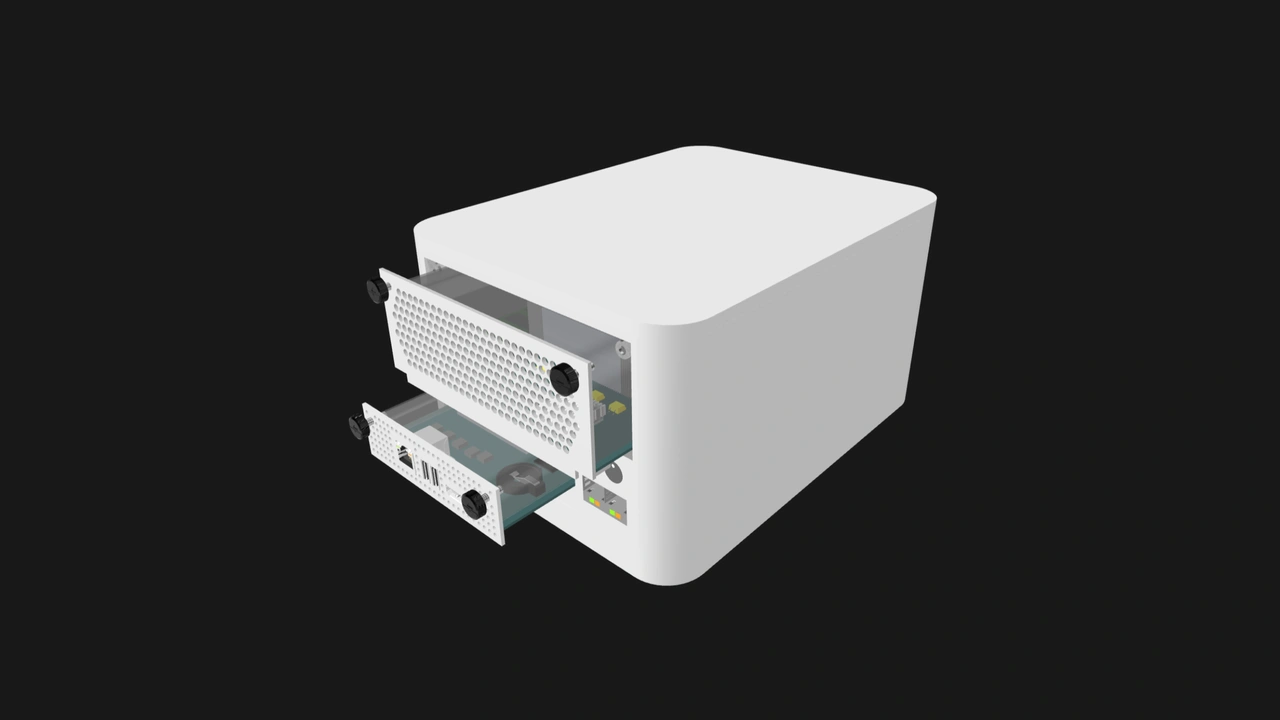
The Management Module can manage nodes regardless of the latter’s vendor, operating system, or CPU architecture. Aside from using x86 CPUs, it is technically possible for a Compute Node to have a board that connects with an SBC or hosts modules based on ARM or RISC-V processors. Some of those node implementations may not qualify for our upcoming certification program, but we look forward to seeing how science professionals modify our standard.
Streamlined and serviceable systems
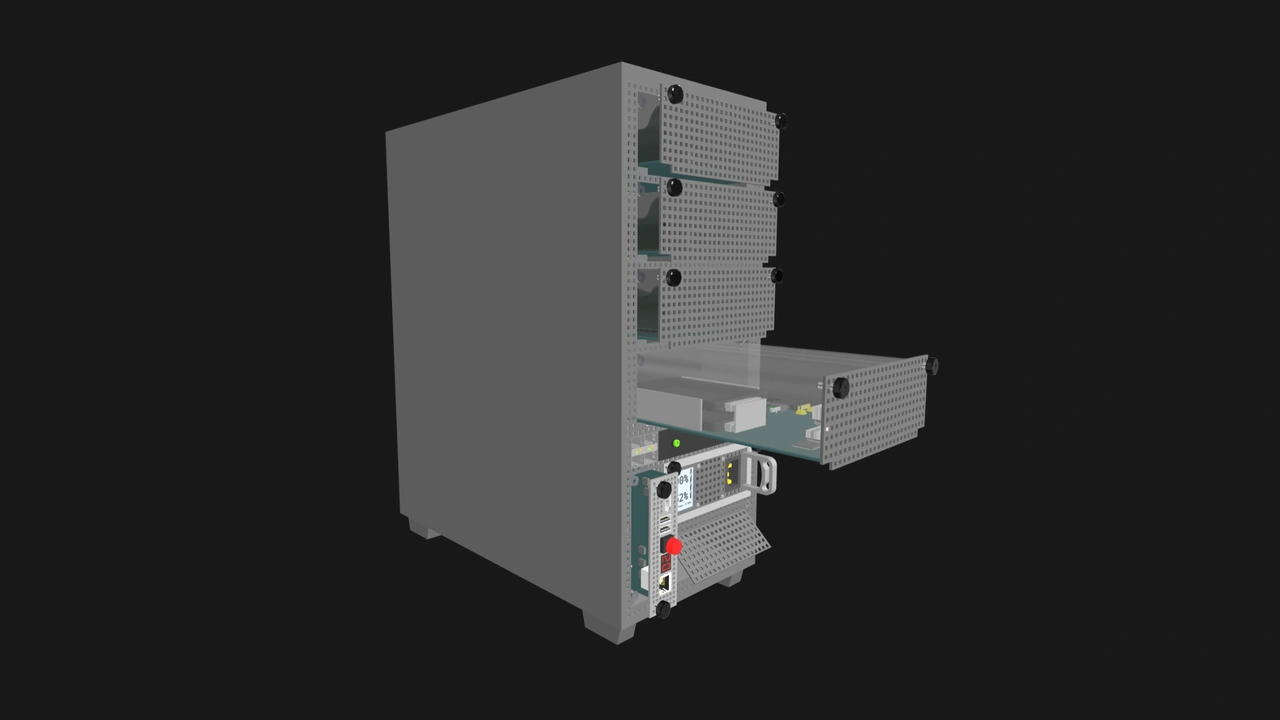
Even with the emergence of 10” mini racks and 3D printable housings, physically clustering SBCs or small form factor computers is still time consuming, as evidenced by Shoop et al. 's experience. OpenSFF addresses this issue in several ways. We use blind-mate card-edge connectors to interface Compute Nodes and Management Modules to an Enclosure’s backplane. Power, I/O, and management signals are all routed through a module’s connector or connectors, drastically reducing internal cabling.
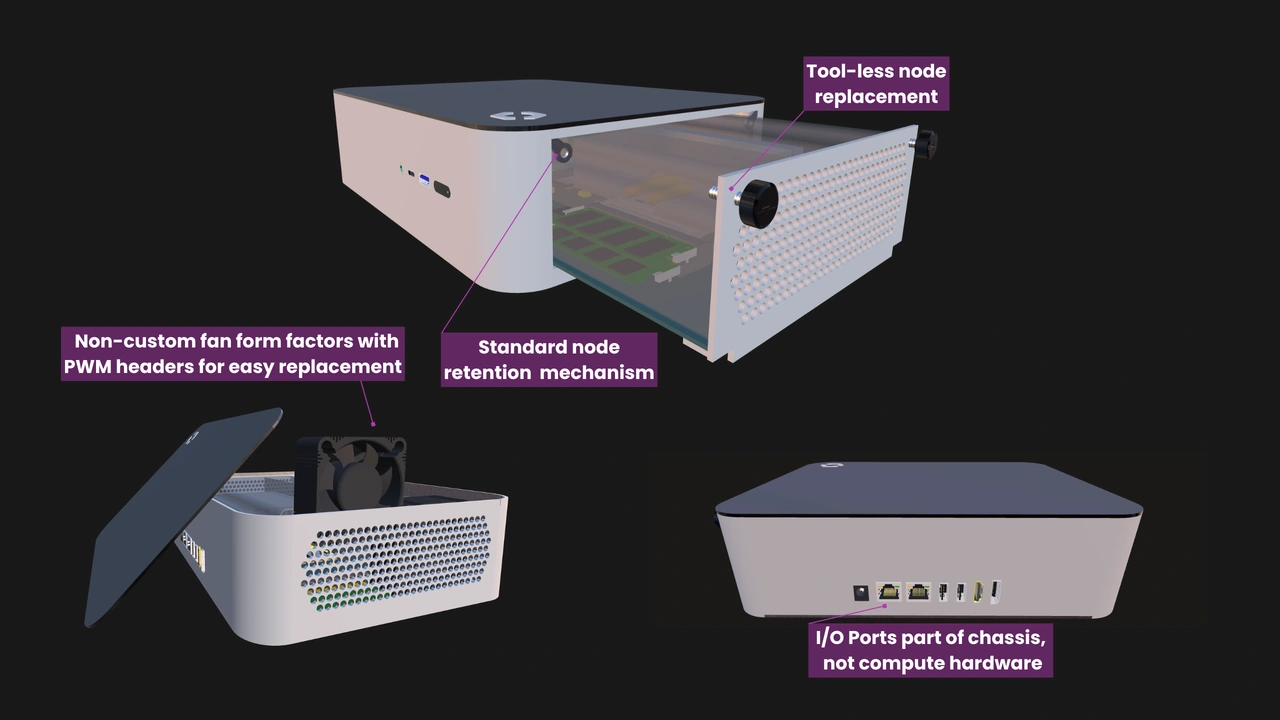
Both module types are secured using only a pair of captive thumbscrews, so there is no need to use tools to install or remove modules. Finally, the Enclosure Specification has provisions for two internal Ethernet fabrics: one for general workload traffic and inter-node communication, and one that is dedicated to management signals. These internal networks can eliminate the need for external network switches and the numerous cables required to connect those discrete devices to nodes. Even students or laypeople can learn how to set up and tear down an OpenSFF-compatible system.
Build with OpenSFF
The scientific community’s adoption of the Raspberry Pi signifies its strong demand for affordable and accessible small form factor hardware. While the SBC is highly suited for low-cost, compact, or battery-powered devices, OpenSFF can serve as a vendor-neutral, modular, and streamlined platform for scientific deployments that require more performance, better connectivity, or remote management.
The Management Module alone represents a great opportunity for vendors and open-source hardware contributors. Its implementations and spinoffs can provide researchers and scientific institutions with a standardized and affordable solution to node management.
We encourage you to read our specifications, and we would be grateful if you spread the word about OpenSFF. For technical clarifications, partnerships, and other inquiries, reach out to our development team at [email protected].
Other Articles

Meet OpenSFF: an open hardware standard that enables cross-vendor compatibility, modular systems, and sustainable hardware reuse.
August 11, 2025
We go over the rise of virtualization and the open software adopted by home server enthusiasts, as well as the current challenges and the future of the hobby.
September 06, 2025

Learn why OpenSFF adopted the SFF-TA-1002 connector standard and how it enables our vision.
September 18, 2025