Blog
Side Quest: Exploring OpenSFF as a retro PC platform
Introduction
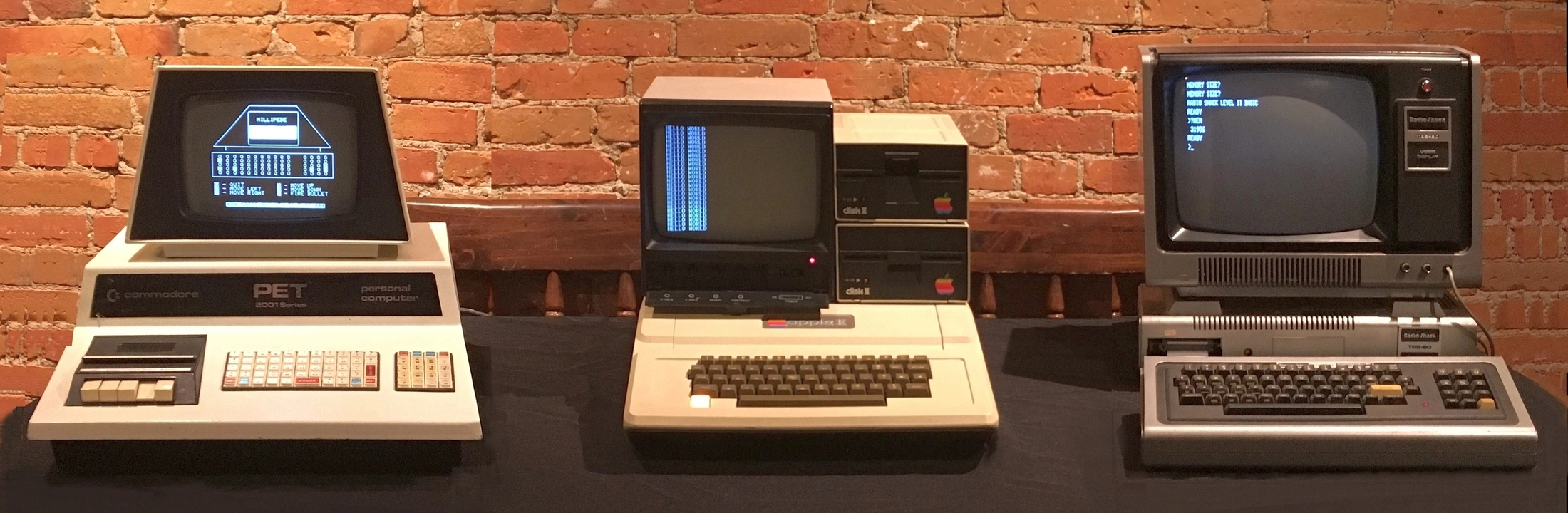
Millions of Gen Xers remember their first computer not as a product, but as an event. That’s because they got to use the first mass market computers. These machines were an entire generation’s introduction to programs, message boards, and computing in general.
So it’s no surprise that many enthusiasts wish to have modern replicas of these computers, or at least wrap modern hardware in chunky beige shells. The problem is that such projects are genuinely hard. Designing a retro PC often devolves into one of two bad options: an expensive or irreparable custom machine, or a compromised product made of off-the-shelf components ill-suited to the task.
While we created OpenSFF to be a blueprint for modern multi-node computers, we can’t help but wonder what retro PC enthusiasts can do with our open standard. An Enclosure can take on any form factor, while Compute Nodes are architecture-agnostic. And the separation of those two components has interesting implications for those who want to combine yesterday’s aesthetics with today’s performance and upgradeability. Let’s take a look at some of the machines that got us thinking and our exploratory concepts for their OpenSFF equivalent.
The Commodore PET (1977-1979)
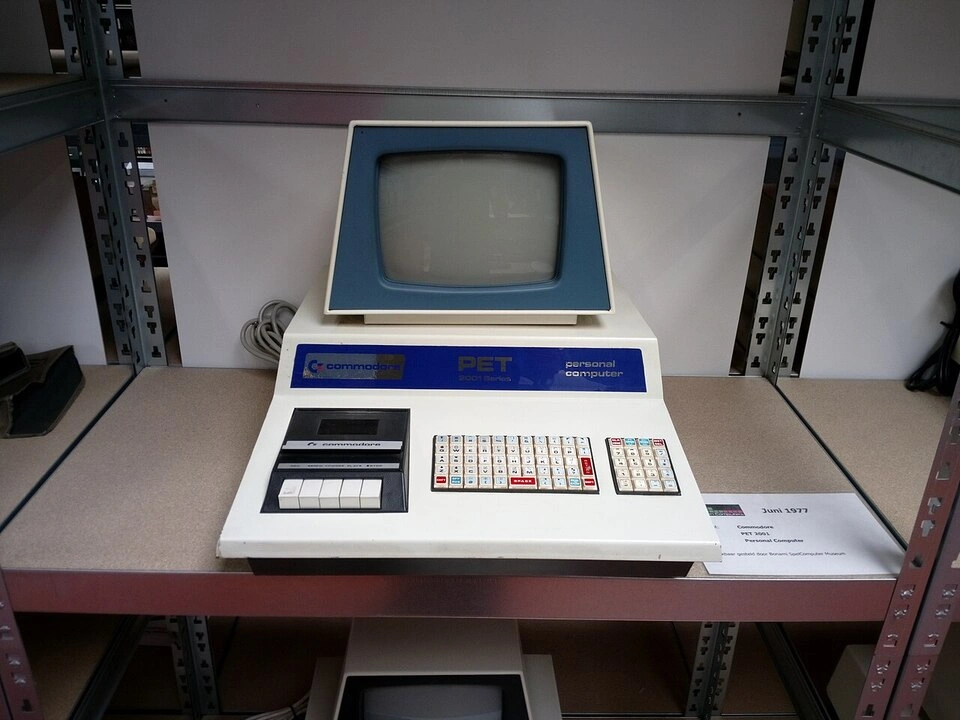
- 1MHz MOS 6502 CPU
- 4 or 8KB RAM
- 18KB ROM
- Built-in cassette tape drive
- 9” monochrome monitor
- Commodore BASIC OS
- Launch price: $795+
The PET was the first to be announced among the 1977 Trinity of home computers, which also included the Apple II and the TRS-80. Its plug-and-play design, durable chassis, and affordable price instantly appealed to the public. The PET series eventually reached hundreds of thousands of homes, classrooms, and offices.
The PET and its CPU were conceived by visionary chip designer Chuck Peddle. He was able to convince Commodore to pivot from making calculators to computers. Peddle also presented a prototype of the PET to Radio Shack, but the retailer’s representatives were not impressed and refused to carry it in its stores. But the computer was such a hit that Commodore actually ended up having the opposite problem: it couldn’t manufacture units fast enough to capitalize on the demand.
Like the rest of the legends on our list, we could easily get lost in Commodore PET lore. The MOS 6502 alone is worthy of a documentary. But we must move on. Ultimately, the PET is remembered as a welcoming, well-priced machine.
OpenSFF PET
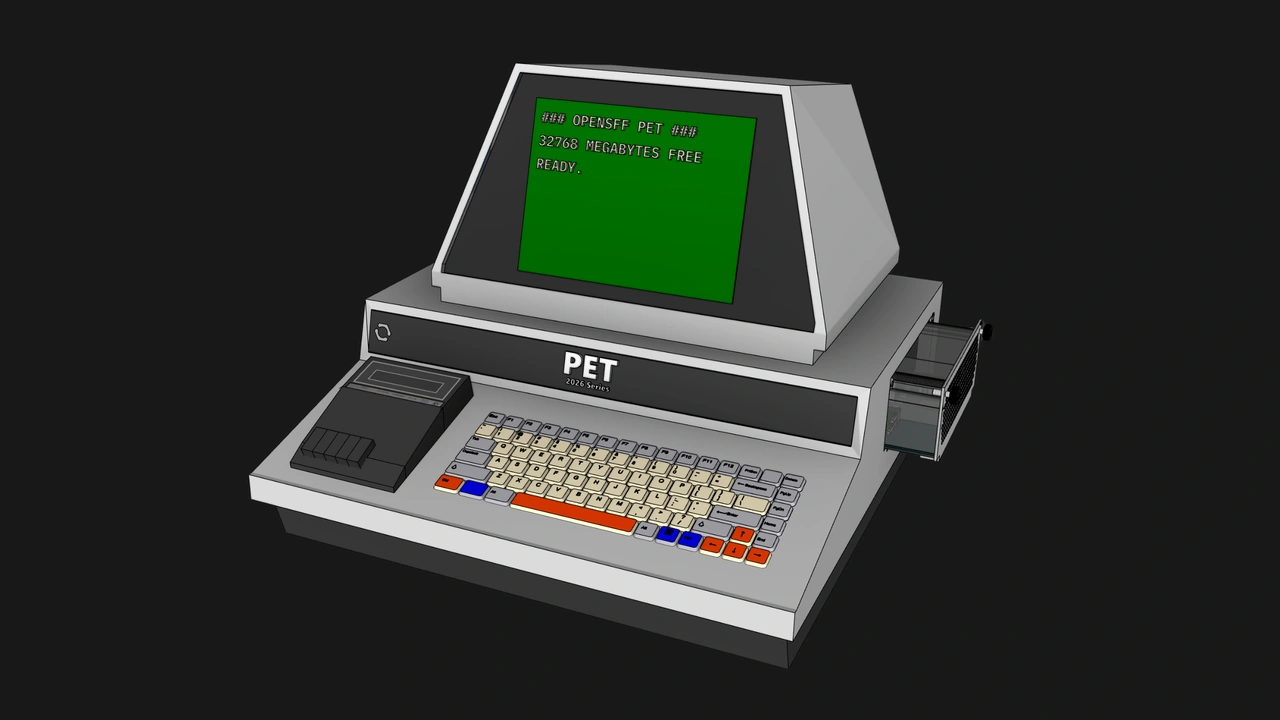
Our idea for a PET remake focuses on recreating the system’s distinctive interaction model within a modern, self-contained design. Its Enclosure has a 9-inch LCD panel driven over DisplayPort, replacing the original CRT monitor. A custom keyboard built on low-profile keycaps and switches recreates the PET 2001’s flat keys while providing a better typing experience.
But not everything was modernized for convenience. The system retains a cassette-style interaction model through a virtual Datasette, implemented using a Tapuino-style interface. Connected internally via one of the Compute Node’s USB signals, the device emulates the behavior of the original tape system, allowing the user to initiate a load by pressing play, just as they would have on the original hardware.
Alongside it, a standard USB audio interface provides modern I/O, enabling real audio recording and playback while opening the door to more experimental uses of cassettes. Together, these elements form a system that captures the interaction model of the original PET while remaining practical and modular for modern use.
The Apple II (1977-1993)
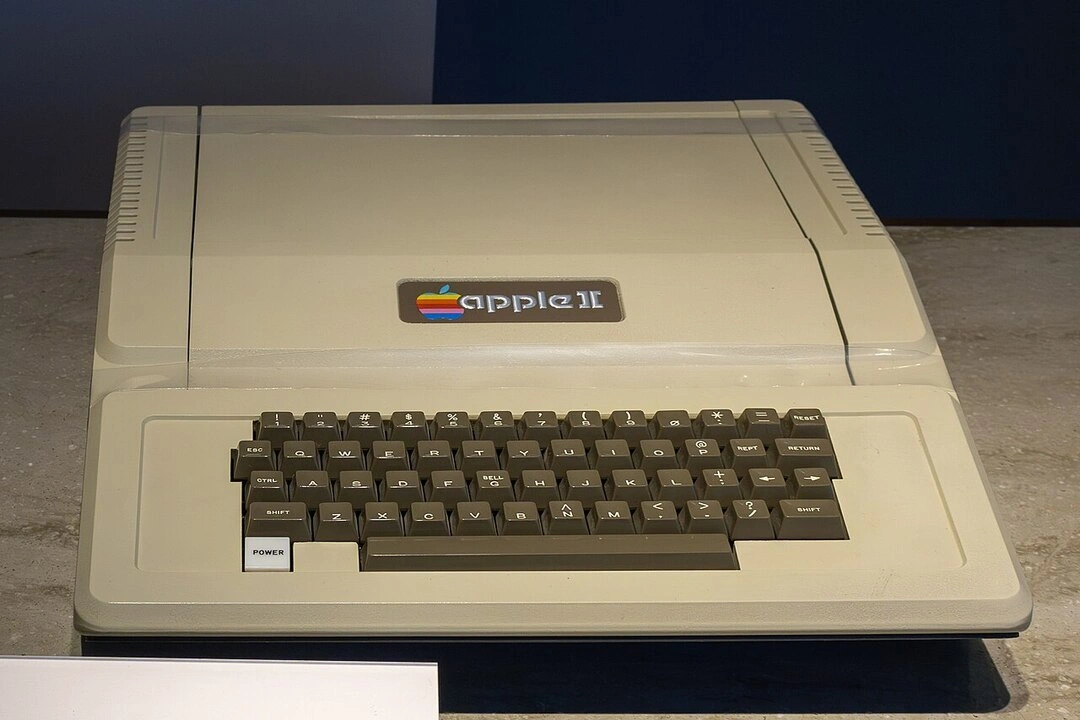
- 1MHz MOS 6502 CPU
- 12KB ROM
- 4 to 48KB RAM
- Cassette tape and 5.25” floppy drive interfaces
- Integer BASIC OS
- Launch price: $1,298+
Designed by Apple co-founder Steve Wozniak, the Apple II could be purchased as a fully assembled computer, whereas its predecessor was available only as a system board. Wozniak embedded Integer BASIC and a disassembler directly in its ROM, making the machine ready for programming out of the box. It was also the first Apple product to bear the rainbow-colored logo.

The Apple tax was already in full force in 1977, but the Apple II’s open architecture puts today’s Macs to shame. Its eight expansion slots—easily accessible via a toolless lid—allowed it to work with a wide range of peripherals, from storage drives to accelerators that allowed the computer to work at significantly faster clock rates.
Apple II’s killer app arrived a couple of years after its release. VisiCalc, the world’s first spreadsheet application, launched exclusively on the home computer. Apple made a machine that’s friendly to programmers, tinkerers, and business users alike, and customers rewarded them for it. The Apple II series ended up staying in production for 16 years.
OpenSFF Apple Two
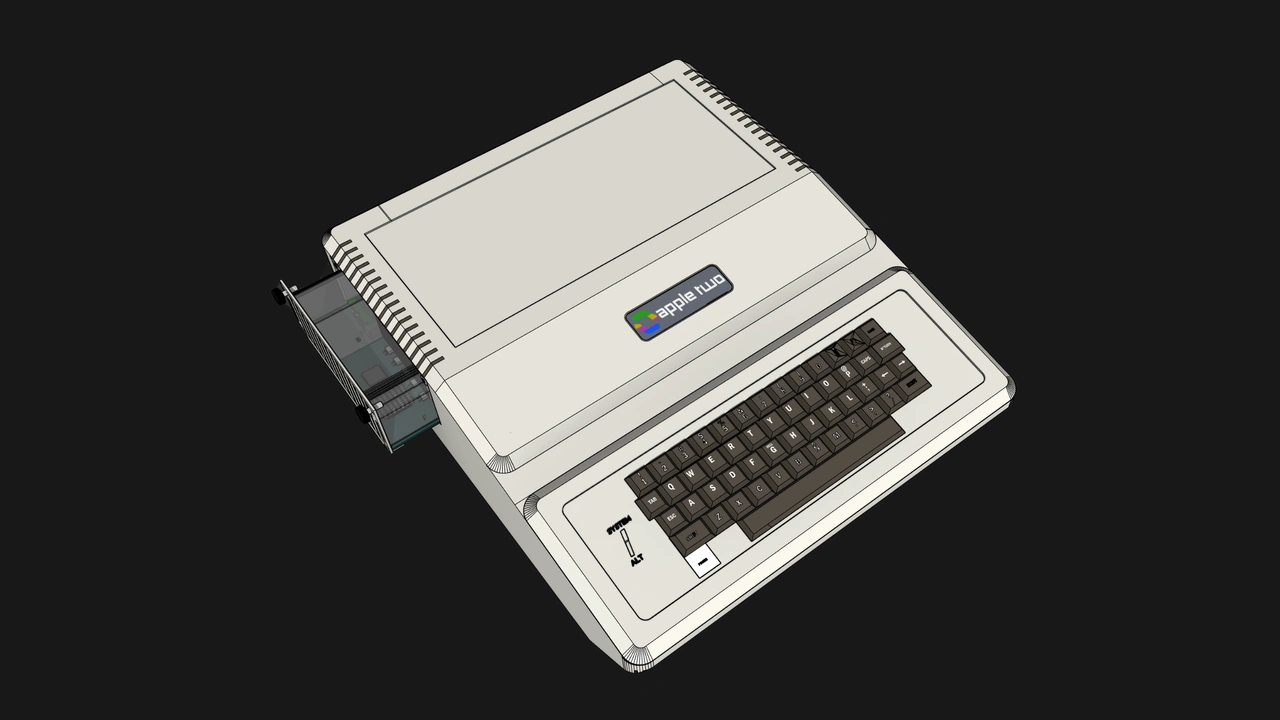
Our concept for an Apple II remake reinterprets the system's defining characteristic: expansion. At its core is an Enterprise Compute Node, which enables additional networking and high-speed USB-C connectivity. This connects to a backplane with a single PCIe slot for high-speed expansion, complemented by rear USB ports for peripherals such as wireless modules, external storage, and other devices.
A physical mode switch on the left of the keyboard allows the system to boot directly into an alternate minimal environment provided through removable storage, or into the primary operating system installed on the node. This behavior is inspired by the original Apple II, where the system was ready for interaction as soon as it was powered on.
The result is a system that balances expansion with flexibility, allowing it to be extended through hardware or used immediately depending on how it is configured at startup.
Tandy TRS-80 (1977-1981)
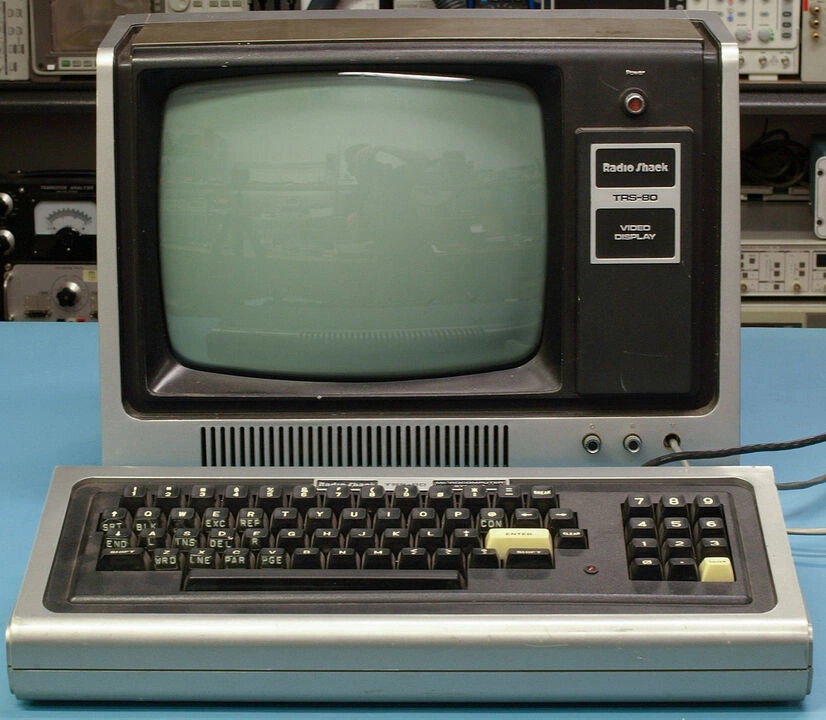
- 1.77MHz Zilog Z-80 CPU
- 4 to 48KB RAM
- Cassette tape drive
- 12” monochrome monitor
- TRSDOS
- Launch price: $599 (system, monitor, and tape drive bundle)
If the Commodore PET was a Samsung Galaxy phone, and the Apple II was an iPhone, then the TRS-80 would be the Poco phone of the 1977 Trinity. It was even mockingly nicknamed the “Trash-80”. But it had an ace up its sleeve: distribution. Tandy Corporation, the company behind the TRS-80, also owned Radio Shack, which at the time had over 3,000 stores across the US. Paired with its price tag, the TRS-80 sold like hotcakes. By 1978, it accounted for half of total home computer sales, and by 1979, it was widely believed to have the largest software library in its category.
OpenSFF TRS-80
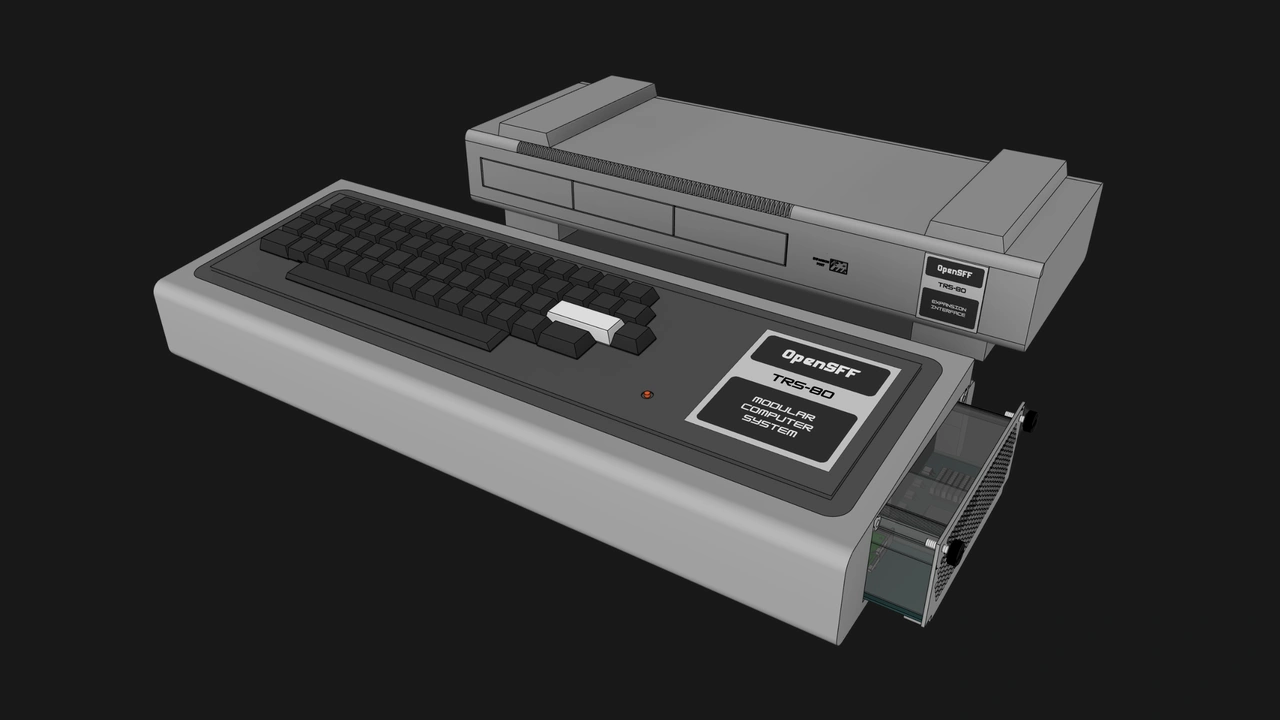
Our TRS-80 retro PC concept treats the system as a set of connected parts rather than a single piece of hardware. The base unit combines a keyboard, display, and a single Compute Node, forming a self-contained machine with just enough I/O to operate on its own.
Additional capability is introduced through an external expansion module, linked via a Mini-SAS HD (SFF-8644) cable that carries PCIe, USB-C, and Ethernet signals. This link functions as a true system extension, allowing the expansion module to host multiple hard drives for network-attached storage, while also exposing additional USB-C and 2.5GbE connectivity when the main unit is paired with an Enterprise Compute Node.
On its own, the system is simple and usable. Once connected to the expansion module, it becomes a more capable system thanks to shared storage and expanded I/O. This reflects the TRS-80’s original idea: a system shaped by the hardware attached to it.
IBM PC 5150 (1981-1987)
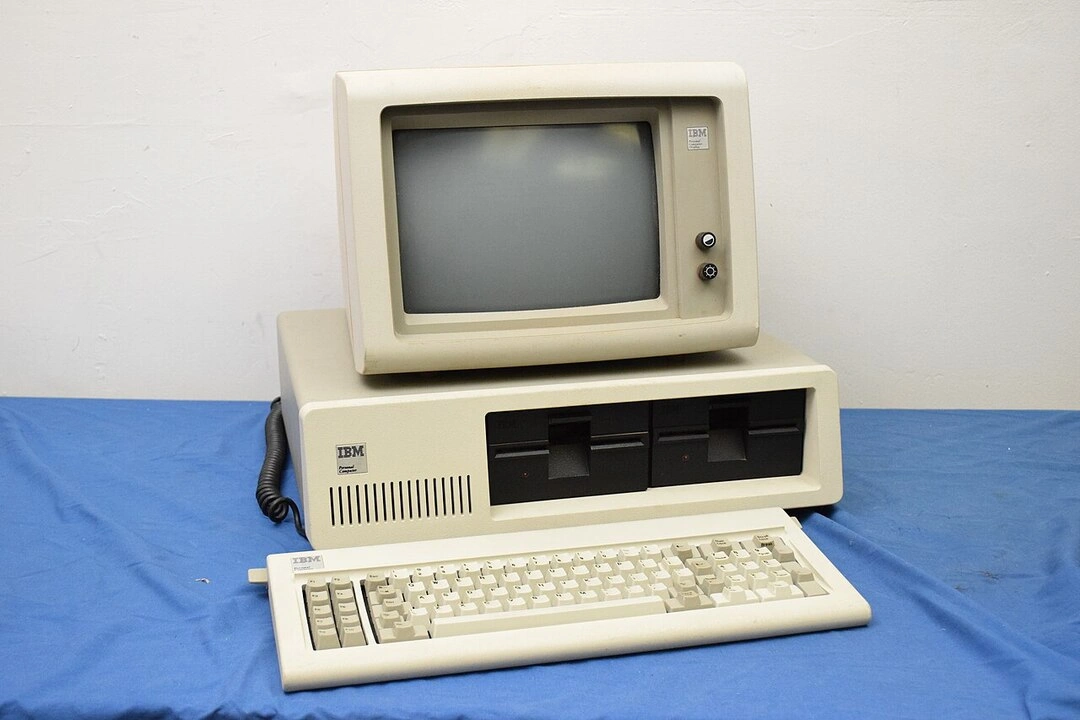
- 4.77MHz Intel 8088 CPU
- 16 to 256KB RAM
- Dual 5.25” floppy disk drives
- 12” monochrome monitor
- MS-DOS
- Launch price: $1,565
While it wasn’t the first home computer, the IBM PC 5150 is arguably the most consequential. Faced with a tight deadline, creator William Lowe and his team had no time to design and source a system from scratch. They adopted many components from the company’s previous microcomputer, the System/23 Datamaster, and licensed Microsoft’s emergent operating system.
But perhaps the 5150 team’s greatest stroke of genius in the face of their constraint was publishing technical documentation—circuit designs and source codes—for their unreleased product. This made it much easier for third-party software and peripheral makers to quickly establish an ecosystem around the 5150, a template that the consumer technology industry largely follows to this day.
IBM went from concept to manufacturing the 5150 in just one year, and they gambled in the face of fierce competition in a rapidly evolving industry. In return, “IBM PC compatible” became the dominant paradigm in personal computing for decades. The 5150’s legacy is about the power of an open standard.
OpenSFF 5150
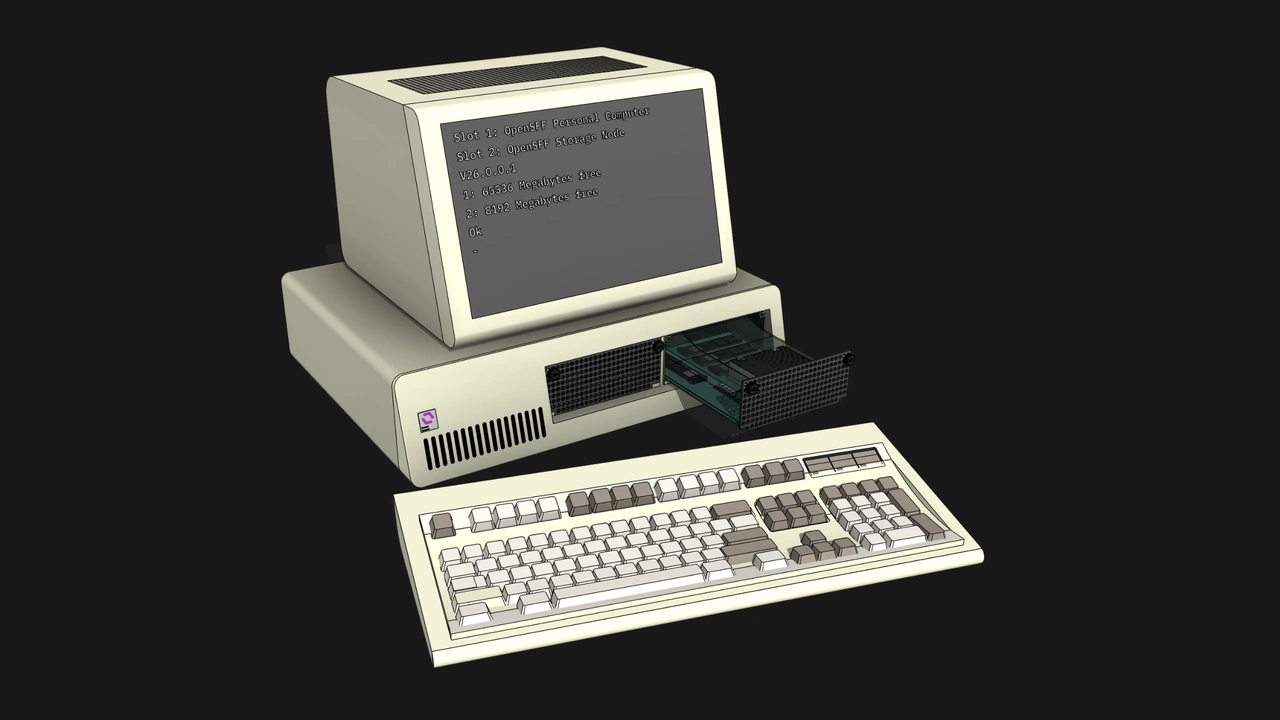
Our 5150 remake concept functions as a shared platform rather than a single-purpose machine. The Enclosure houses two Compute Nodes connected through a common backplane, allowing different functions to be composed within a consistent physical and electrical platform.
In its two-node configuration, the system separates roles between compute and storage. The primary node runs the main operating environment, while the secondary node functions as a dedicated storage system, with its NVMe drives configured in a high-speed, redundant pool. Through the Node Network integrated into the backplane, the storage node can be used for backup, data access, or other shared services.
A rear-mounted pass-through Management Module provides direct access to each node through its KVM, defaulting display and input to the primary Compute Node. When needed, control can be handed to the secondary storage node with a simple switch on the Management Module itself. Paired with a modern buckling spring keyboard such as the Unicomp Model M, this homage retains the iconic tactile feel of the original.
The result is a system that reflects the 5150’s original idea: a standardized foundation that gains capability through compatible, interchangeable parts.
Commodore SX 64 (1983-1986)
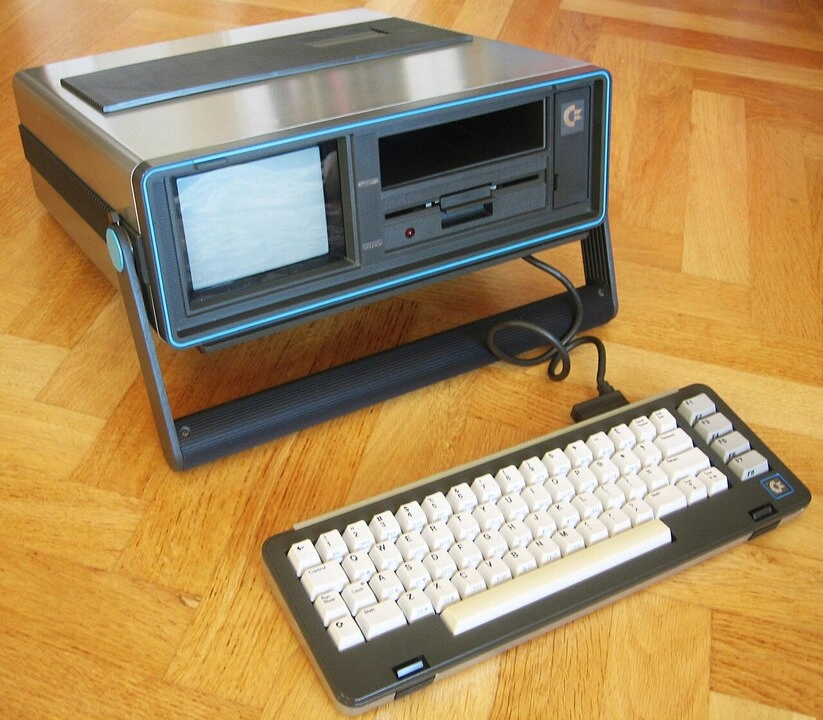
- ~1MHz MOS 6510 CPU
- 64KB RAM
- 20KB ROM
- 5.25” floppy disk drive
- 5” color CRT display
- BASIC 2.0 OS
- Launch price: $995
This list wouldn’t be complete if we didn’t mention the world’s best-selling desktop computer, the Commodore 64. To make things interesting, let’s check out a C64 variant that’s not quite as successful or influential but is still genuinely interesting. It’s the SX-64, aka the Executive 64, one of the C64's portable versions. Unfortunately, “portable” by 1980’s standards meant a machine that weighs 23 lb.That's about as heavy as eight 13” MacBook Airs, or two 18” Alienware Area-51 laptops. Also, it didn’t have a battery and had to be plugged in.
While there may have been executives in the 80s who could tolerate the SX-64’s weight and power delivery, its software library was a dealbreaker. The SX-64 was incompatible with CP/M, the operating system that had a wealth of business apps at the time. Even then, by the time the SX-64 came out, MS-DOS was fast becoming the new standard operating system, and the computer couldn’t run that either. It's like if the 2027 MacBook Air turned out to be an Alienware desktop PC.
But if we consider it purely as a piece of hardware, the SX-64 is undoubtedly iconic. Its pioneering full-color display, detachable keyboard, briefcase design, and electric blue trim make it a cool piece of gear in our eyes.
OpenSFF Commodore SX-64
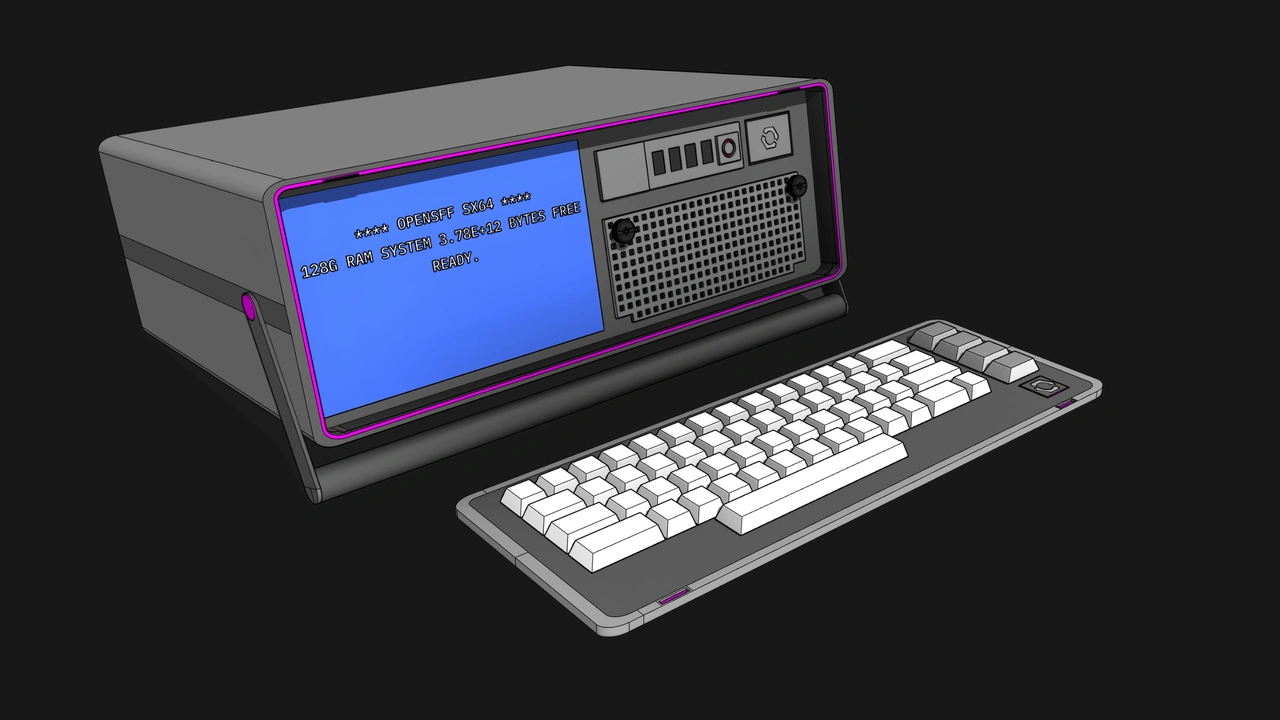
The OpenSFF SX-64 concept reimagines portability as a fully self-contained system. The Enclosure integrates a display, keyboard, and a Compute Node into a single transportable unit, designed to operate independently without external peripherals.
The front panel doubles as a detachable keyboard (wirelessly this time), which keeps true to the original system's aesthetics and interaction model. Alongside it, a front-accessible drive bay reintroduces removable storage to the system, allowing data transfer or expansion without opening the Enclosure. The front-mounted node provides primary system functionality and is easily swappable in the field, allowing the system to quickly adapt to different workloads without full disassembly.
A built-in battery and integrated wireless radios add more modern conveniences to our concept. The integrated display is also implemented as a touchscreen.
This system carries forward the SX-64's defining idea: a complete computer that can be carried and deployed anywhere, without sacrificing modularity. It's still no ultraportable, but it can easily pack a large battery.
Amiga 1000 (1985-1987)
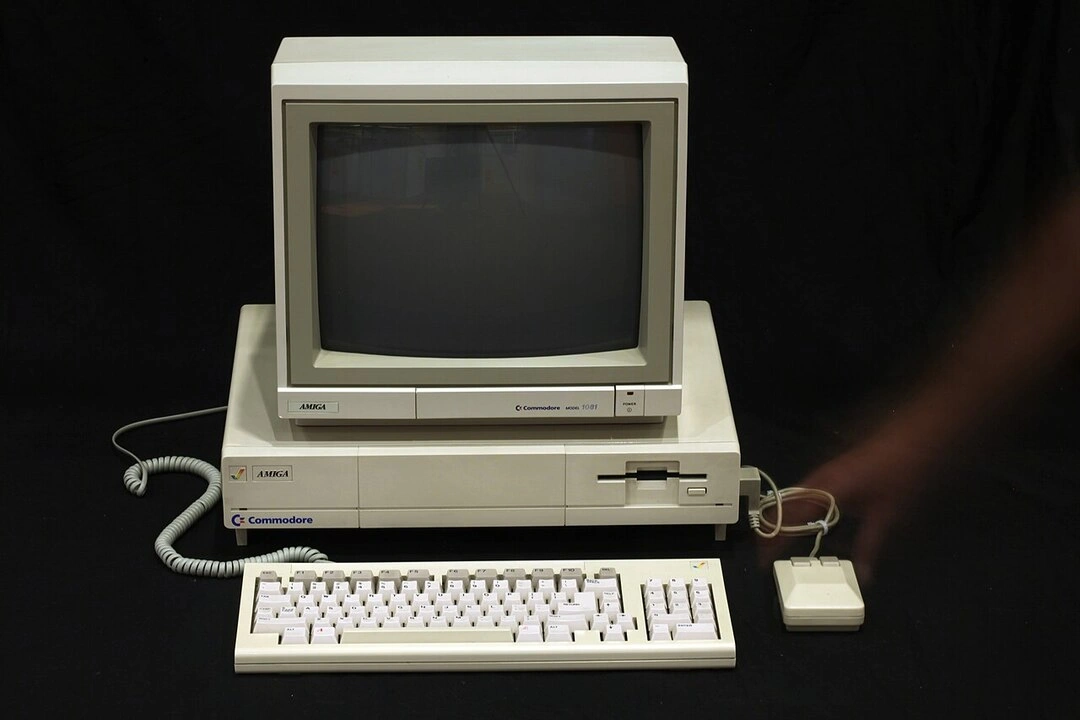
- 7.16MHz Motorola 68000 CPU
- 256KB RAM
- 192KB ROM
- 3.5” floppy disk drive
- 14” Commodore 1080 color CRT display
- AmigaOS
- Launch price: $1,295
By the time Commodore acquired Amiga, home computers had rapidly become a known quantity. No longer wanting to cater to early adopters, the company decided to market the A1000 as a mature and elegant machine—a stark departure from the friendly and playful appeal of the C64. It had a low and slim silhouette, and legs that freed up enough space at the bottom of the system to store its keyboard.
The A1000’s launch event was a black-tie affair that eclipses most present-day tech reveals. It culminated with Andy Warhol using the computer onstage to draw a portrait of punk icon Debbie Harry.
Yet some would argue that the A1000 wasn’t hyped enough. Because underneath its sleek exterior was a groundbreaking electronic orchestra: Amiga’s Original Chip Set (OCS). The OCS is a set of custom co-processing chips that handle memory access and I/O, leaving the CPU free to focus on number-crunching. The result is a machine that can display 4,096 colors, blast four-channel stereo audio, and multitask, a concept so new that Byte Magazine had to define it in its comprehensive preview.
At the end of its article, Byte Magazine concluded that the A1000’s unique architecture “points to a complexity of hardware design that we have not seen before in personal computers.” The A1000 wasn’t perfect, mainly due to software issues, but it’s widely acknowledged as the first multimedia computer, and an engineering marvel ahead of its time.
OpenSFF Amiga 1000
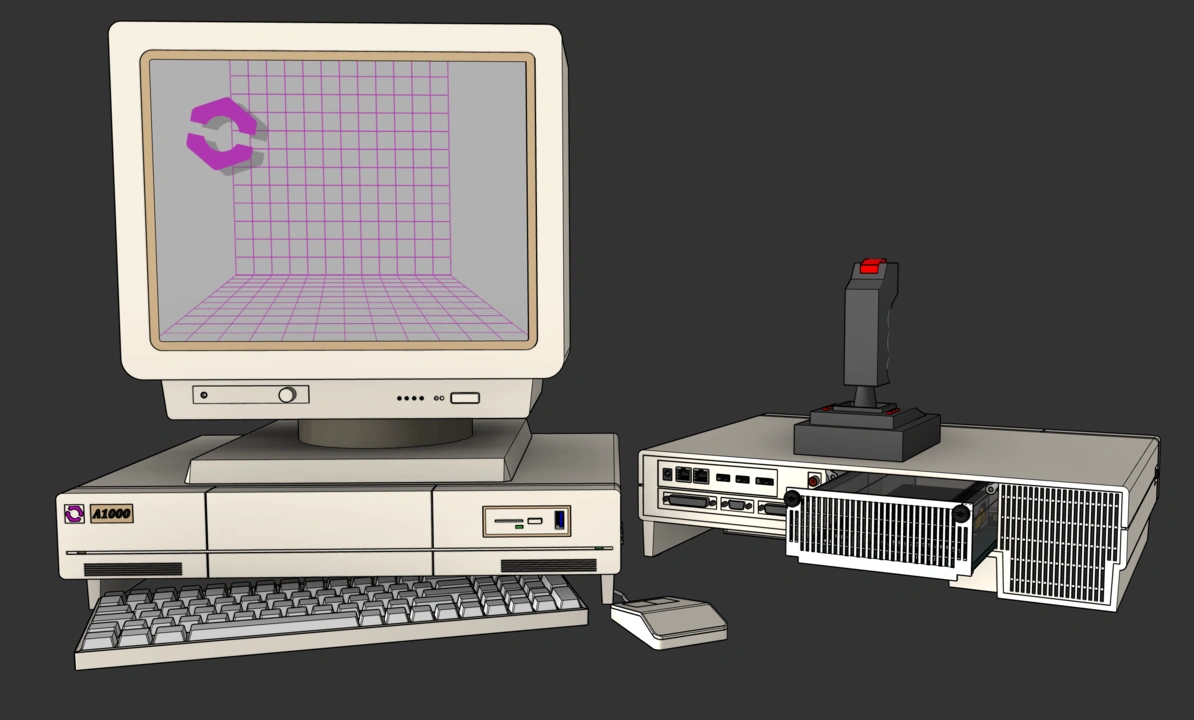
True to the A1000’s legacy, our concept for its remake focuses on multimedia interaction within a modern, modular system. It lends itself naturally to be a dedicated emulation system, running Amiga software on a standard OS while preserving the feel of the original hardware.
The Enclosure preserves one of the Amiga’s most distinctive physical features: a keyboard that slides neatly into a front garage, keeping the system footprint compact when not in use. Alongside it, a front-access SD card slot provides a simple way to load emulator ROMs, save data, and configuration files, allowing entire libraries to be swapped without modifying the operating system installed on the Compute Node.
Besides the keyboard and a mouse, other input devices are fundamental to the complete Amiga experience. Its joystick ports would support classic controllers such as the QuickShot joystick, with the DE-9 connectors internally mapped to USB. Built-in speakers are integrated into the Enclosure as a modern addition, reflecting the Amiga’s emphasis on sound while making the system usable on its own.
Display choice plays an important role in the overall cohesiveness of the setup. Period-inspired monitors such as the Checkmate IPS or this Commodore 1702-inspired beauty can be paired with it to bridge original aesthetics with modern LCD panels.
The result is a system that captures what made the Amiga unique: not just its capabilities, but the way users could see, hear, and interact with it.
Special mention: MiSTer FPGA
The last item on our list isn’t an old computer. Founded by Alexey “Sorgelig” Melnikov, MiSTer is a modern open-source hardware emulation project. It reconfigures the physical logic gates in the DE10-Nano, an FPGA development board, to make them work like the original circuits of old computers, gaming consoles, and arcade machines. The goal is to make compatible software and peripherals behave on the mass-produced board exactly as they would on original hardware.
The MiSTer community has achieved that goal on over 80 distinct systems, including most of the home computers on our list. There are also several MiSTer add-on board designs for the DE10-Nano, such as an analog I/O board that adds VGA output.
OpenSFF MiSTer FPGA
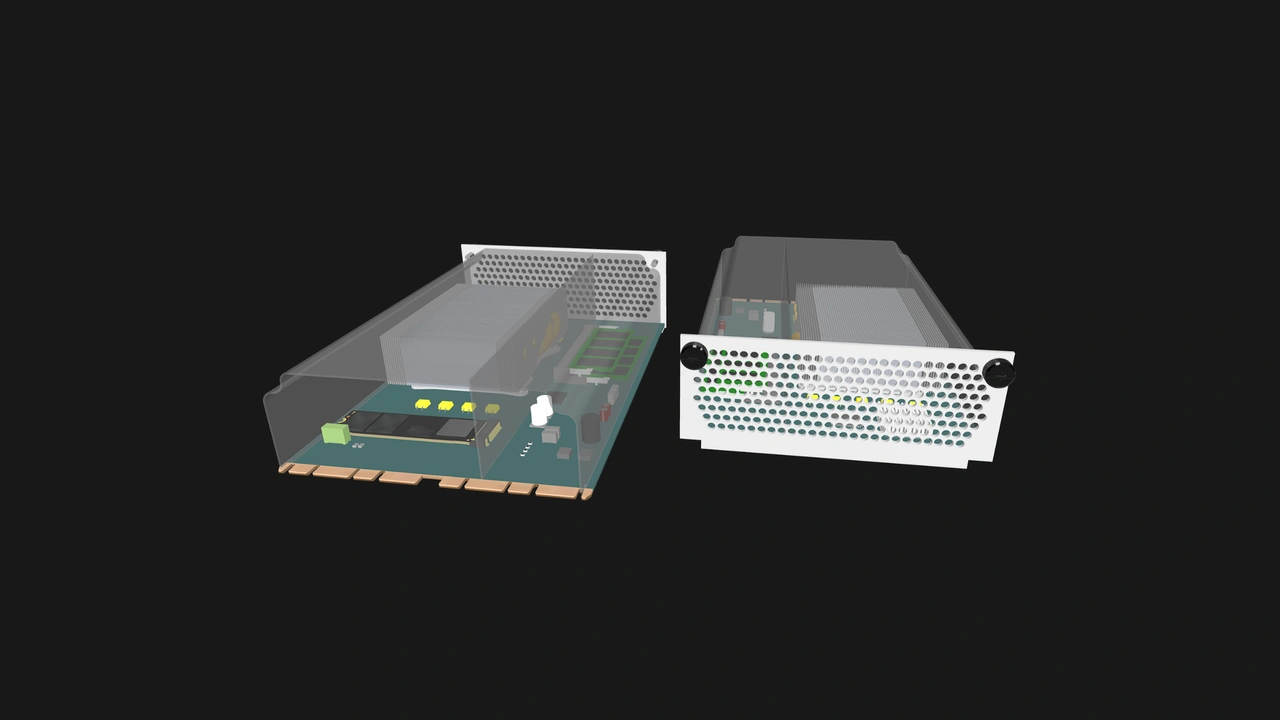
Rather than reimagining a single system, we propose an FPGA-based node. It can coexist with standard Compute Nodes in an Enclosure, enabling hybrid configurations where modern workloads and emulation operate side by side. The same modular infrastructure for general purpose computing can be repurposed for hardware-accurate recreation, without the need for a dedicated system.
A MiSTer FPGA node would likely not qualify for OpenSFF certification as it wouldn’t meet our minimum requirements for a Compute Node, such as having at least two 2.5GbE signals. But that’s the beauty of an open standard, and we’d be honored if enthusiasts used OpenSFF as a jumping off point to revive classic hardware.
Rebuild with OpenSFF
The first home computers still expected users to have a fair bit of programming knowledge and struggled to get some of the basics right. For example, the keys on the original Commodore PET were cramped, flat, and arranged on a rectangular grid instead of the staggered layout popularized by typewriters. So many users complained about it that Commodore decided to ditch the integrated cassette tape drive to make room for a more usable keyboard on subsequent PET models.

Yet the innovators behind these computers made the best of what they had. Those workarounds and even the unconquered limitations make these machines more memorable. Just as important, they heralded the world we live in today, where computing is accessible and embedded in our daily lives.
We wouldn’t necessarily pitch OpenSFF as the retro PC platform for vendors, and there will probably be spinoffs that won’t fully adhere to our standard. But we’re throwing our ideas out there to see what the fans of classic computers can do with our specifications, and what tricks they’ll pull to work around their constraints.
If you enjoyed reading this, we invite you to learn more about OpenSFF and our specifications, and we would be grateful if you spread the word about our standard. For technical clarifications, partnerships, and other inquiries, reach out to our development team at [email protected].
Other Articles
Meet OpenSFF: an open hardware standard that enables cross-vendor compatibility, modular systems, and sustainable hardware reuse.
August 11, 2025
We go over the rise of virtualization and the open software adopted by home server enthusiasts, as well as the current challenges and the future of the hobby.
September 06, 2025

Learn why OpenSFF adopted the SFF-TA-1002 connector standard and how it enables our vision.
September 18, 2025