Blog
Nothing to Hide: Comparing Rear Connector Motherboards to OpenSFF’s 4C+ Connector
Introduction
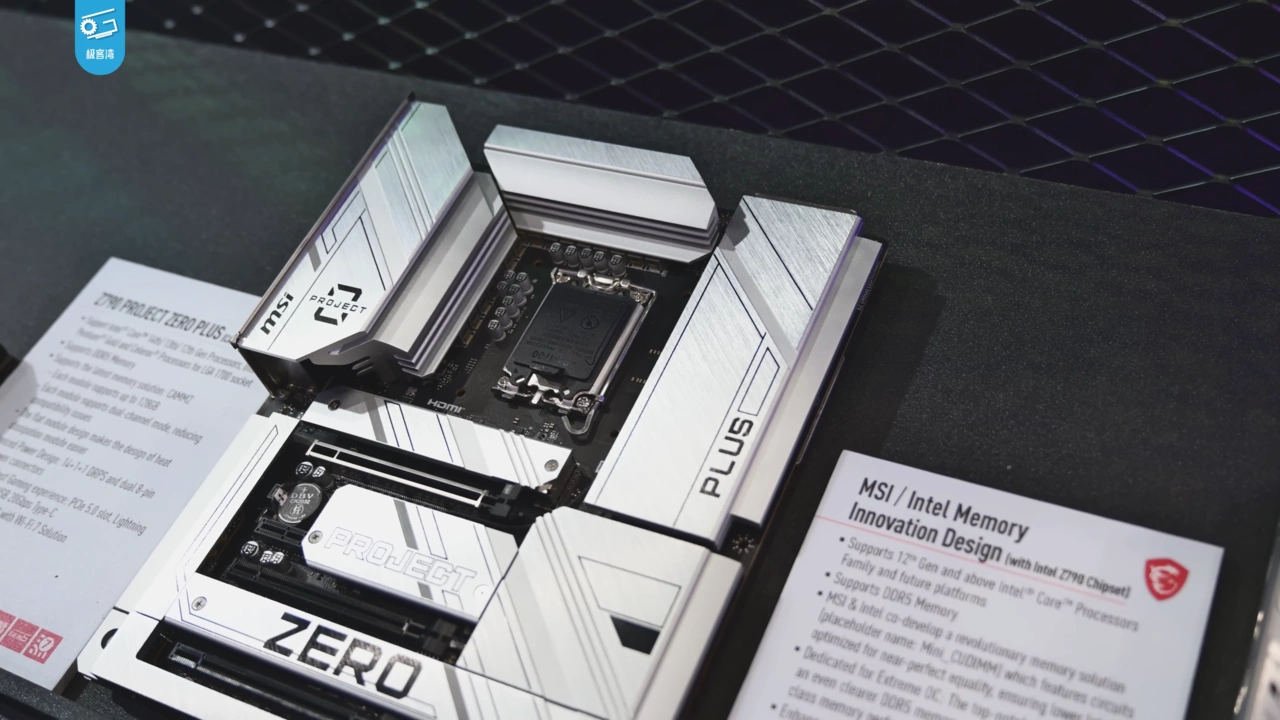
Cable clutter is a problem that both PC builders and IT technicians learn to live with. It can turn a clean build into a rat’s nest, it complicates servicing, and it can affect airflow. In recent years, major motherboard vendors have been bringing up a simple but clever solution: rear connector motherboards.
OpenSFF approaches the problem from a different angle and with different priorities. Rather than relocating connectors and cables, we were able to do away with most internal cables by choosing a protocol-agnostic connector that carries all the power and signals that a node needs. Let’s go over these two solutions and what they mean for their respective use cases.
What are rear connector motherboards?
A rear connector motherboard moves power, data, and header connections to the rear of the board while leaving the rest of the ATX layout untouched. It takes advantage of the dual-chamber design commonly found in modern ATX cases, which set aside space behind the motherboard tray for cable runs. The main catch is that a vendor’s rear connector motherboard works only with cases whose tray cutouts line up with that vendor’s connector layout.
In 2011, boutique PC builder Maingear patented the rear-connector design that participating vendors license today. Gigabyte was the first motherboard vendor to bring the concept to market with its Project Stealth in 2022, though the first board was available only as part of a bundle that included a matching case. ASUS followed in 2023 with BTF (“Back to the Future”), MSI joined in 2024 with Project Zero, and ASRock rounded out the field in 2025 with BMD (Back Mount Design).
These motherboard lines have largely been well received, and continue to win over PC enthusiasts as more compatible cases reach the market. Some reviewers admitted that they were skeptical at first, but they came away impressed by just how clean the build and the process turned out to be. That said, critics have cited a couple of concerns regarding rear connector motherboards. The first one relates to how it can throw a wrench in the typical PC building process, as it can be difficult to connect components to a rear connector motherboard before installing it to a case.
More importantly, there’s the question of fragmentation across vendor implementations. Like their branding, the connector layout of these motherboards are slightly different across vendors. Some enthusiasts fear that they may be tied to a specific case manufacturer based on the rear connector motherboard they choose. In a 2024 article, PC World warned about “thorny little issues” that case makers and motherboard vendors need to sort out, such as the varying locations of smaller connections such as PWM fan headers, and how rear connectors could affect complex builds that involve daisy-chained fans or custom liquid cooling.
Despite these concerns, rear connector motherboards appear to be here to stay. Similar to RGB accessories, it appears that Gigabyte, ASUS, MSI, and ASRock’s push has been enough so far to convince other case manufacturers to create compatible cases despite the lack of a standard behind the feature. The design philosophy has also reached graphics cards. ASUS, MSI, and Sapphire have all released GPUs that lean into the idea. Granted, MSI and Sapphire simply tuck the GPU power cable behind a backplate. As of this writing, only ASUS has created GPUs that are cable-free, thanks to additional connectors that draw power straight from the motherboard.
How OpenSFF’s 4C+ Core Connector differs from rear connector motherboards
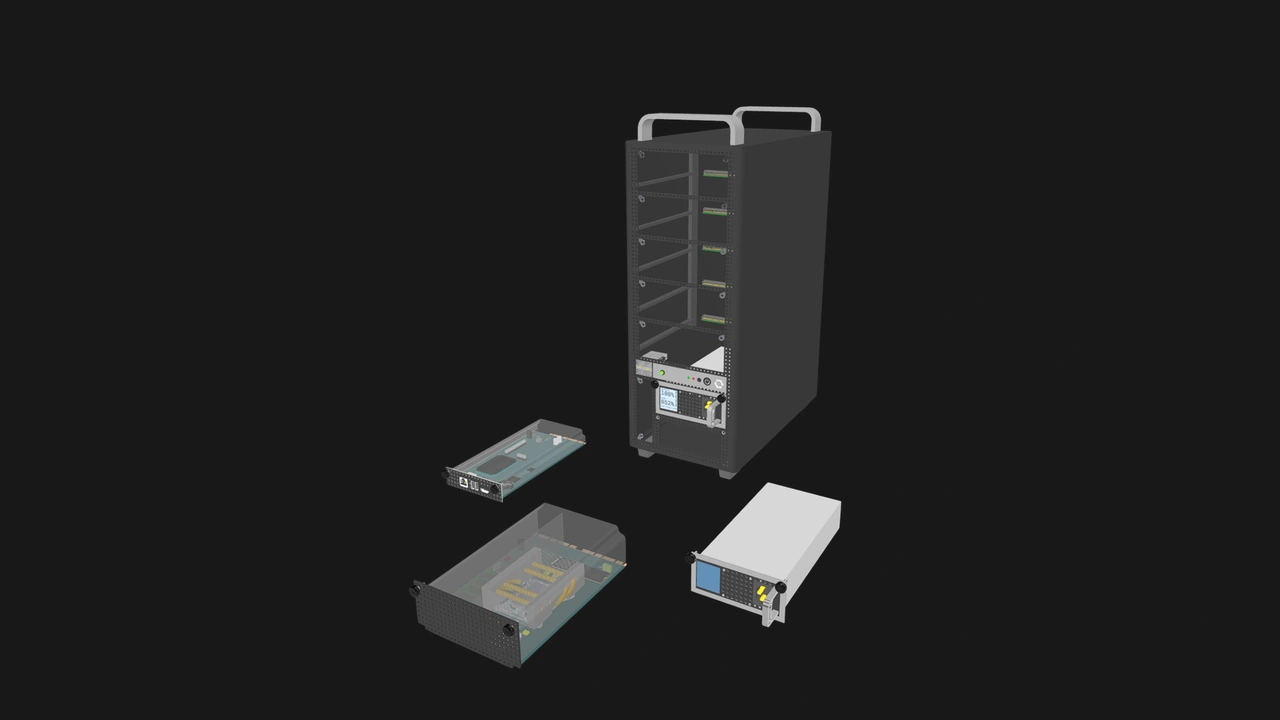
We’re a nonprofit developing an open standard for vendor-neutral, modular, and scalable compute systems. Vendors can adopt OpenSFF to create a wide range of devices, such as servers, workstations, and edge devices. Our standard defines three hardware components. The Compute Node is a self-contained processing module. One or more nodes slot into an Enclosure, an active electronic housing that provides power, cooling, and networking. We also define the Management Module, an optional component that provides KVM redirection and power control.
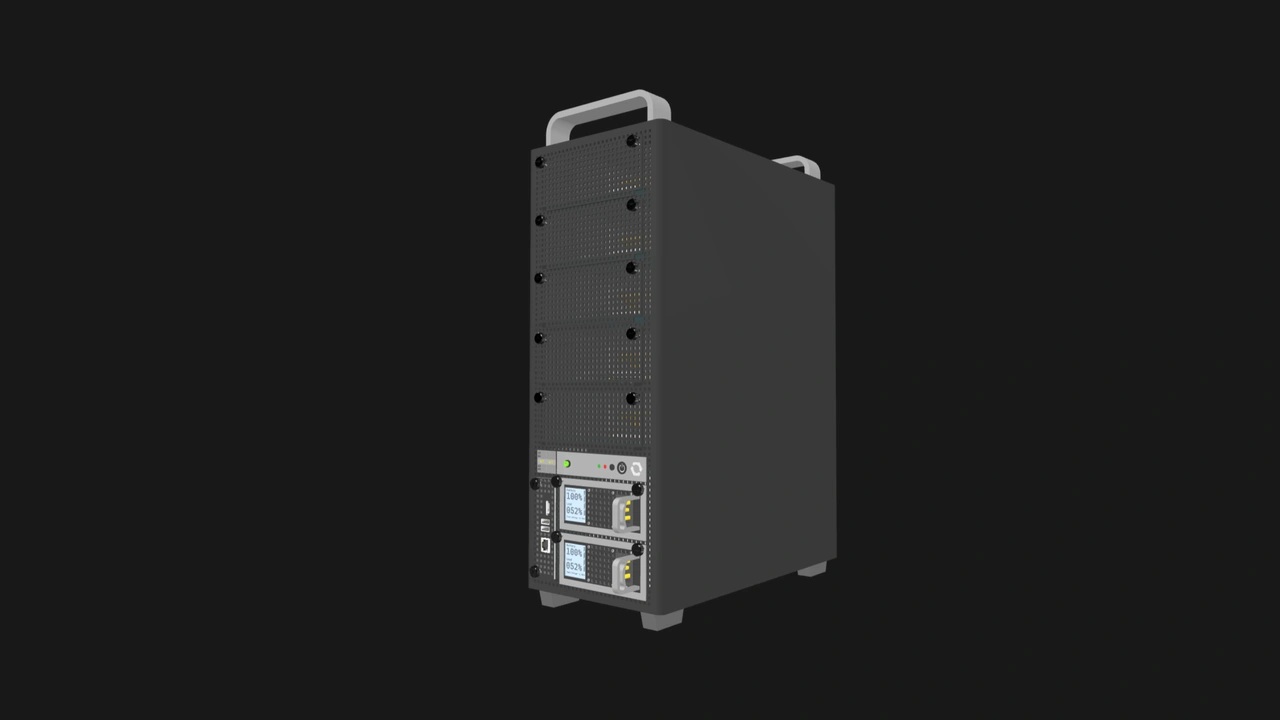
Where rear connector motherboards simply relocate and hide cables, our standard's 4C+ connector outright removes most of them. Based on the SNIA SFF-TA-1002 standard, the 4C+ connector connects Compute Nodes and Management Modules to compatible Enclosures. It carries power, I/O, and management signals through one or two connectors per module. We chose this approach because an open standard for modular computing needs cross-vendor compatibility above all else.
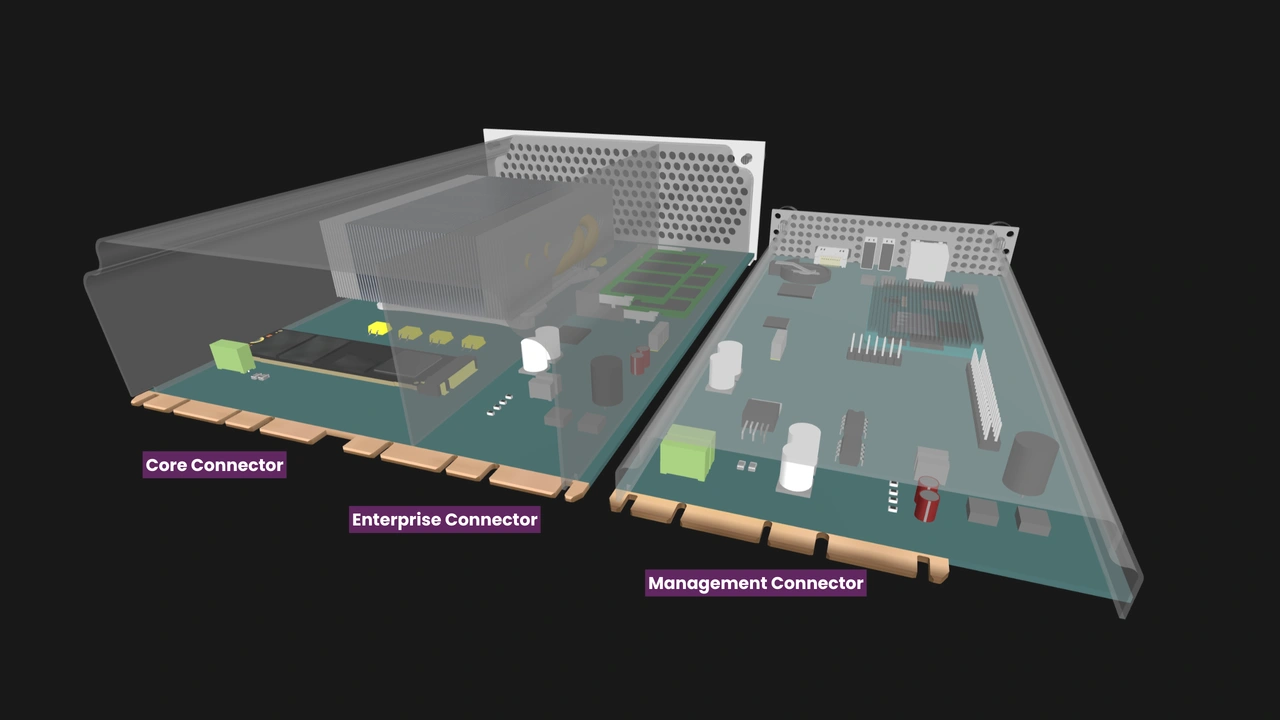
Let’s take a quick look at how the 4C+ connector compares to rear connector motherboards before diving deeper into some of these aspects.
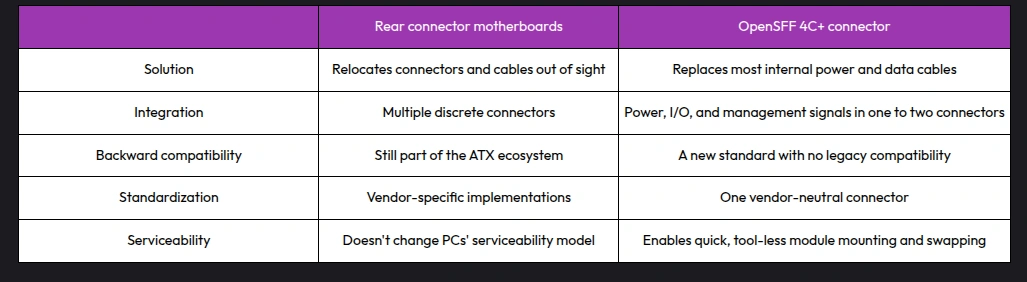
Backward compatibility is the biggest strength of rear connector motherboards. Despite needing compatible cases, ultimately these are still ATX motherboards. They work with the vast ranges of power supplies, coolers, and other components and accessories on the market, and they don’t drastically change the PC building process.
Standardization is our 4C+ connector’s main edge. It’s the only connector that our standard uses. Any Compute Node will work with any Enclosure, regardless of their vendors. The same goes for the Management Module and compatible Enclosures.
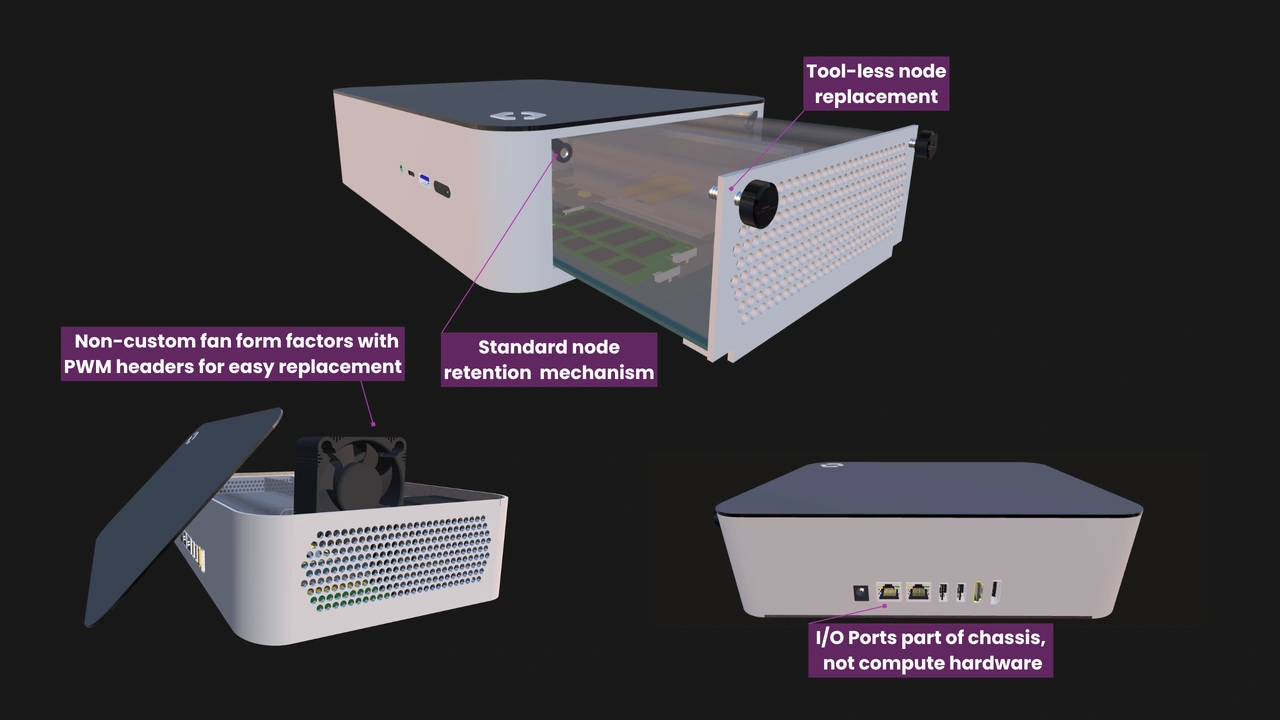
Our standard’s serviceability is a direct consequence of the 4C+ connector as well. Since we don’t have to worry about cable routing, strain, and alignment, we were able to design a tool-less mounting mechanism. OpenSFF modules mount to Enclosures using a blind-mate guide-rail system and are secured using only a pair of captive M4 thumbscrews.
Build with OpenSFF
Rear connector motherboards and our 4C+ connector both present good answers to cable clutter, just at different levels. The former preserves the flexibility and expansion of the ATX ecosystem while moving cables out of sight. Establishing a new standard allowed us to cut out most internal cables to make assembling and servicing compact, multi-node systems fast and straightforward.
Besides the multipurpose 4C+ connector, our standard also reduces cable clutter even further for multi-node implementations. Where discrete clusters require multiple power sources and lots of external network connections, our modular design and internal networks can reduce a system to a single power cable and far fewer network cables.
If you enjoyed reading this, we invite you to read our specifications, and we would be grateful if you help spread the word about OpenSFF. For technical clarifications, collaborations, and other inquiries, reach out to our development team at [email protected].
Other Articles

Meet OpenSFF: an open hardware standard that enables cross-vendor compatibility, modular systems, and sustainable hardware reuse.
August 11, 2025
We go over the rise of virtualization and the open software adopted by home server enthusiasts, as well as the current challenges and the future of the hobby.
September 06, 2025

Learn why OpenSFF adopted the SFF-TA-1002 connector standard and how it enables our vision.
September 18, 2025