Blog
Orchestration for All: The OpenSFF Management Module Software
Introduction
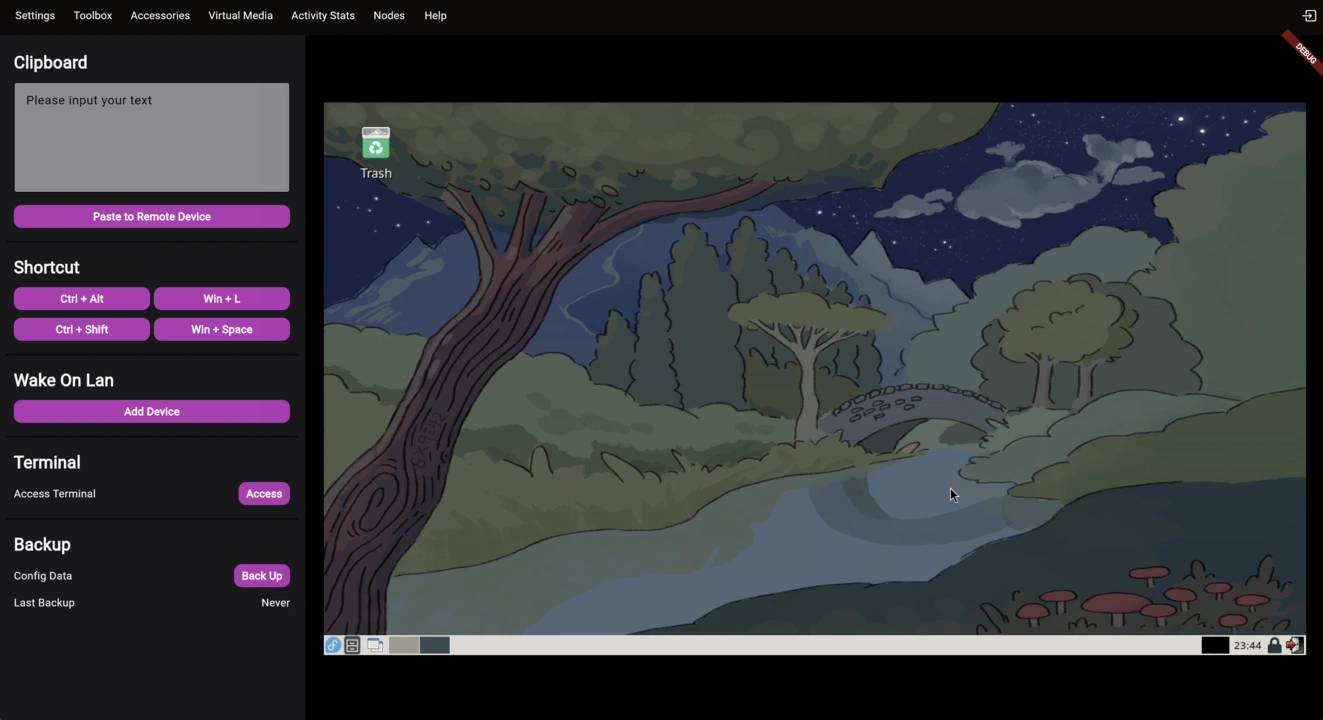
As we noted in its overview, the Management Module specification represents our commitment to interoperability. It would be counterproductive to create specifications for vendor-agnostic multi-node systems if we will not provide a common server management solution. Thus, we are developing not only the Management Module’s hardware specification but also a default management software.
The Management Module software provides two APIs. The Platform API is dedicated to user-facing interactions, such as managing logs and retrieving information about installed Compute Nodes. It is based on Redfish, DMTF’s proven protocol for managing IT infrastructure. The Node API on the other hand will handle interactions between Compute Nodes and the Management Module itself. Due to our unique approach and hardware design, we opted to build the Node API from scratch as a fully documented REST API.
In this article, we are going to go over our planned features, design principles, and a major shift in the Management Module specification that affected our development process. Our goal is to provide users with a secure, intuitive, and cost-effective orchestration platform that preserves our standard’s interoperability and compatibility.
Management Module software features
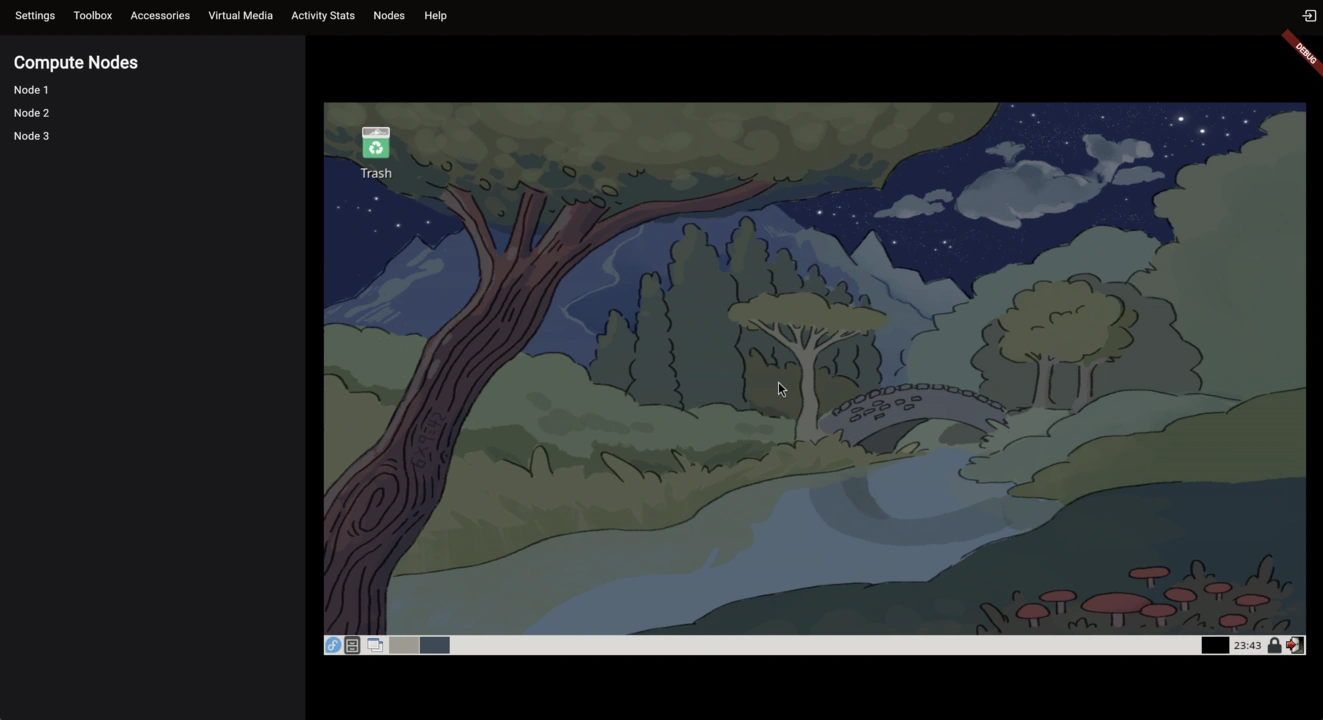
We aim to have the following elements and features in version 1.0 of the Management Module software:
- A web management interface
- The ability to switch the active node console in multi-node Enclosures
- IP-KVM
- Remote OS installation
- A basic Redfish interface
- The Node API
- Retrieving Enclosure configuration files from the Enclosure microSD Card
- Storing and restoring Management Module configuration files using the Enclosure microSD Card
Some of the enhancements we have planned for succeeding versions of the software include a more robust implementation of Redfish and the ability to emulate file storage. We are also considering scaling up both the backend and the hardware in the future. This will enable Management Modules to oversee a significantly larger number of Compute Nodes. We cannot commit to a release schedule at the moment, as we are taking our time to ensure that the software will be secure, intuitive, and reliable.
Our design principles for the Management Module software
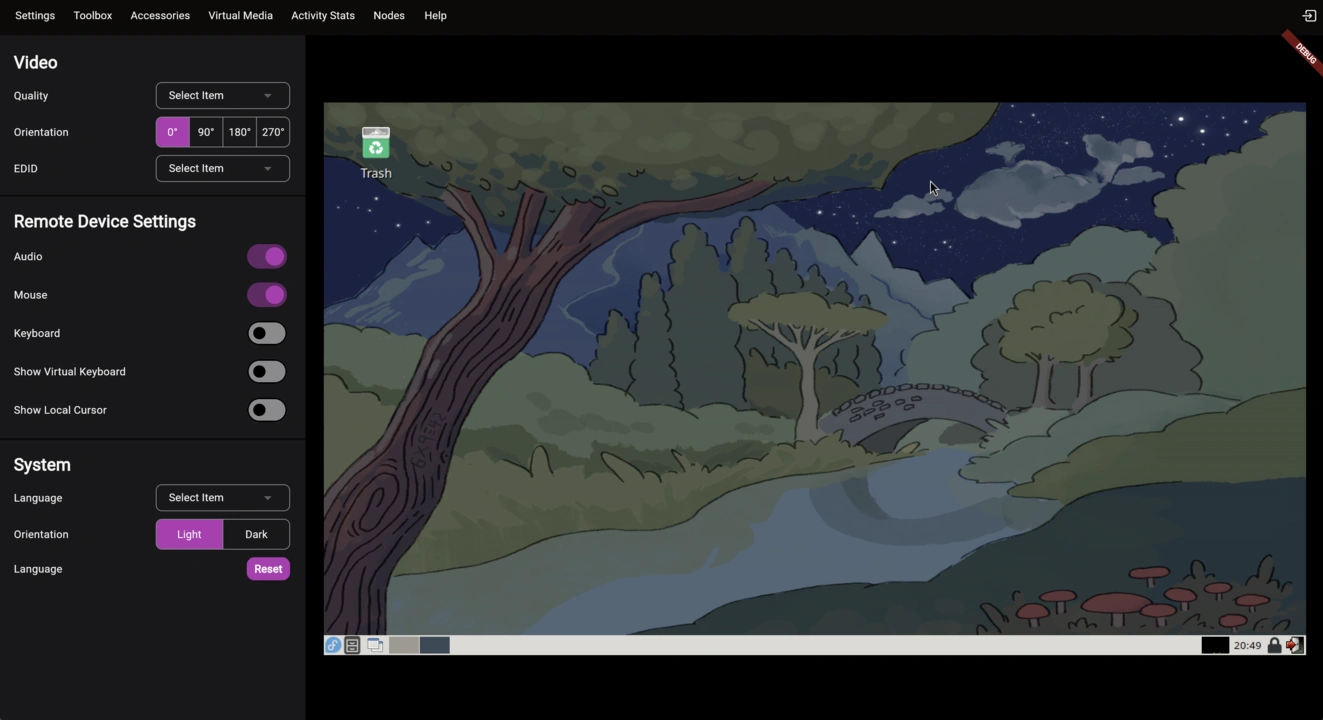
Simplicity
Administrators will interact with the Management Module software primarily during critical situations, such as when troubleshooting or upgrading systems. We are making sure that the software will be straightforward and intuitive, helping users do their job instead of compounding the challenges of the task at hand.
Security
An orchestration platform is untenable if it is not secure. This is one of the reasons why the Management Module must go hand-in-hand with an integrated out-of-band management network in the first place. Hence, we are developing the Management Module software using Rust to take advantage of the language’s memory-safety. We are also building the software around permissions, making it easier for administrators to set rules for access and execution.
Cost-effectiveness
Blade servers have specialized hardware that can manage multiple enclosures and access dozens of nodes simultaneously. On the other hand, OpenSFF is aimed at small-to-medium scale applications. Manufacturers should therefore be able to create Management Modules using off-the-shelf hardware and offer their implementations at affordable prices.
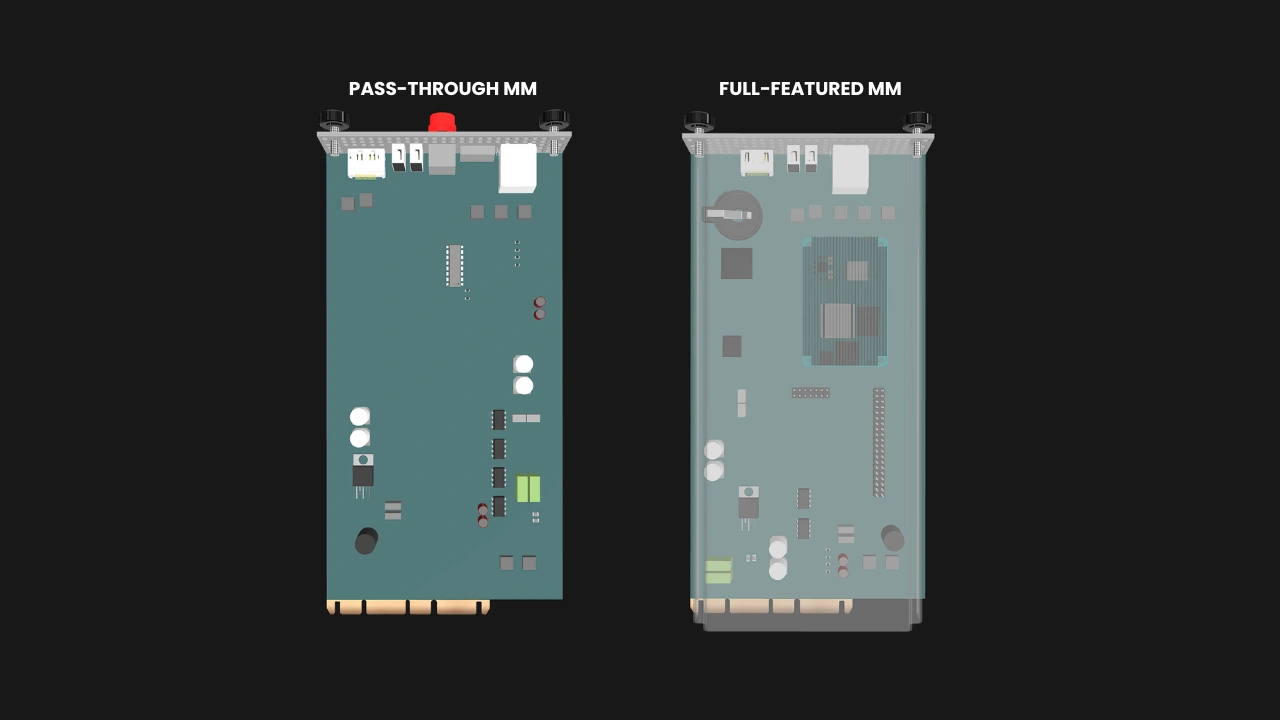
As such, we decided to have only one active console session per Management Module. Users will be able to see and switch the active node through a physical interface, a browser-based interface, or both. We also have a reference design for a pass-through Management Module, an inexpensive solution for those that require only local access to their server. It is a purely hardware device that routes USB signals and video output from the active node to its external ports.
However, this does not mean that smart Management Modules will be compromised in terms of their overall performance and functionality. For these variants, we selected a hardware platform that is both affordable and capable.
Shifting the Management Module from x86 to ARM
We initially used the Intel N100 as our baseline CPU for advanced Management Modules, such as our full-featured reference design. The processor is widely available, energy efficient, and has more than enough power for our purpose. However, we tested the Raspberry Pi Compute Module 5 and found that it can simplify the Management Module’s design, especially around USB Device Mode (aka USB Gadget Mode).
Compute Nodes must recognize the Management Module as a USB slave device for the latter to perform its primary functions, such as acting as a KVM device or facilitating remote OS installation by emulating a mass storage device. A staple feature of enterprise servers, remote OS installation allows administrators to rectify complete system failures wherever they may be, instead of spending precious time travelling to the server’s physical location. The Private Enclosure Network (PEN), the out-of-band management network built in compatible Enclosures, will allow users to mount the Management Module as a boot device and install an operating system even if the server itself is unbootable.
Aside from supporting USB Device Mode, Compute Module 5 also provides us with other notable benefits. It can be used with an I/O board, which streamlines testing and development. In our case, we were quickly able to verify that the module can act as a keyboard, mouse, and mass storage device.
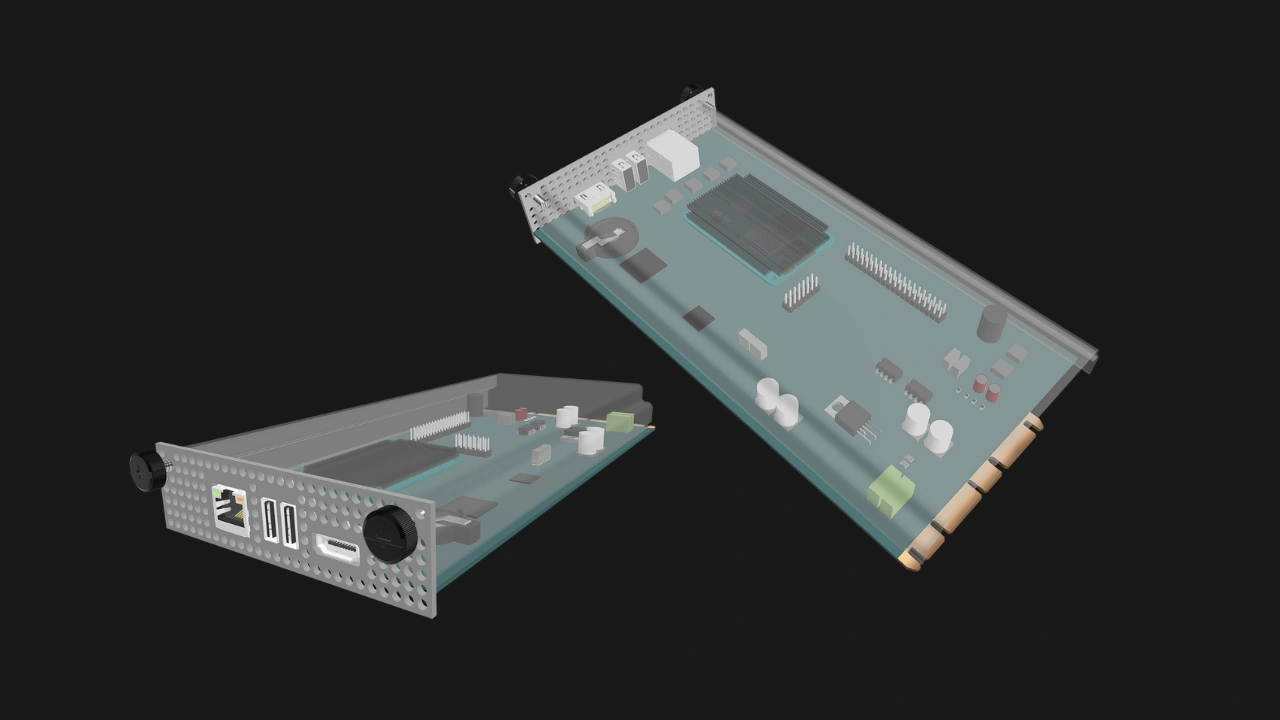
While not as powerful as the N100, Compute Module 5 still gives Management Modules plenty of performance while consuming less power than Intel’s CPU. It has a quad-core 2.4GHz processor and can be configured with up to 64GB of eMMC storage. For context, the embedded hardware for iLO 6, the management technology in HPE servers, only has an 800MHz CPU and 1GB of NAND storage.
As a result of this transition, we shifted development of the Management Module software from an x86 Linux environment to the ARM-based Raspberry Pi OS (64-bit).
Build with OpenSFF
The Management Module software will allow OpenSFF users to employ many management features traditionally found in enterprise servers. Meanwhile, the Management Module itself is user-replaceable and vendor-agnostic. Together, they result in an orchestration platform that presents a middle ground between the expensive embedded solutions in prebuilt enterprise servers and the discrete KVM devices and monitoring software used in DIY setups.
Developing the software ourselves opens up our standard to a wide range of manufacturers, including those that have minimal experience with servers. We also believe that this approach will lead to affordable implementations.
We invite you to read the Management Module specifications and help us create an open future for multi-node computing. For technical clarifications and other inquiries, reach out to our development team at [email protected].
Other Articles

Meet OpenSFF: an open hardware standard that enables cross-vendor compatibility, modular systems, and sustainable hardware reuse.
August 11, 2025
We go over the rise of virtualization and the open software adopted by home server enthusiasts, as well as the current challenges and the future of the hobby.
September 06, 2025

Learn why OpenSFF adopted the SFF-TA-1002 connector standard and how it enables our vision.
September 18, 2025