Blog
Multiclass Computing: Building an Asymmetrical OpenSFF System
Introduction
There are many workloads that need a group of mixed-role or asymmetrical nodes. There are jobs that need one or two nodes stacked with drives alongside compute-focused ones. There are also those that need a node with lots of PCIe lanes wired to specialized I/O. Such systems are as common in server rooms, offices, media studios, and homelabs as Kubernetes or HCI clusters that call for identical nodes.
While there are many servers and purpose-built solutions that are equipped with asymmetrical nodes, they lock you into their vendor’s hardware and management solution. Our open hardware standard can lead to equally capable systems that are more adaptable and sustainable.
OpenSFF defines three hardware components that can be combined to create a variety of modular compute systems. The Compute Node is a self-contained processing module. The Enclosure is an active electronic housing that provides power, cooling, and networking to one or more nodes. Finally, the Management Module is an optional unit that provides KVM redirection and power control.
Any module will work with any compatible Enclosure, regardless of their vendors. This opens the door to vendors that specialize in one of those components. A vendor could focus on low-power Compute Nodes, while another could choose to be known for Enclosures that have built-in SATA or SAS drive bays. With OpenSFF, you’ll have the option to mix and match vendors as in a DIY setup, but with the space- and power-efficiency of a purpose-built multi-node system. To give you a better idea of the possibilities, let’s take a look at five concepts for asymmetrical OpenSFF-compatible systems.
Server with integrated mass storage
This is the most common asymmetrical system, with numerous examples from enterprise vendors. The Dell PowerEdge VRTX chassis holds up to four PowerEdge nodes alongside shared 3.5” or 2.5” drive bays and eight shared PCIe slots. Cisco’s UCS XE9305 chassis anchors the company’s Unified Edge system, a space-efficient alternative for discrete edge clusters. Its compatible nodes come in compute, storage, networking, and security variants.
Unlike those capable but locked down products, an OpenSFF-compatible system would provide integrated mass storage while giving you the option to procure the Enclosure, Compute Nodes, and drives from different vendors.
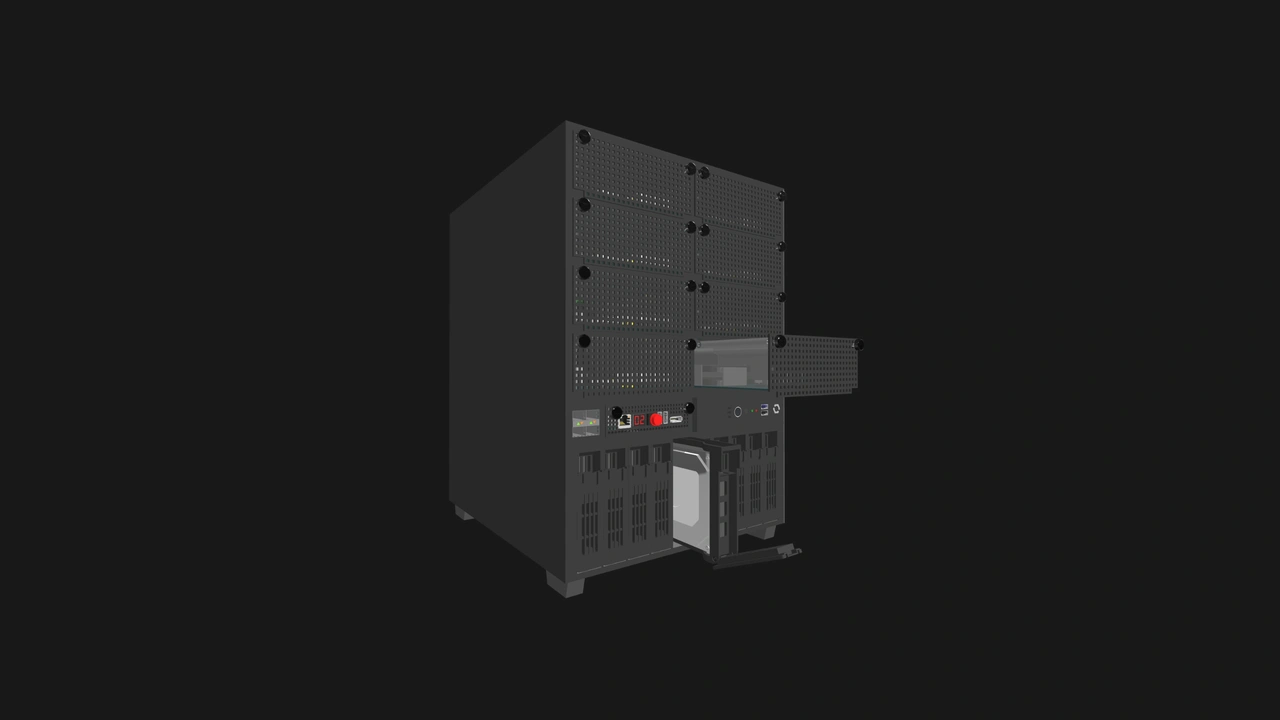
Our concept system would consist of:
- An Enterprise Enclosure with up to 10 SAS drive bays.
- Two storage-focused Compute Nodes providing a highly available, replicated storage service.
- Six general-purpose nodes with little to no onboard storage. They reach out to the storage nodes over the Enclosure’s internal switch fabric to access the Enclosure-bound drives.
Video surveillance system
Network video recorders (NVR) store and manage security camera footage. They’re typically paired with PoE-capable switches to power connected cameras. Unfortunately, they can lock you in just as much as enterprise servers do. For example, Ubiquiti cameras work only with the company’s NVRs. That’s why multi-site deployments typically use Video Management System (VMS) software that runs on mixed-vendor hardware.
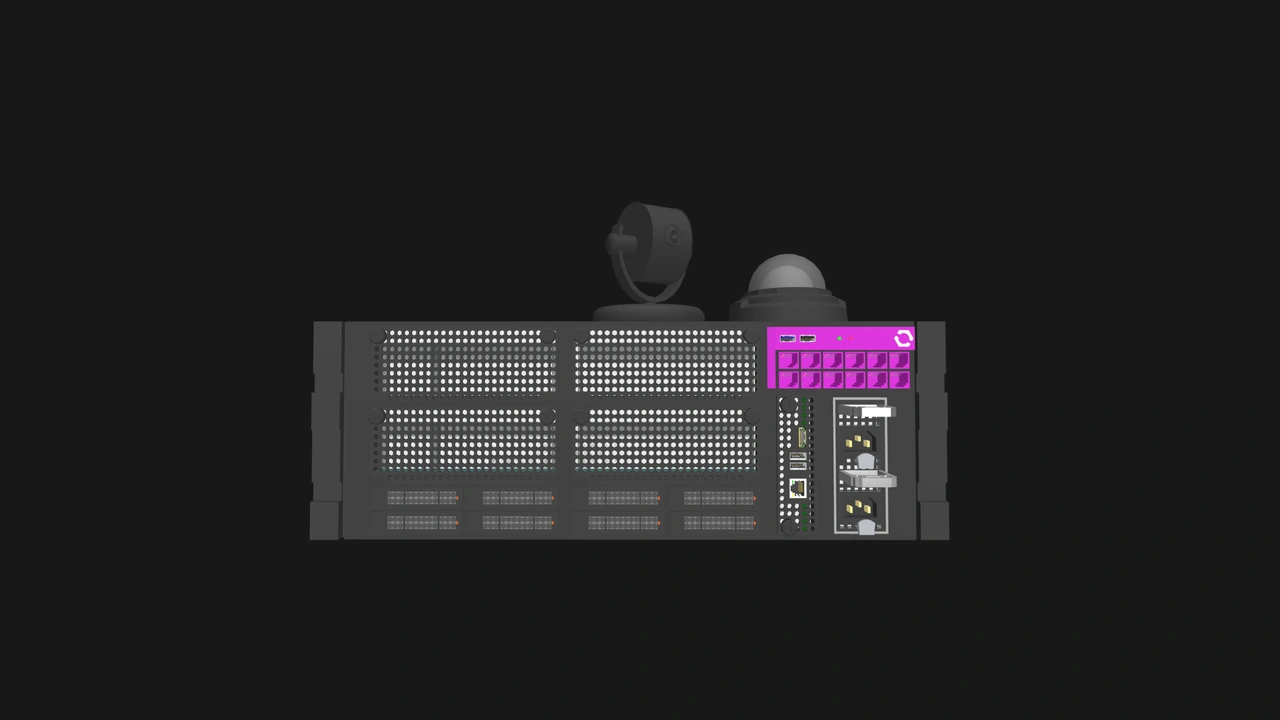
Our concept system provides interoperability, serviceability, and scalability regardless of the number of locations you need to cover. It would have:
- An Enterprise Enclosure with 12 PoE ports and eight SATA drive bays.
- Two storage-focused Compute Nodes configured for high availability.
- Two nodes dedicated to ingesting footage.
Digital audio workstation (DAW) system
Professional audio companies work on live broadcasts or recordings where any take could be that unrepeatable flawless run. Either way, they can’t afford hardware failures. Some opt to run two sets of identical rigs for redundancy, which is an understandable but expensive precaution.
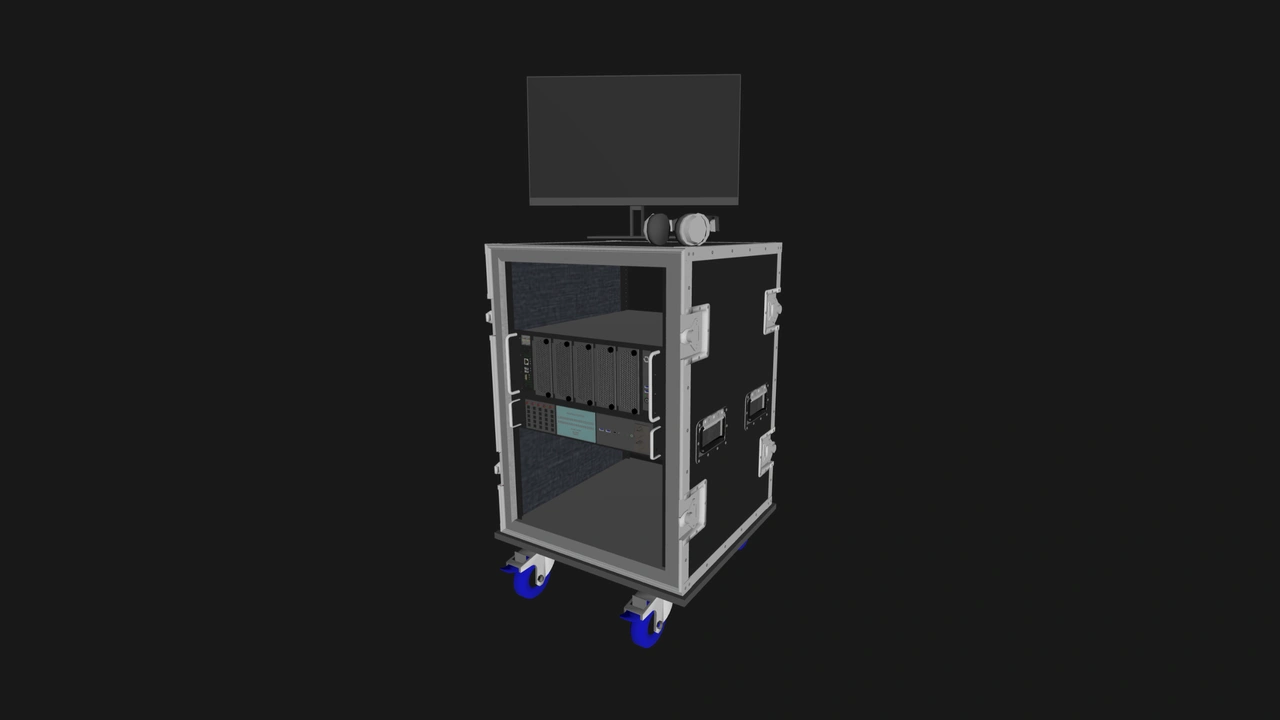
Our concept system takes advantage of our modular and serviceable approach to separate roles to easily swappable Compute Nodes instead of asking you to spend on an expensive emergency clone. It would have:
- An Enterprise Enclosure with five SATA drive bays.
- A master Compute Node running the primary DAW, connected to a display for the operator.
- A slave node dedicated to background-heavy tasks, such as loading sample libraries or running plugins.
- An audio I/O node that passes multiple channels of live audio to the other nodes.
- A storage node.
- An expansion node slot.
Admittedly, OpenSFF is more suited for Dante and other Ethernet-based media-over-IP protocols than PCIe-native interfaces. If your setup requires HDX or MADI cards, you’ll likely connect another appliance or chassis to our DAW concept.
Livestreaming cluster
Streamers commonly run at least two PCs: the one at their desktop to play games or whatever content they do, and another rig for capturing their main PC’s output and encoding their stream.
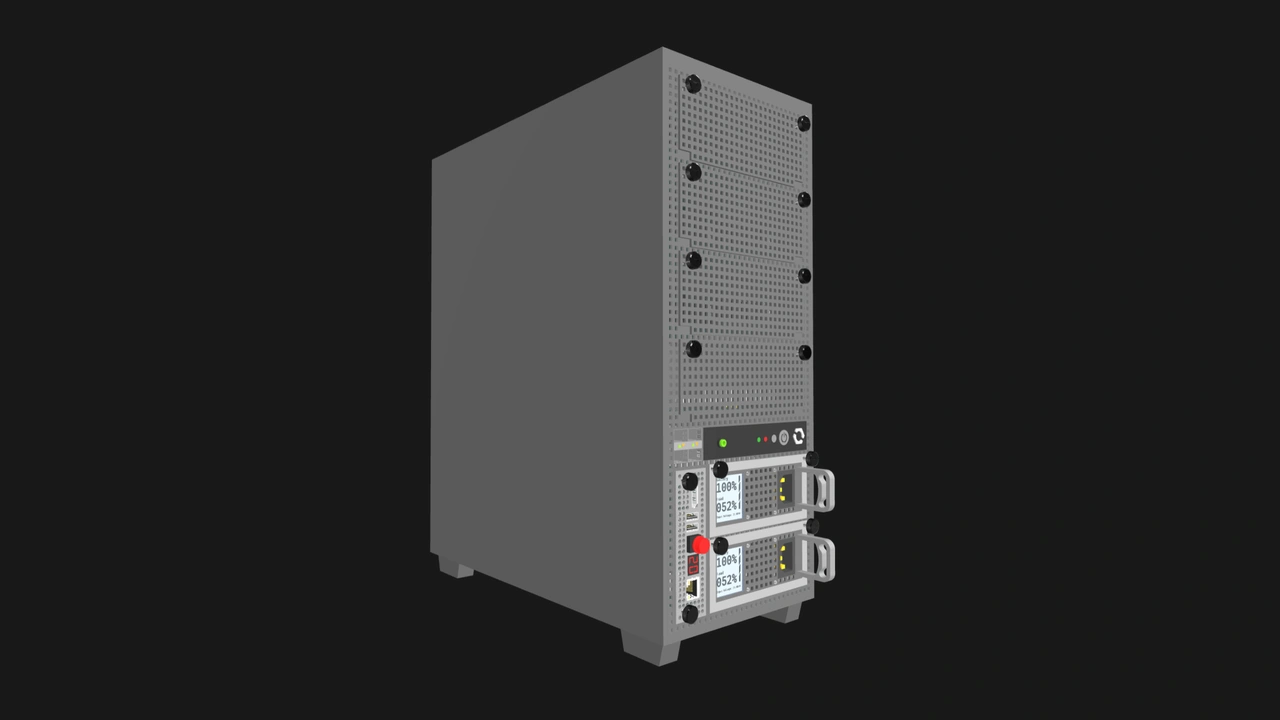
Our concept system would keep that separation while integrating the asymmetrical nodes into one space-efficient Enclosure. It would have:
- An Enterprise Enclosure.
- A storage Compute Node with two NVMe SSDs and a 3.5” HDD onboard. This is where other nodes send and access raw footage, exports, archives, and other large files.
- A capture node that receives raw video feed via an HDMI or SDI capture card.
- A production node to host broadcast software, where the streamer can select active video feeds and combine them with overlays.
- An encoder node to compress the finished feed for streaming or archiving.
Homelab
Home server enthusiasts often mix asymmetrical nodes for cost and sustainability reasons. Pairing single-board computers or mini PCs with high-performance nodes also cuts down on power consumption and heat. Mini racks, shelves, and consoles help wrangle these patchwork rigs into clean setups. But there will always be a mess of network and power cables to deal with, and it can be awkward to scale a homelab unless you planned well in advance.
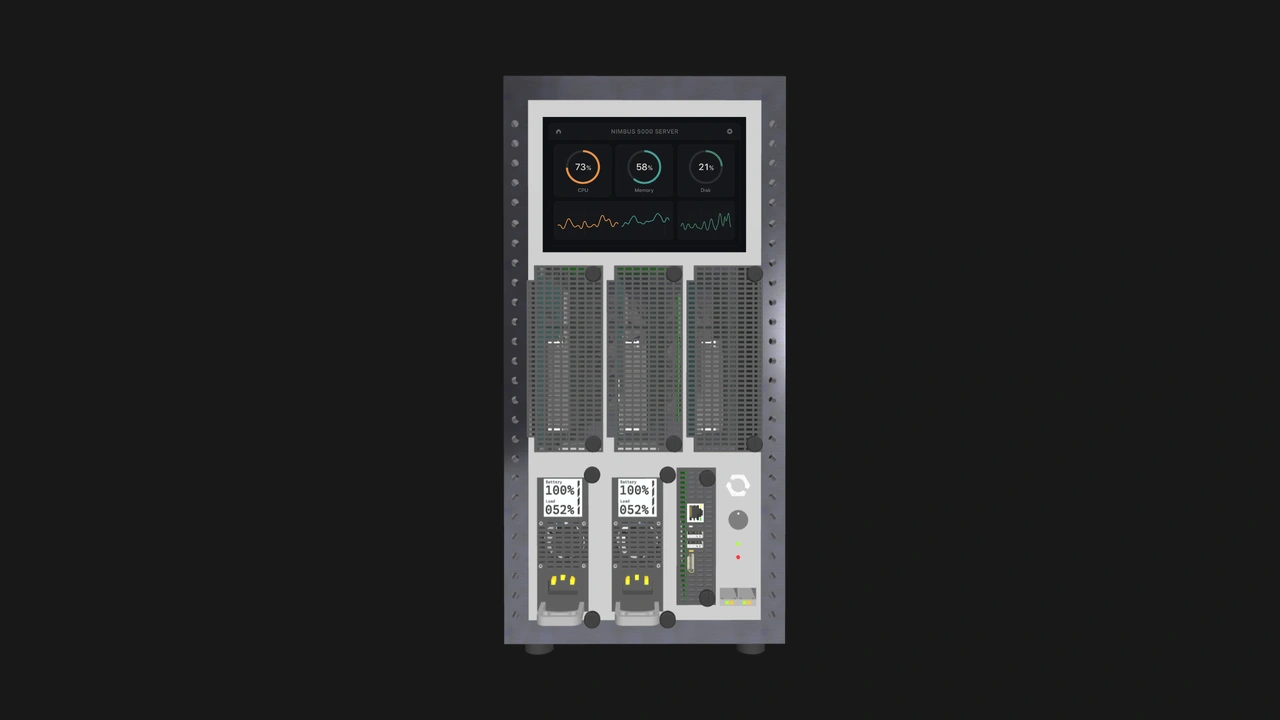
Our concept homelab gives its user a standard node footprint and connection interface, making it easy to swap nodes and scale their cluster. It would have:
- An Enterprise Enclosure that has a built-in touchscreen OLED display. The display would be connected to the DisplayPort out and one of the USB-A ports of node slot 1. The idea is to slot in a node according to the information you want to see on the screen. For instance, slotting in your home automation node into that slot lets you prepare a dashboard that shows your smart appliances' status on the display.
- A high-performance lab and home automation Compute Node, which has one of its USB-A ports consumed by a Zigbee or Z-Wave radio dongle built into the node.
- A media server and lab backup node that has a pair of 2.5” SATA SSDs as well as two NVMe SSDs.
- A router or firewall node, which has its PCIe 4.0 x1 lane connected to a NIC chip. WAN/LAN traffic would run here, keeping it isolated from the rest of the cluster’s traffic.
OpenSFF’s management advantage
Our standard not only enables cohesive systems with mixed specs, it also supports mixed vendor setups as well. That extends to node management, thanks to the Management Module. Unlike today’s budget IP-KVM devices, you need only one Management Module to gain console access and power control to all nodes in an Enclosure. We’re also developing a default operating system for Management Modules that have a CPU, providing a consistent remote management platform that vendors can build on.
Build with OpenSFF
Modularity is ultimately about adaptability. You can get a polished and powerful proprietary system, but you’ll have to stay with that vendor’s walled garden. You can go full DIY and be free from restrictions, but you’ll need to come up with (and document!) solutions to your custom rig’s space, networking, and management issues.
OpenSFF presents a solution that sits between those extremes. Not only will you be able to mix and match OpenSFF-compatible components from different vendors, you’ll also be able to replace nodes without worrying about compatibility or needing specialized tools.
If you enjoyed reading this, we invite you to learn more about OpenSFF and our specifications, and we would be grateful if you spread the word about our standard. For technical clarifications, partnerships, and other inquiries, reach out to our development team at [email protected].
Other Articles

Meet OpenSFF: an open hardware standard that enables cross-vendor compatibility, modular systems, and sustainable hardware reuse.
August 11, 2025
We go over the rise of virtualization and the open software adopted by home server enthusiasts, as well as the current challenges and the future of the hobby.
September 06, 2025

Learn why OpenSFF adopted the SFF-TA-1002 connector standard and how it enables our vision.
September 18, 2025