Blog
March of the Penguins: Building Linux Systems on OpenSFF
Introduction
In the past three years, there has been a marked increase in interest and enthusiasm for Linux-based operating systems (OS). Microsoft Windows users have expressed concerns and frustrations with their OS for decades, but recent developments are providing the movement with significant momentum. In the same vein, Linux-first system integrators have been around for quite some time. Major vendors such as System76 and TUXEDO Computers carved out their niche more than 20 years ago. But the growing demand for Linux-based systems presents a great opportunity for businesses wishing to enter or expand in this space.
OpenSFF is developing open-source specifications for modular, scalable, and serviceable small form factor computers. In this article, we are going to discuss how our standard can allow Linux-first hardware vendors to offer systems that are unique, streamlined, and aligned with open-source values.
The shift to Linux
Linux is being increasingly adopted across enterprise, government, and consumer sectors. Software licensing costs, data privacy concerns, and Microsoft’s recent decisions have encouraged Windows users to seek open-source alternatives.
In 2023, Microsoft released the last version of Windows 10 and announced that it would end support for the OS in October 2025. Users who wish to stay on Windows 10 can subscribe to Extended Security Updates. The program starts at $61 for the first year and doubles in price for every year thereafter, for a maximum of three years.
At the same time, migrating older systems from Windows 10 to Windows 11 is not straightforward. Windows 11’s official hardware requirements disqualify hundreds of millions of otherwise functional PCs. In 2023, research firm Canalys estimated that 20% of existing PCs, around 240 million units, did not meet Windows 11’s requirements. In 2025, the Public Interest Research Group (PIRG) reported that the number of affected PCs may be as high as 400 million. The financial, operational, and environmental impact of this awkward transition cannot be overstated.
Yet even before Windows 10’s end of life, organizations have been gradually migrating to Linux to reduce their reliance on proprietary software. In 2024, France’s Gendarmerie completed its transition from Windows to the Ubuntu-based OS that it launched in 2008. The project saves the law enforcement ministry €2 million annually in licensing costs, lowering the total cost of ownership by 40%. Inspired by that successful shift, France’s digitalization ministry has required the rest of the nation’s ministries to submit their own Linux migration plans by the third quarter of this year. EuroStack, the European Union’s initiative for digital independence, endorses Linux as a critical asset that is flexible, secure, and aligned with member states’ values.
On the consumer side, Valve’s steady work on Linux-based tools has helped amplify discussions about migrating to Linux. Its translation layer, Proton, enables thousands of Windows games to work on Linux distributions without any effort from developers. The numerous forum discussions, articles, and videos from gamers and content creators about their experience is introducing a generation to Linux. More and more end users are discovering that plenty of Linux distributions are just as easy to use as Windows or MacOS for common tasks.
The Linux community has also been encouraging interested users. In the wake of Windows 10’s end of life, KDE, Debian, Fedora, and many other Linux supporters created End of 10. The project creates resources and holds events that help Windows 10 users migrate to a Linux distribution.
The challenges of Linux-first hardware vendors
System76, TUXEDO Computers, Slimbook, and several other vendors specialize in computers that are guaranteed to support one or more Linux distributions. They thrive and support the open-source community despite facing a number of significant challenges.
Constrained component landscape
Most Linux-first hardware vendors cannot afford to design and build their own systems. As such, they rely on a small pool of ODMs for their laptops, such as Clevo, Tongfang, and Compal. This homogenization has occasionally extended to hardware issues. In 2022, TUXEDO submitted a patch for Linux 5.20 to fix a keyboard and touchpad bug that affected a number of Clevo laptop models.
The situation is similar for their mini PCs. System76’s Meerkat is a rebranded NUC machine. When Intel abandoned the platform in 2023, System76 stopped selling the Meerkat for nearly 2 years. The model is now based on an ASUS NUC product. TUXEDO’s Nano Pro is a rebadged ASRock 4X4 BOX mini PC, while Nova Custom’s NUC Box is a rebranded ASRock NUC BOX-100H.
Planning around a relatively low order quantity can also be problematic for vendors. In 2025, pre-order deliveries of Star Labs’ top of the line laptop was delayed for over 6 months. The company decided to switch manufacturers in the middle of accepting pre-orders, stating that manufacturing had gone slower than it expected and that the original factory did not prioritize its orders.
Firmware control and development
Linux-first hardware vendors typically rely on the UEFI firmware provided by an ODM or motherboard manufacturer, though others use open-source alternatives such as Dasharo or coreboot. Proprietary firmware is generally well-supported, but vendors and their customers have limited control over them. Open-source firmware reflects the Linux market’s principles, but its progress can be uneven. It requires months of work from teams and communities that have limited resources or access to essential information from chip makers.
This instability has led to costly setbacks on occasion. In 2025, TUXEDO suspended its plan to release a laptop running the ARM-based Snapdragon X Elite SoC. After 18 months of development, the company admitted that it struggled to optimize the laptop’s battery life, BIOS update mechanism, USB4 transfer rate, and video hardware decoding. That same year, an irreversible signing error by Dasharo’s developer, 3mdeb, prompted NovaCustom to recall all affected laptops.
The ongoing shift to Linux needs more component options and more vendors across the globe. Our vendor-agnostic standard can support the movement while providing vendors with unique and significant advantages.
How OpenSFF can help Linux-first hardware vendors
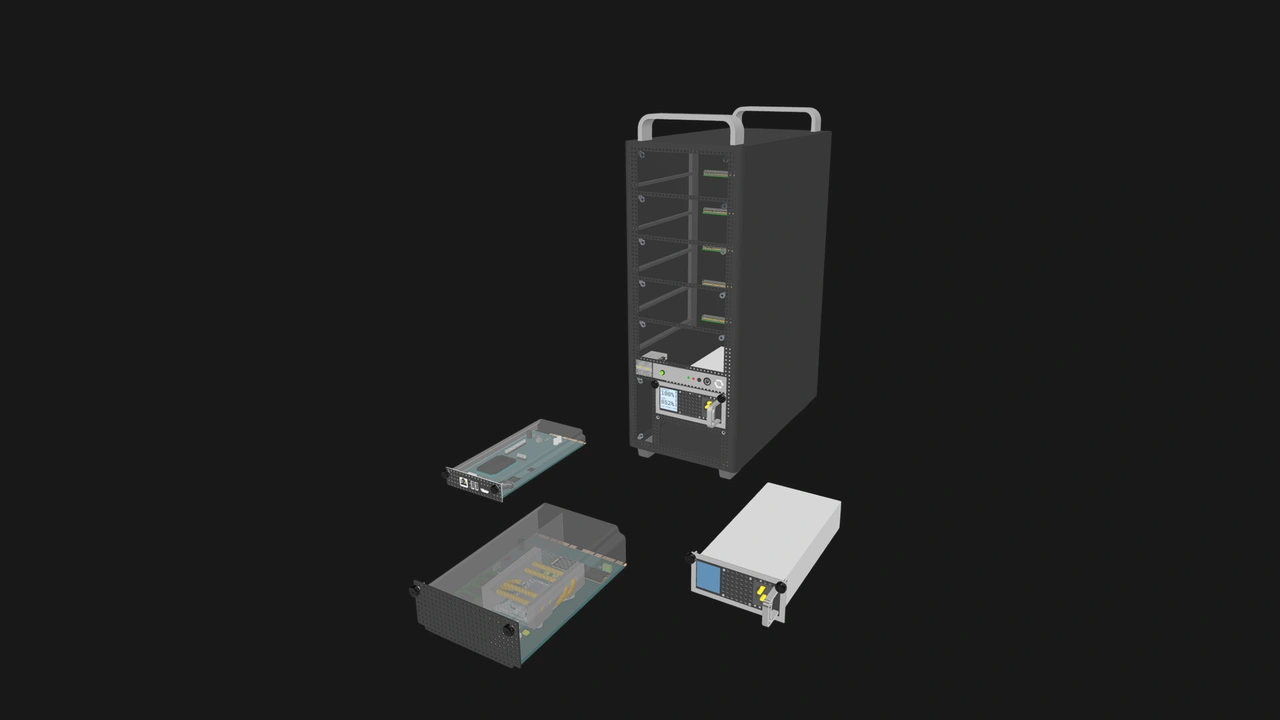
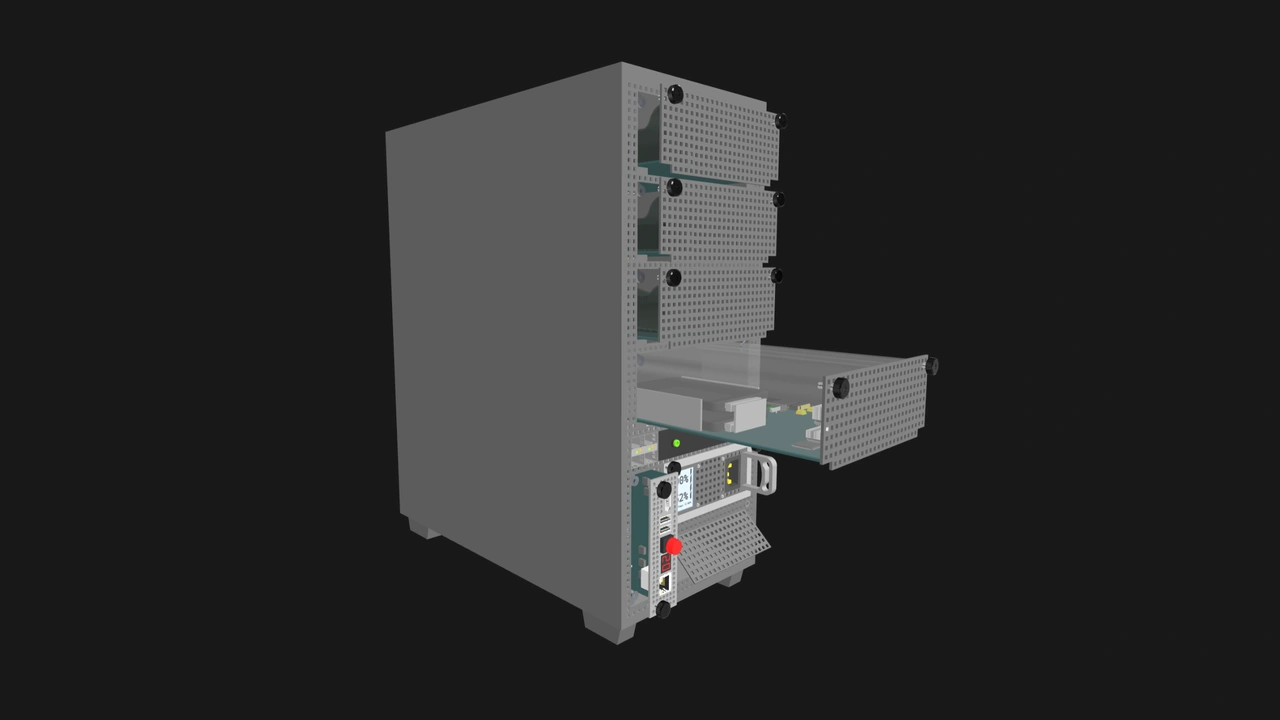
Our open specifications define three components that can be combined to create a wide range of small form factor systems. Compute Nodes are self-contained processing modules that slot into Enclosures, which provide shared power, cooling, and optionally, networking. We adopted the general architecture of blade servers, but with a vendor-agnostic approach that takes advantage of the architecture’s modularity. We also define the Management Module, an optional component that provides out-of-band access, KVM, and power control in compatible Enclosures.
While OpenSFF-compatible systems can run any operating system, our standard provides Linux-first hardware vendors with unique benefits that can define their brand and address unmet demands.
Shared values
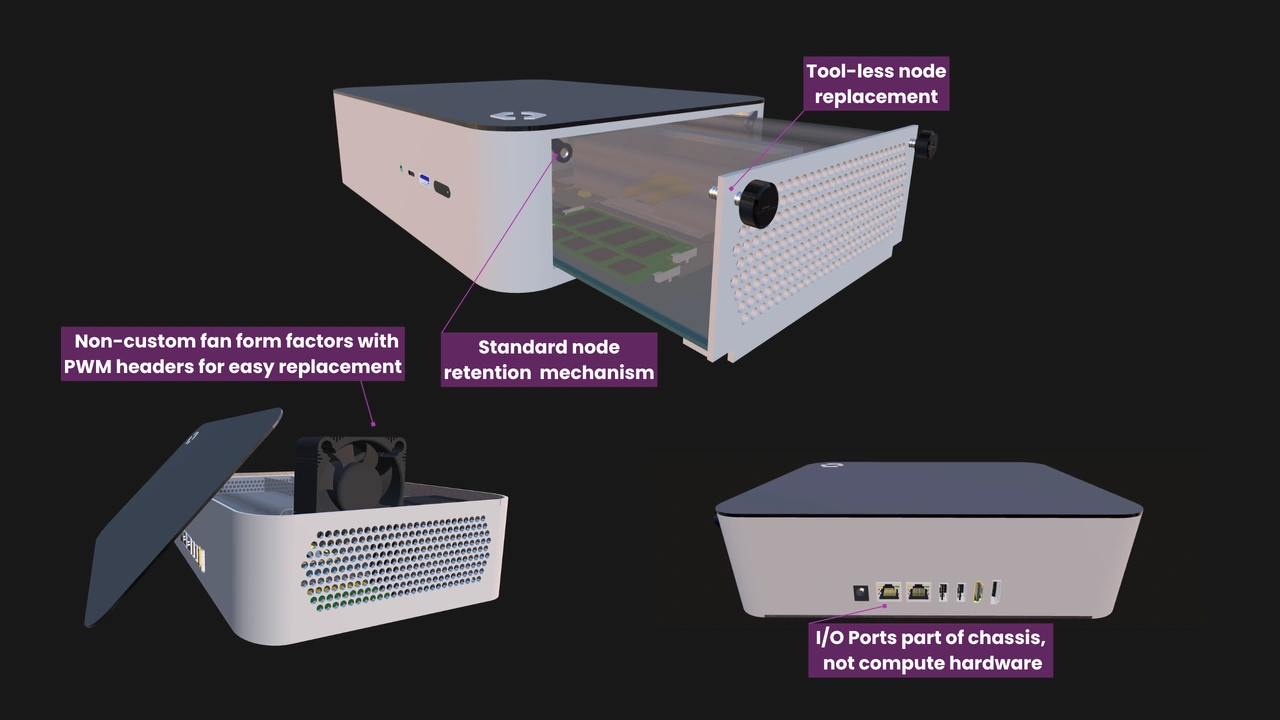
Beyond financial considerations, organizations and individuals are shifting to Linux because they value independence, control, and sustainability. We founded OpenSFF on similar principles. We standardized around the SFF-TA-1002 connector, which is also an open specification. Compatible implementations of our components will work regardless of their vendors. These components can be replaced without using tools, since Compute Nodes and Management Modules are secured only by a pair of captive thumbscrews. Enclosures that support the Management Module also have an Enclosure microSD Card. It enables smooth Management Module replacements and Enclosure migrations, and is itself user-replaceable.
New system integrators can mold their brand around this modularity and serviceability rather than offering systems with proprietary chassis. Our standard also discourages planned obsolescence, allowing users to independently replace components.
Vendor-neutral sourcing
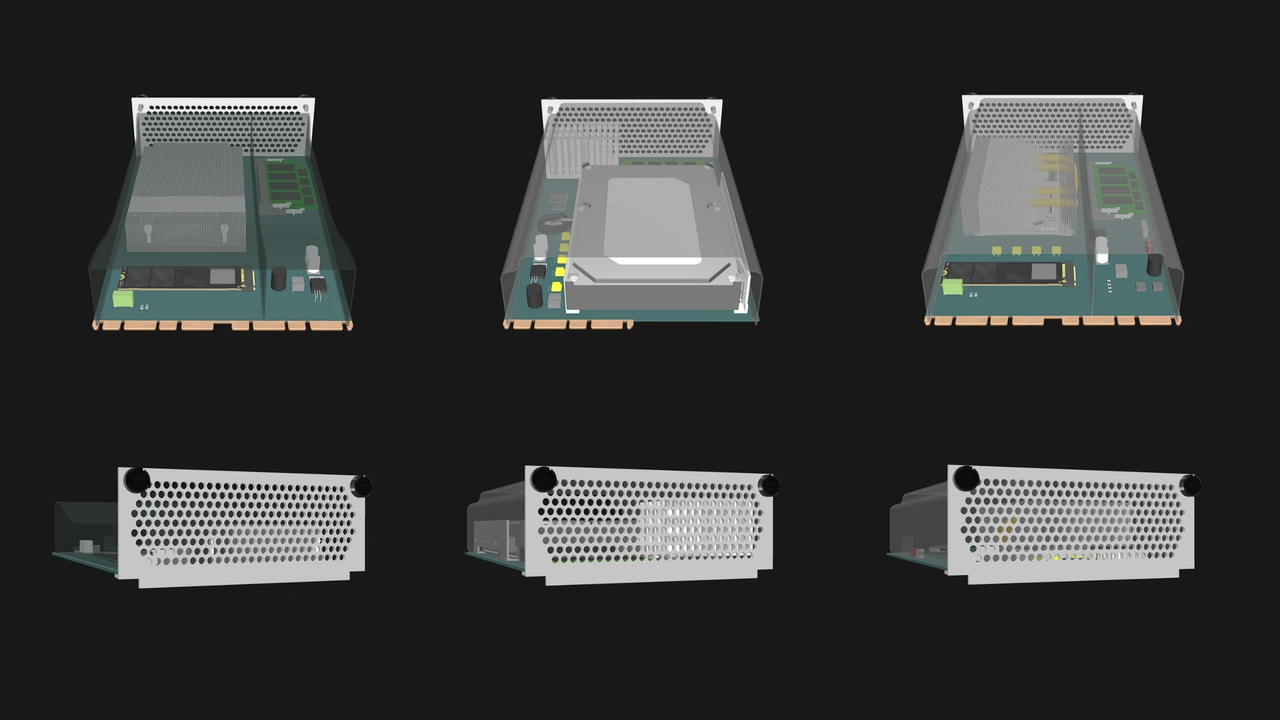
Our modular approach can also ease sourcing and manufacturing pressures. In a world with OpenSFF, system integrators will be able to rely on more vendors for components. Our standard can become the foundation for more consistent design and assembly procedures.
OpenSFF can run on any processor architecture and does not prescribe specific firmware. But when our standard becomes widely adopted, a manufacturer specializing on Compute Nodes may have enough demand to justify developing flexible firmware for Linux systems. A Linux-first vendor on the scale of System76 or TUXEDO may also have the resources to commission optimized firmware from an ODM. Our standard’s modularity and vendor-neutrality makes it easier for such solutions to spread through the ecosystem.
A common platform for multiple product lines
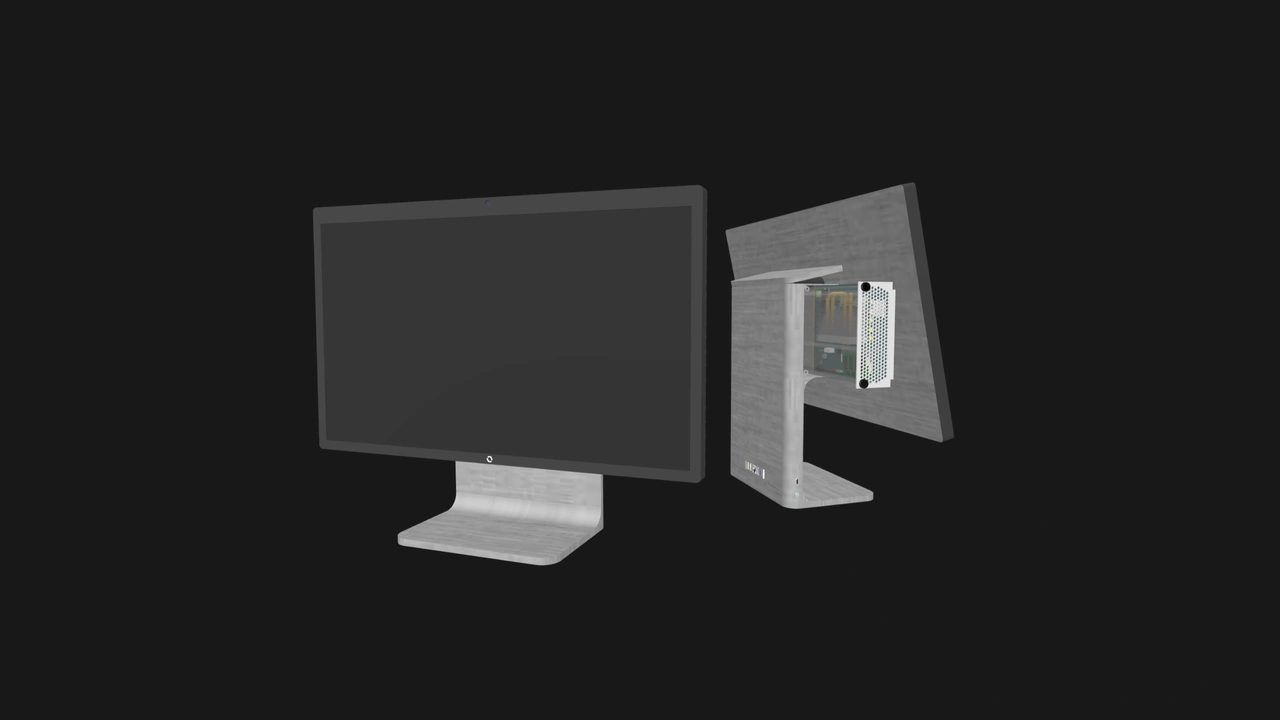
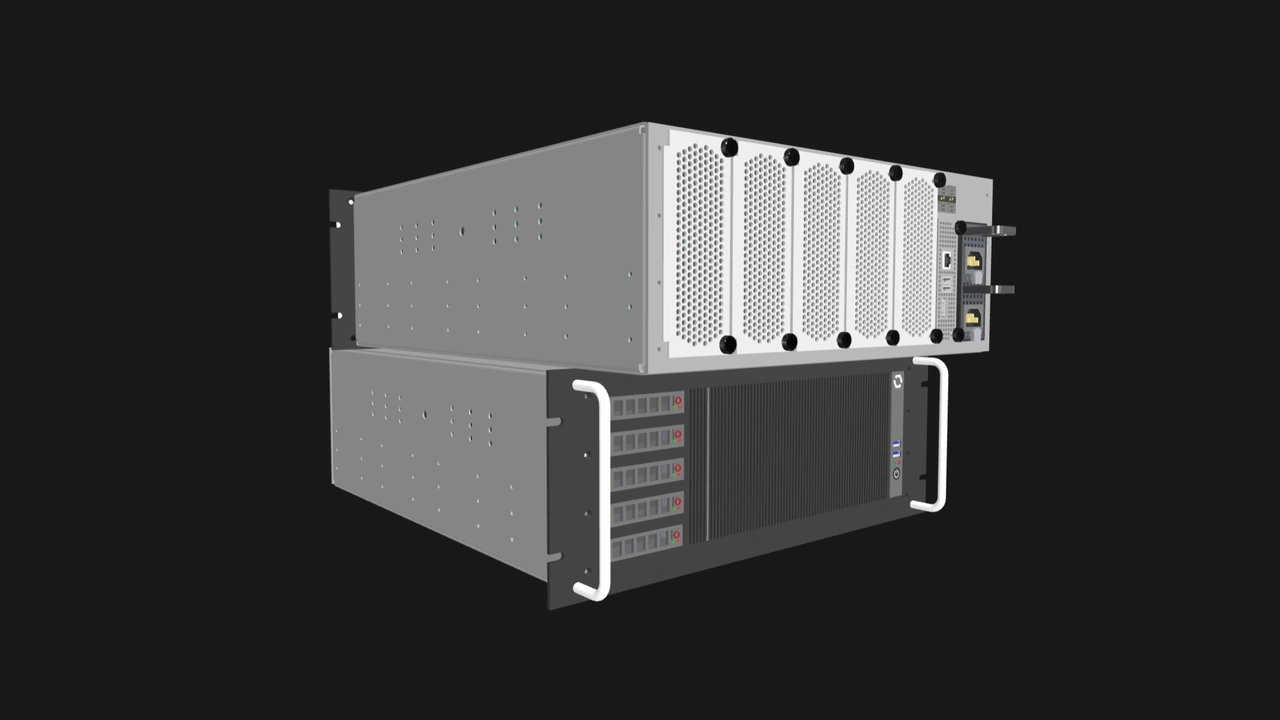
Enclosures have no defined form factor, and they can have one or multiple Compute Node slots. A system integrator can offer a single-node workstation alongside a multi-node managed cluster using a common pool of Compute Nodes and Management Modules. This streamlines inventory and support, and allows both vendors and their customers to gradually scale as their needs grow.
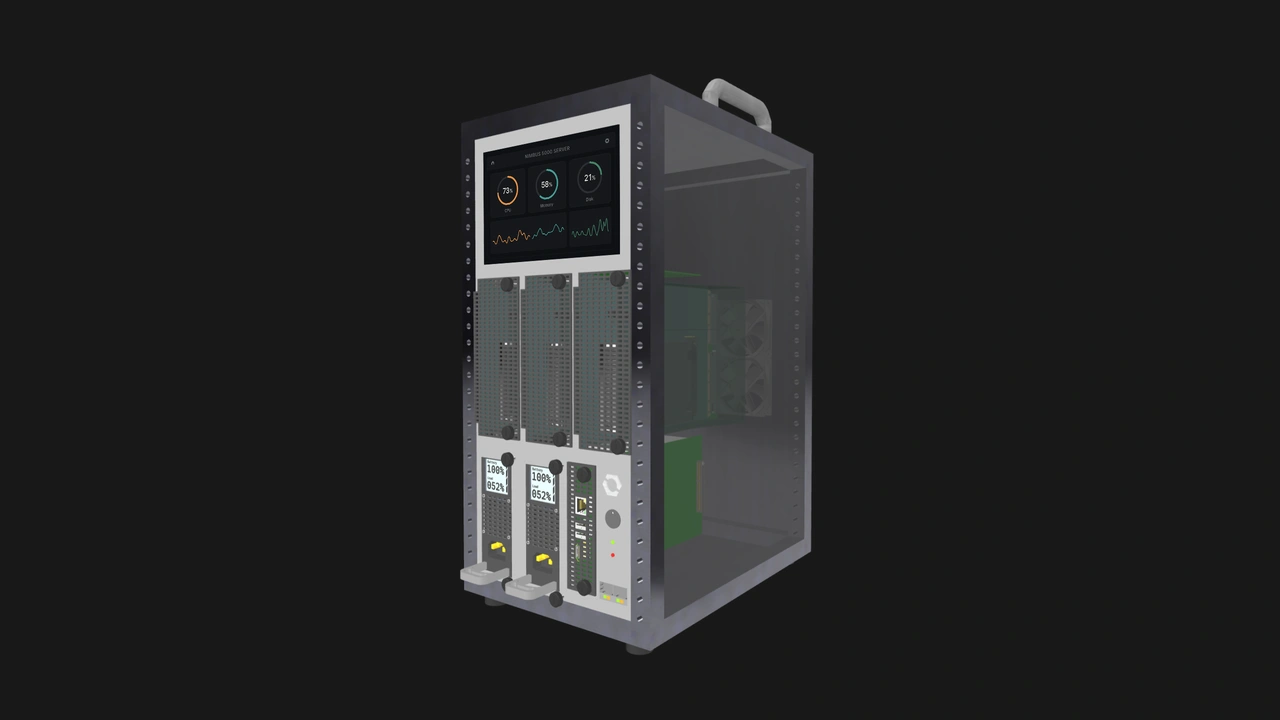
Conversely, a system integrator can choose to specialize on a use case or form factor. They can offer all-in-one desktop PCs that do not become e-waste when the compute hardware fails. They can offer compact multi-node clusters that have internal Ethernet switch fabrics, which drastically reduce cabling and streamline assembly and maintenance.
Integrated and standardized node management
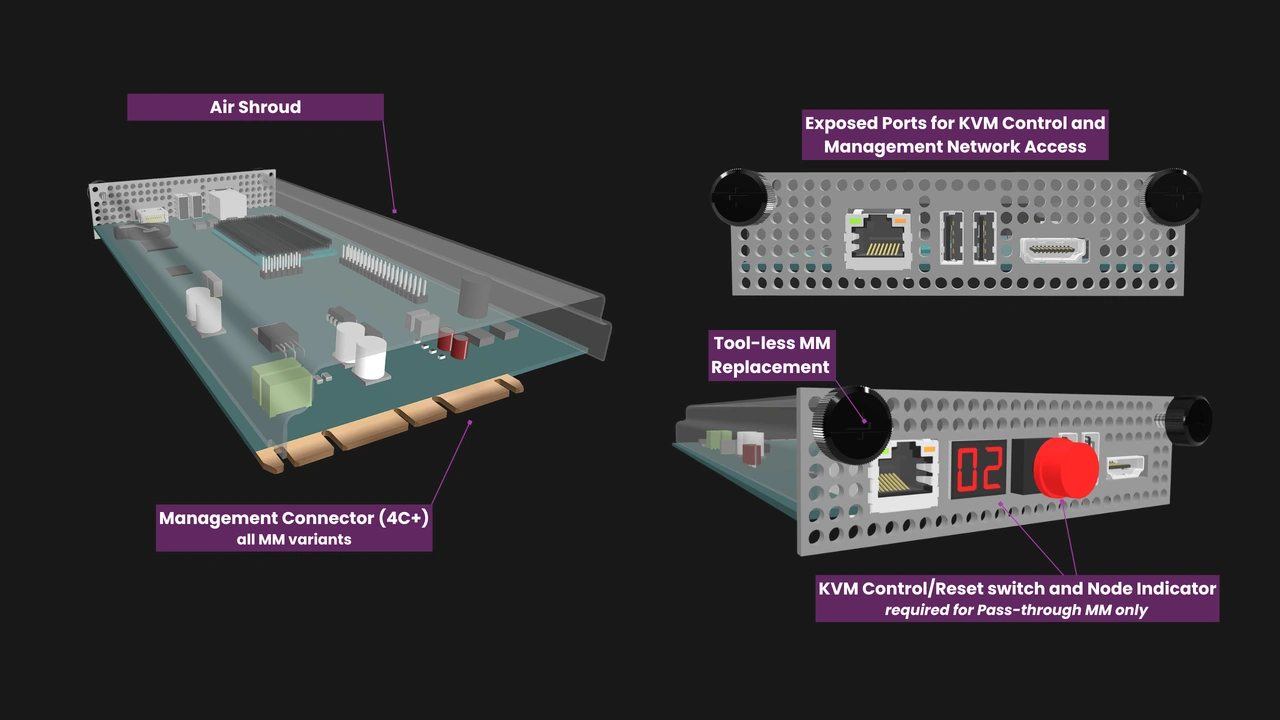
Speaking of multi-node systems, we are also developing the default management software for advanced Management Module implementations. The software is also based on Linux, specifically a custom version of Raspberry Pi OS, since we prescribe the Raspberry Pi Compute Module 5 as the platform for advanced Management Modules.
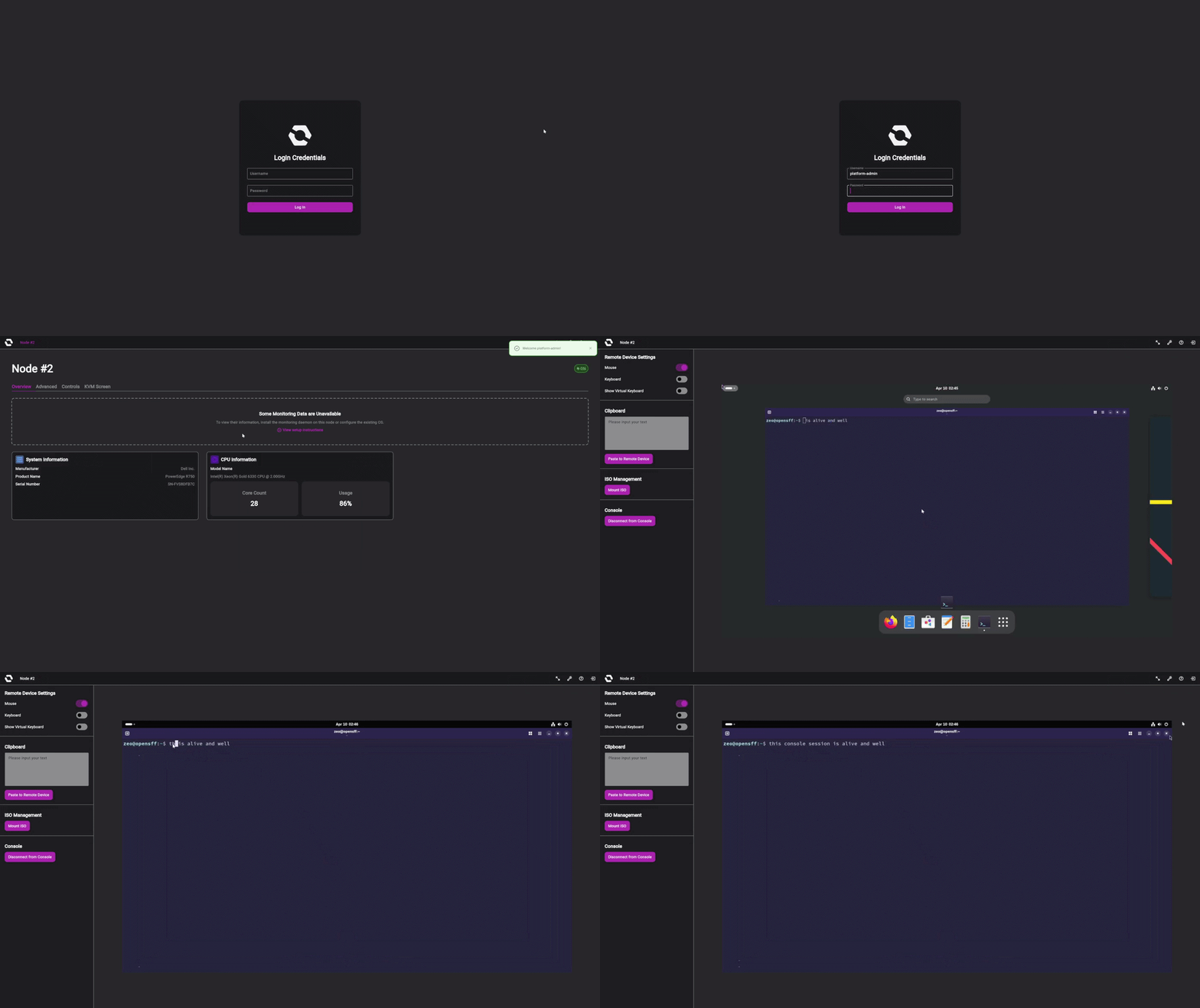
Instead of one KVM device per node, a single advanced Management Module provides IP-KVM functionality and remote power control for all nodes in an Enclosure. Linux has been the optimal choice for most servers regardless of scale, yet remote management remains out of reach for non-enterprise customers. OpenSFF-compatible implementations will allow Linux-first hardware vendors to offer systems that bridge that gap.
Architecture-agnostic and futureproof
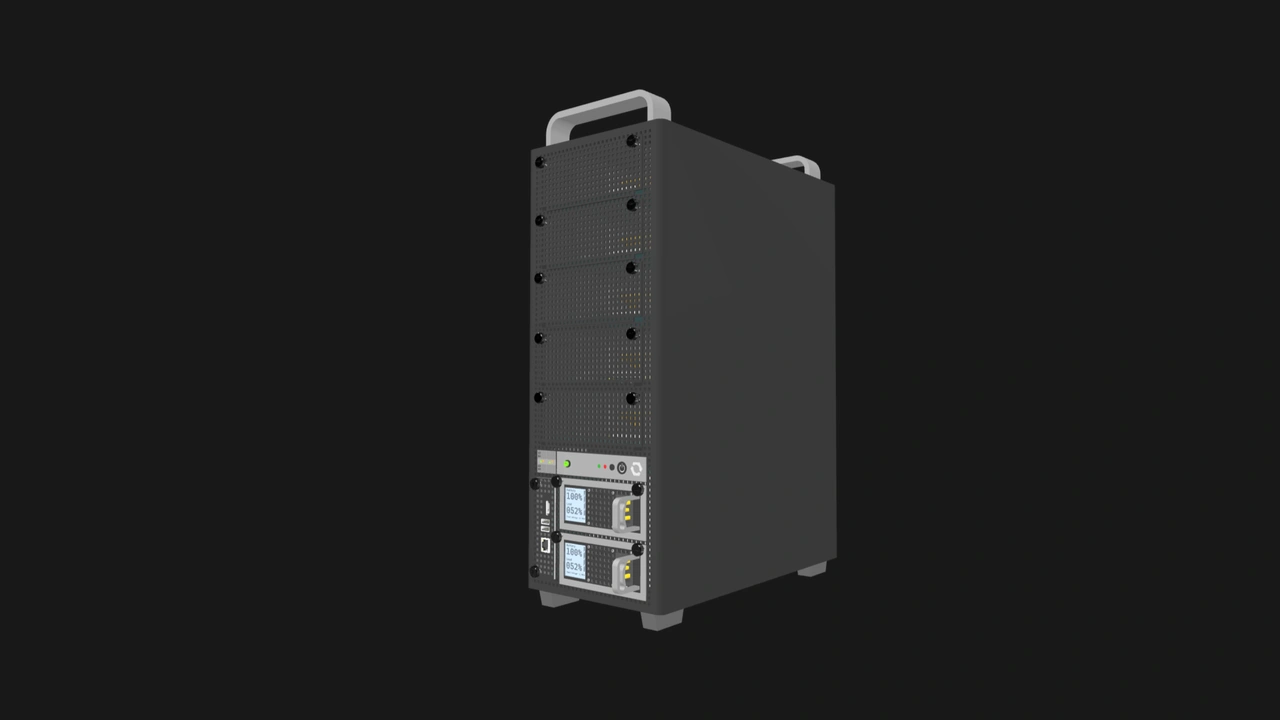
Compute Nodes with different chip architectures will work together in the same Enclosure, managed via the same Management Module. When desktop-grade ARM-based SoCs become mainstream, system integrators can offer ARM-based nodes to customers without asking them to replace their Enclosure or Management Module. Their inventory of x86 nodes can remain relevant years after ARM-based nodes mature.
Build with OpenSFF
The demand for Linux-optimized hardware is far from reaching its peak, and we commend the pioneers in this space for being ahead of the curve. But there is still plenty of room for growth and competition, including for use cases that current hardware options cannot easily serve. OpenSFF is not the optimal hardware standard for laptops, gaming PCs, or high-powered servers. But it is highly suited for workstations, thin clients, and compact servers—the computers typically used by government agencies, educational institutions, and businesses looking to switch to Linux.
We encourage you to read our specifications, and we would be grateful if you spread the word about OpenSFF. For technical clarifications, partnerships, and other inquiries, reach out to our development team at [email protected].
Other Articles

Meet OpenSFF: an open hardware standard that enables cross-vendor compatibility, modular systems, and sustainable hardware reuse.
August 11, 2025
We go over the rise of virtualization and the open software adopted by home server enthusiasts, as well as the current challenges and the future of the hobby.
September 06, 2025

Learn why OpenSFF adopted the SFF-TA-1002 connector standard and how it enables our vision.
September 18, 2025