Blog
Reforging the Blade Server: From a Proprietary Tool to an Interoperable Ally
Introduction
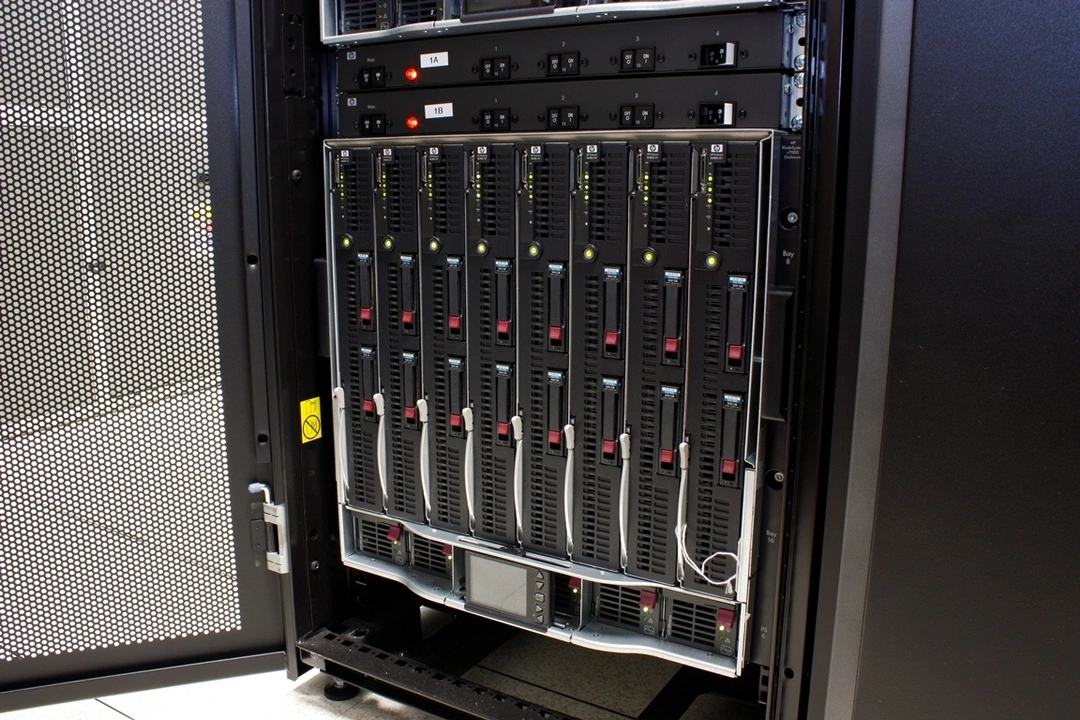
In a 2024 article promoting its rack servers, Lenovo summarized the blade server market in a single bullet point: “Once a customer chooses their blade enclosure, only that vendor’s hardware can be supported in the blade chassis. With blades, a customer can only use the specific switches, network adapters, Fiber Channel adapters, and RAID adapters that are designed for that specific blade system.”
But industry veterans know that the blade server market could have taken a very different path.
When blade servers were invented, numerous relevant open standards were already established. Within the first decade of the form factor’s release, major players in computing hardware also attempted to rally their peers to standardize. But vendors did not heed the call and chose to invest in their own designs. While some of these efforts drove genuine innovation, the landscape quickly devolved into isolated ecosystems.
For business leaders, the blade server market is a case study in the tradeoffs between differentiation and standardization. For OpenSFF, it has provided more than enough reasons to take the hardware back to its roots.
The open origin of blade servers
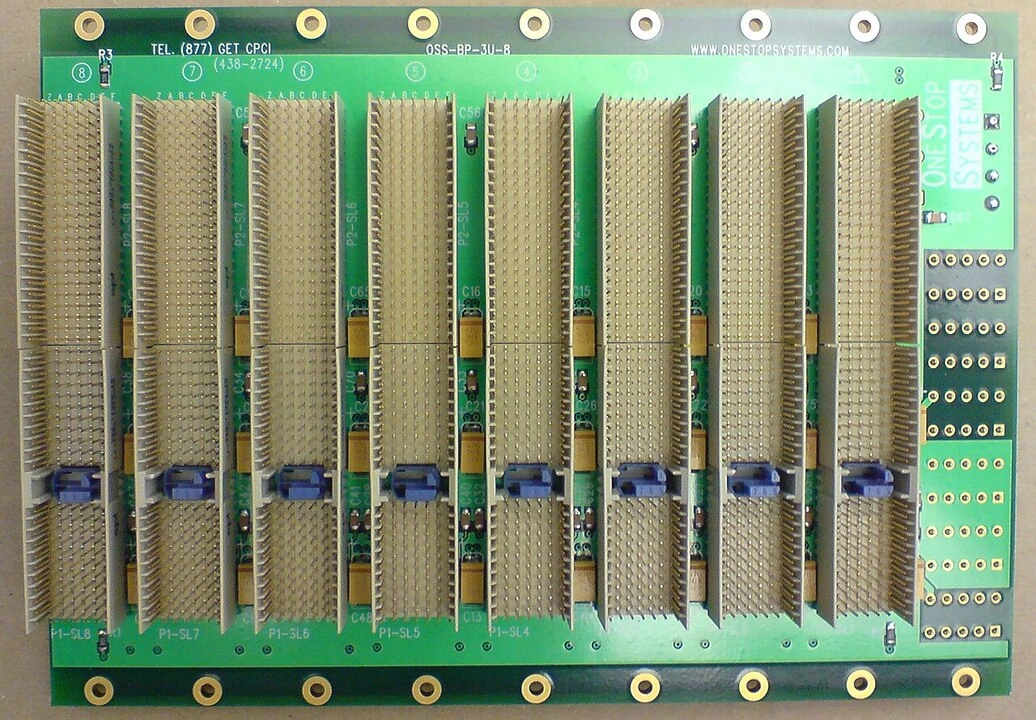
The modern blade server owes its existence to an open standard called CompactPCI. In September 2001, the PCI Industrial Computer Manufacturers Group (PICMG) released CompactPCI 2.16. That version codified the concept of interconnecting system boards using an Ethernet backplane. A startup called RLX Technologies became the first company to implement the concept and offer blade servers for commercial use.
PICMG also spearheaded the development of Advanced Telecom Computing Architecture (ATCA), an open standard for blade servers. First released in 2003, ATCA was primarily developed for telecommunications companies. It has since been applied to other critical applications such as scientific research and military surveillance, and is still actively developed to this day.
The Intel-led Server System Infrastructure (SSI) initiative also created specifications to standardize server hardware. When it was established in 1998, more than 200 vendors pledged support for SSI. Two of the headlining supporters were HP and Dell.
Proprietary implementations dominate the market
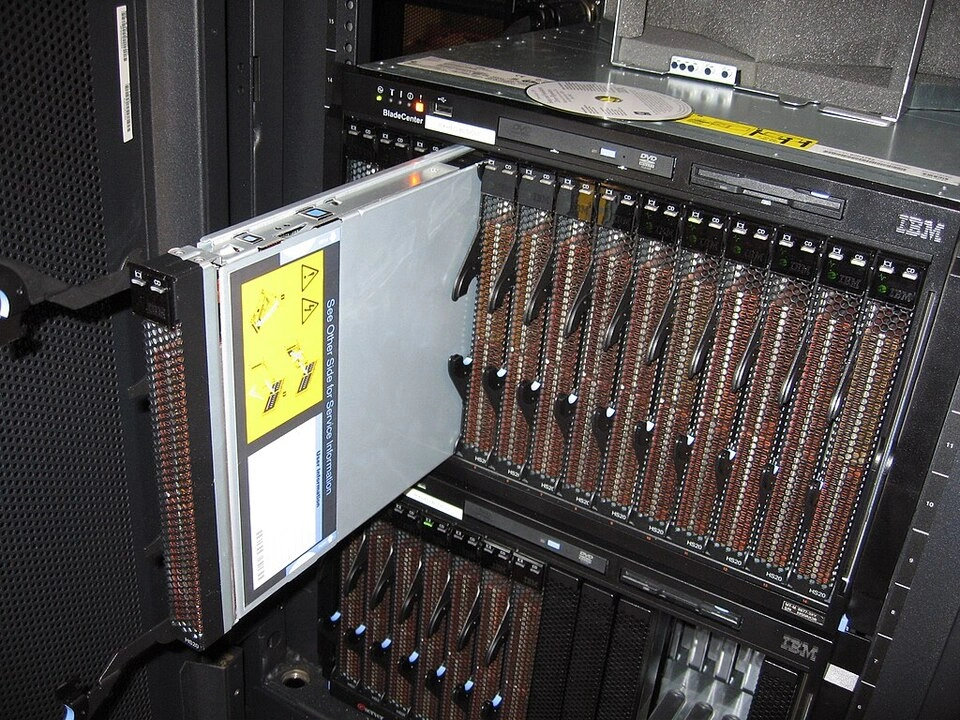
In 2002, HP and IBM entered the blade server market with the p-Class and BladeCenter servers respectively. The two companies set the trend of proprietary enclosures, add-on cards, modules, and management tools that worked only with each company’s server blades.
While IBM kept newer BladeCenter enclosures compatible with previous generation blades, HP took a more aggressive approach. Its c-Class enclosures, released in 2006, were not backward compatible.
Dell joined the fray in January 2008 with the PowerEdge M1000e and saw no reason to deviate from its competitors’ playbook. In August of that same year, executives from HP and IBM attended a panel discussion at a virtual trade show hosted by Computerworld. They made sure that the world heard their companies’ stance on standardization loud and clear.
At the panel, Intel senior blades marketing manager Kurt Lender asked attendees why the blade server market was “proprietary to a box.” HP executive Gary Thorne argued that the blade chassis should remain proprietary to allow for innovation and differentiation. IBM BladeCenter Vice-President Alex Yost had a more straightforward response.
Computerworld’s Robert Mitchell relayed Yost’s message as follows:“SSI is for the smaller, niche market blade system vendors that lack a large enough installed base to create their own ecosystem, not for IBM, which has a tremendous amount invested in its own infrastructure and designs – and has plenty of market share to have its own way.”
When SSI announced in 2009 that it had released specifications for core blade server hardware, the media was not optimistic and practically resigned to the market’s proprietary fate.
To some of the vendors’ credit, there was some truth to Thorne’s argument about innovation and differentiation. For instance, the design and fan control of the c-Class enclosure resulted in up to 30% less airflow and up to 50% less power needed to cool its blades compared to an equivalent rack server. IBM’s BladeCenter H, released in 2010, sacrificed enclosure space to add redundant internal power and I/O connectors on each blade. In addition, its power supplies achieved up to 95% efficiency.
Perhaps the most notable example of server innovation achieved through complete control of the technology stack is Cisco’s Unified Computing System (UCS). First released in 2009, UCS introduced the concept of stateless resources. Its management software, API, and proprietary switches and cables allow administrators to allocate computing, storage, and networking resources to applications based on roles and policies. This groundbreaking approach of servers as a pooled resource would eventually morph into composable infrastructure.
Today, Cisco, HP Enterprise (HPE), and Dell dominate the blade server market. According to Future Market Insights, Cisco leads with 20% of the estimated $18B global sales revenue for 2025. Its UCS X-Series, released in 2021, shifted resource management to the cloud via the Cisco Intersight platform. In addition, the X9508 chassis can be equipped with one of two specialized fabric modules to connect server nodes to different variants of PCIe Nodes.
This year saw the release of the 12th generation HPE ProLiant Synergy 480, a bleeding edge compute node that can harness the power of up to two Intel Xeon 6 CPUs, while many competitors are still using 4th or 5th generation Xeon processors. HPE claims that its Gen12 server is seven times more powerful than its Gen10 counterpart. Thankfully for existing customers, the Gen12 node is compatible with the Synergy 12000 Frame enclosure, which has been available since 2015.
On the other hand, Dell seems to be of the same mind as Lenovo and is moving away from blades and back to rack servers. Its latest blade server, the PowerEdge MX760c, was released in 2023, while its latest blade enclosure, the PowerEdge MX7000, was released in 2018. As with HPE Synergy, Dell has been making a push towards subscription-based composable infrastructure with Dell Apex.
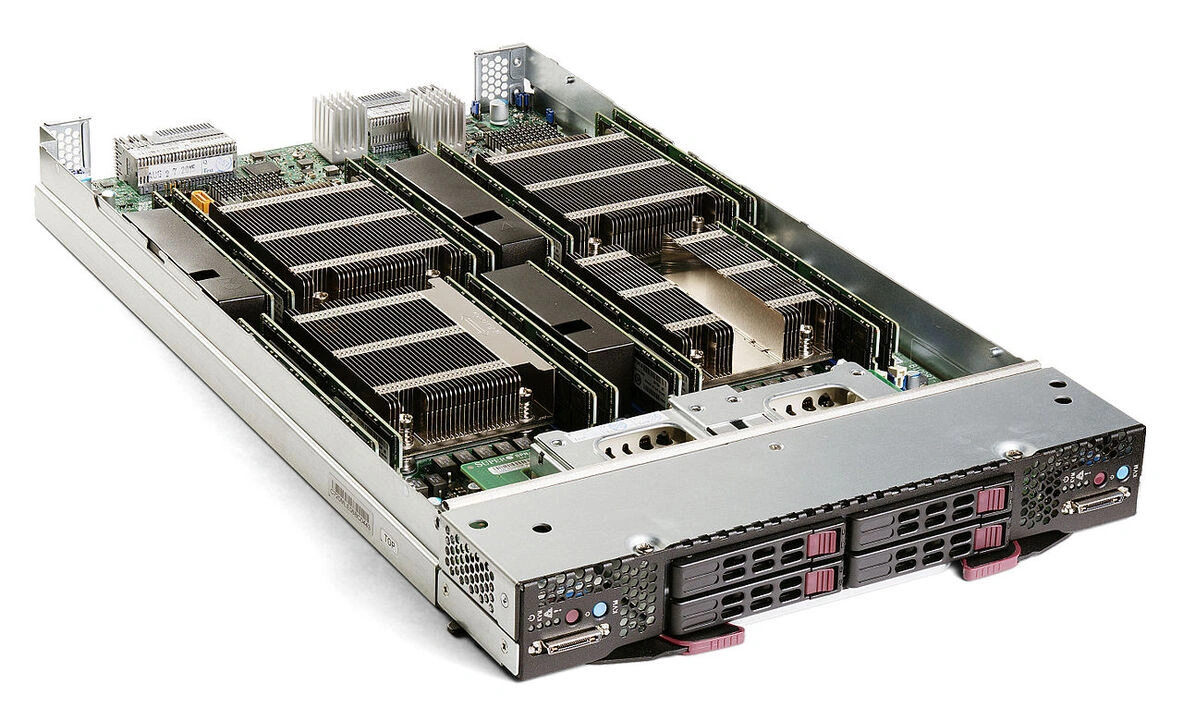
Other major vendors in the modern blade server market include Supermicro, Fujitsu, and Huawei. But even with fierce competition and various vendors leaving and entering the market, customers remain as restricted as they were over 20 years ago. Intel’s SSI initiative has proven unconvincing in light of the successful implementation of proprietary solutions. In 2018, the SSI Forum handed over its specifications to the Storage Networking Industry Association (SNIA).
The OpenSFF approach
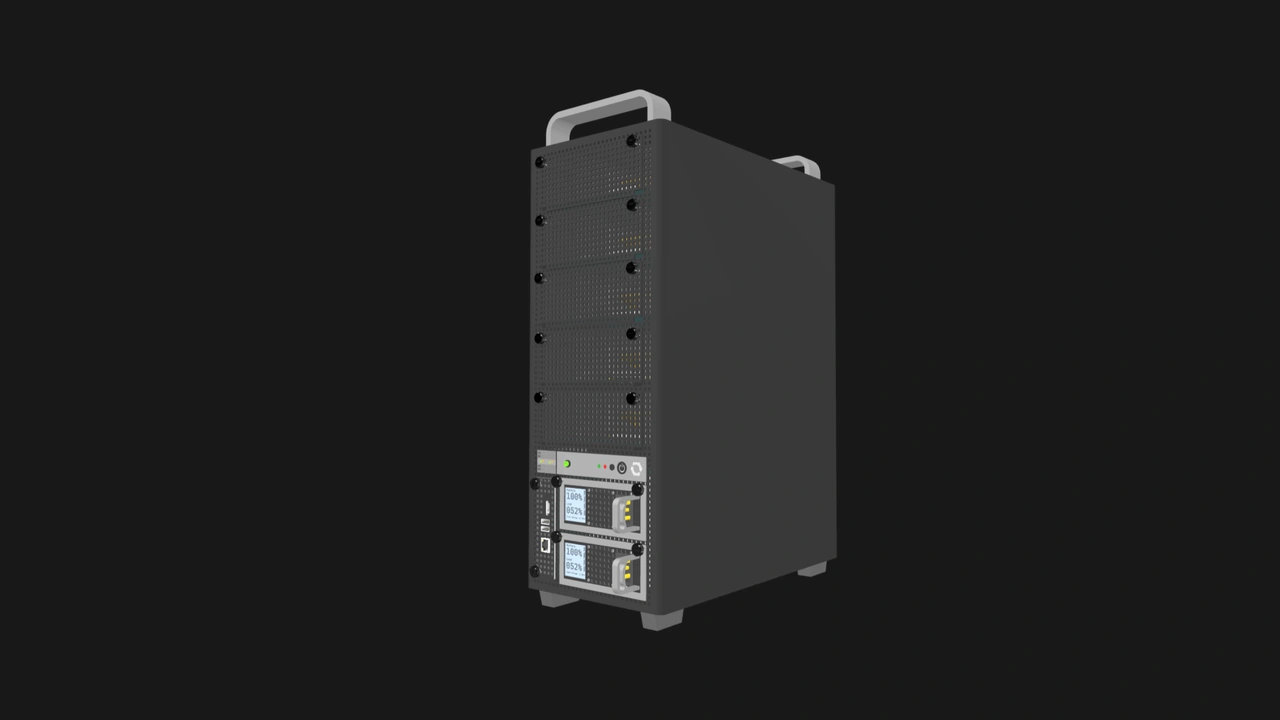
Our standard was born out of our frustration with existing solutions for small- to medium-sized clusters. We realized that we could leverage the blade server architecture - multiple nodes sharing power, cooling, and networking in one Enclosure - to enable interoperability instead of preventing it.
The backbone of our modular design is SFF-TA-1002, an open and widely adopted connector standard. Our specifications also define minimum airflow and power requirements to ensure consistency across vendor implementations. We are also developing a default Management Module software designed to run on Raspberry Pi OS. This will allow vendors with minimal experience in servers to enter the market without developing an orchestration platform from scratch.
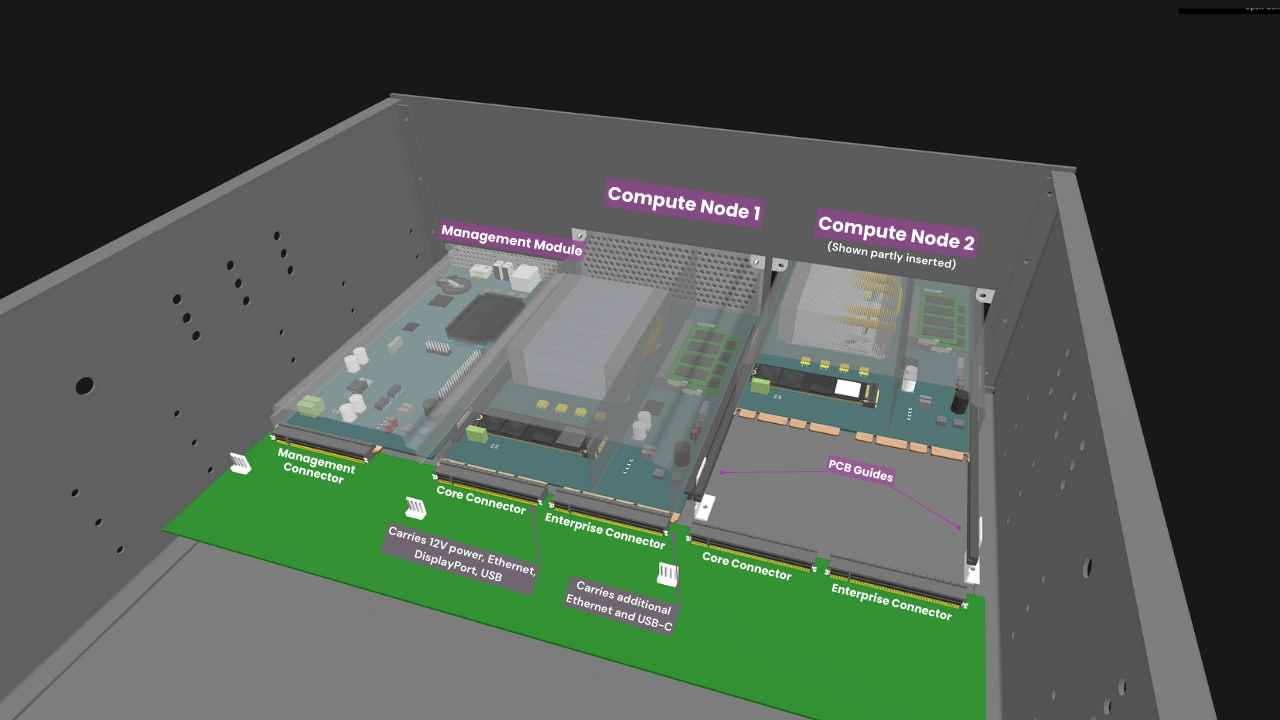
But we are also giving vendors plenty of space and flexibility to innovate and differentiate their implementations. Our Compute Node specification does not specify a selection or layout of components. Our Enclosure specification specifies measurements related to mechanical envelopes, retention zones, and connector alignment, but it does not define overall dimensions or forbid additional features. Vendors are also free to determine the mode of power delivery in Core Enclosures. Similarly, our Management Module specification defines a pair of reference designs, but allows for a wide range of implementations.
While blade servers were designed from the start to cater to large-scale deployments, OpenSFF is also suited for single-node implementations. Along with the open nature of our standard, this should enable a truly modular and cost-effective upgrade path for users. It also allows vendors to implement our standard in non-server hardware. This flexibility can reduce their research and development costs and enable them to tap into other markets, even if they focus only on one of the OpenSFF components.
Build with OpenSFF
Blade servers were invented because enterprise users wanted a space and power-efficient alternative to the rack and tower servers of the 90s. We can only imagine what vendors could have achieved had they standardized.
But for small-to-medium scale applications, we believe that we can go beyond wishful thinking. With your support, we can create clusters that merge the interoperability of desktop systems with the efficiency of blade servers.
We encourage you to read our specifications, and we would be grateful if you help spread the word about OpenSFF. For technical clarifications, partnerships, and other inquiries, reach out to our development team at [email protected].
Other Articles

Meet OpenSFF: an open hardware standard that enables cross-vendor compatibility, modular systems, and sustainable hardware reuse.
August 11, 2025
We go over the rise of virtualization and the open software adopted by home server enthusiasts, as well as the current challenges and the future of the hobby.
September 06, 2025

Learn why OpenSFF adopted the SFF-TA-1002 connector standard and how it enables our vision.
September 18, 2025