Blog
Communal Property: How OpenSFF Can Aid Humanitarian Efforts
Introduction
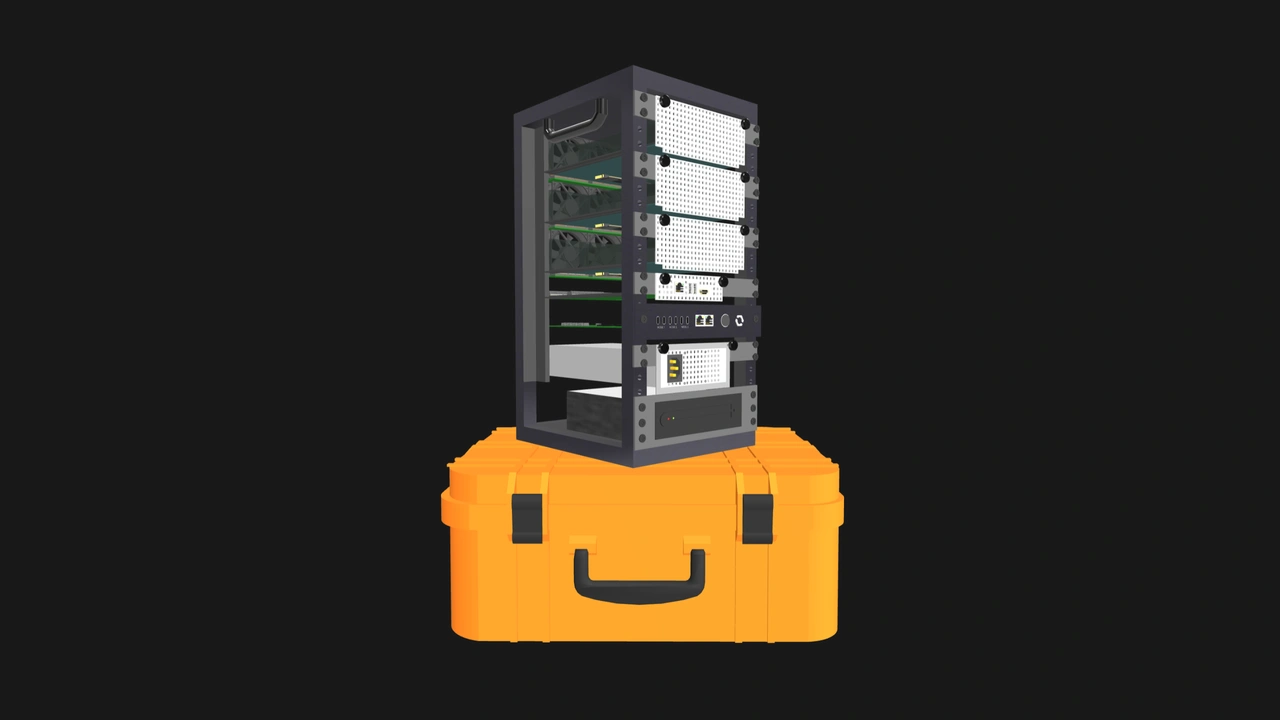
Humanitarian organizations and community-led technology projects must perennially do more with less, and often in places where supply chains are unreliable and technical expertise is scarce. Whether their efforts involve rapid response or long-term operations, humanitarians need technology that lets them act as quickly, as efficiently, and as freely as possible.
Many of these organizations benefit from the generosity of their corporate partners. Hardware or software donations from major technology companies have undoubtedly extended the reach of humanitarian programs. But even organizations that enjoy this support or continue to rely on proprietary technology understand the risks of depending too much on a single vendor’s products.
Grassroots initiatives operate under even tighter conditions. Due to their limited visibility, they often resort to used equipment or devices that they build themselves. The philosophical implications of vendor-neutrality matters just as much to these operations, but serviceable and affordable hardware also means the world to them and the people they serve.
OpenSFF is developing specifications for modular small form factor computers. Our goal is to establish a diverse ecosystem of interoperable, serviceable, and scalable hardware—the same properties that humanitarian and community organizations need from their IT equipment.
Why humanitarian organizations need vendor-agnostic, open-source technologies

To maintain neutrality, flexibility, and resilience
The International Red Cross and Red Crescent Movement has clearly articulated why vendor independence matters for humanitarian organizations. In the draft elements (PDF) of the Movement’s proposed resolution entitled Humanitarian accountability of technology: Ensuring humanitarian principles guide our use of ICTs, the Movement proposes that it should focus on open-source solutions for business-critical capabilities, noting that even the perception of alignment with vendors could compromise its neutrality and independence.
The draft also calls on member organizations to diversify their Information and Communications Technology (ICT) stack, reduce dependency on a small number of providers, and prioritize local ICT options whenever possible. The Movement also noted that exploring free or open-source tools can help it avoid the “disproportionate cost” of switching away from proprietary solutions.
Neutrality and adaptability are essential for any humanitarian organization, regardless of its scope. Their programs ultimately boil down to help that has no strings attached, and many of these organizations were founded specifically to foster independence or self-reliance.
To maximize limited resources and reduce friction in emergencies
Open-source technologies also facilitate interoperability, which can significantly increase the efficiency and agility of humanitarian organizations. NetHope, a nonprofit organization that connects NGOs with technology companies, advises that “fragmented structures and siloed systems” reduce the overall impact of NGO activities.
NetHope’s Frontline Humanitarian Logistics program page also warns that if the companies behind the information systems that humanitarian organizations use do not prioritize interoperability, “they can quickly become a limiting factor in emergency response and recovery.” NetHope adds that forcing NGOs to come up with their own workarounds to these inefficiencies would put more strain on these organizations’ resources.
NetHope’s warnings are specifically aimed at supply chain software and data systems, but the same logic applies to hardware. Proprietary devices that can be serviced only through specialized technicians or vendor-specific components can become liabilities on the field.
Where OpenSFF fits in the humanitarian hardware landscape
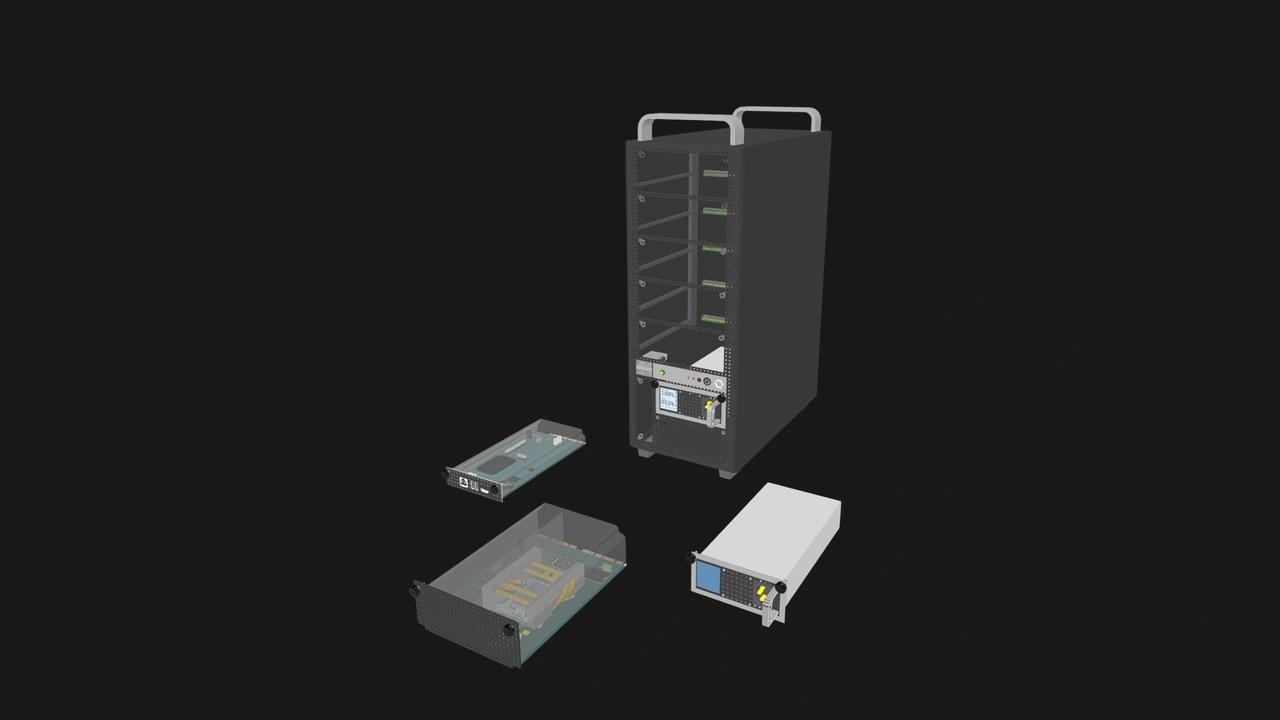
Our modular design adopts the general architecture of blade servers into an open-source hardware standard. We define two user-replaceable modules: the Compute Node, a self-contained processing unit, and the Management Module, an optional management device that provides local KVM access and power control at its simplest implementation. They are mounted using only a pair of captive thumbscrews to an Enclosure, which provides power, cooling, and optionally, networking. Enclosures have no defined form factor or layout, and can be designed to host one or multiple nodes.
Any Compute Node will work with any compatible Enclosure, regardless of their vendors. The same applies to the Management Module. By decoupling compute and node management from the housing and I/O, we enable users to procure these three components from multiple vendors and replace them independently.
Our adoption of the SFF-TA-1002 connector drastically reduces internal cabling. Paired with our toolless mounting mechanism, OpenSFF modules can be installed and replaced without special training or tools. We are also developing software for remote node management and monitoring.
Here are several humanitarian deployments that would benefit from OpenSFF-compatible alternatives.
Field servers and remote deployments
Médecins Sans Frontières (MSF), aka Doctors Without Borders, standardized its fixed Field Network Kit on the Lenovo ThinkSystem SE350 Edge Server. The computer is packed into a shock-resistant case, along with a router, switch, power supply, and the required cables.
The kits are shipped to missions across more than 20 countries, and are managed remotely by a small engineering team. While the ThinkSystem SE350 has a built-in management controller, MSF revealed in its FOSDEM 2025 presentation that it created its own remote management architecture. They set up SSH relay servers distributed across three locations and three platforms, because SSH is “blocked a lot less” than VPNs in the countries where they operate.
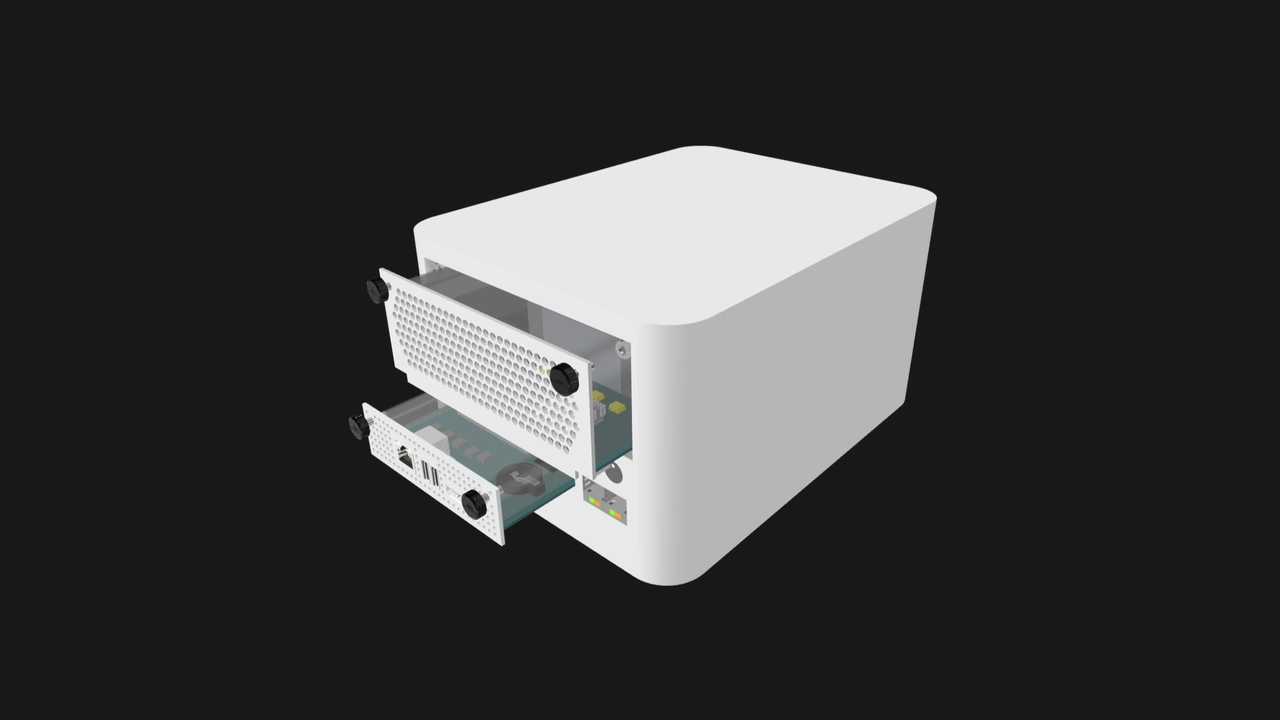
OpenSFF addresses MSF’s need for a managed edge server at the hardware level. Our Enclosure Specification defines two internal Ethernet fabrics. The Node Network is for inter-node traffic and external connectivity, while the Private Enclosure Network (PEN) is a dedicated out-of-band management network. Our Management Module Specification has a reference design for a Full-featured variant that has its own processor and operating system. Together with the PEN, a full-featured Management Module provides IP-KVM and remote power control and monitoring across all Compute Nodes in its Enclosure.
MSF also mentioned in its FOSDEM presentation that they also make smaller Field Network Kits powered by “fanless industrial NUC” mini PCs that fit in a backpack, which is another computer that an OpenSFF-compatible system can adequately replace.
Community network infrastructure
Humanitarian organizations that operate in more accessible locations can also benefit from OpenSFF alternatives to their IT infrastructure. One such group is NYC Mesh, a nonprofit that provides affordable and unrestricted internet access, web hosting, and colocation to New York City residents. It operates a distributed network that connects to the internet through “supernodes”—servers with direct fiber connections to internet service providers.
The OpenStreetMap Foundation aggregates geographic data from volunteer contributors and freely licensed sources into a free database. Its collection has proven valuable in a variety of fields, as well as in supporting humanitarian efforts. The Foundation uses proprietary servers to render maps, replicate data, and provide API services.
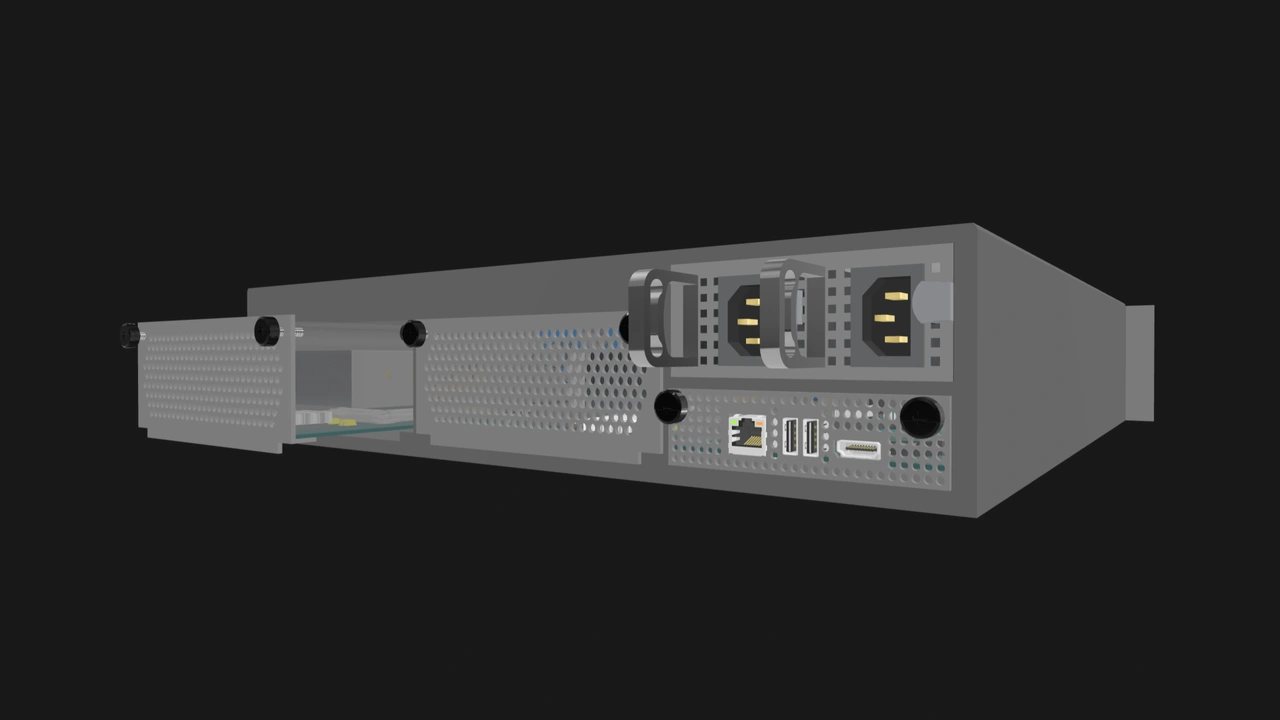
These operations require more than just server-grade performance and connectivity. They would be served best by options that can maximize their budgets and minimize their operational overhead. OpenSFF makes it easier to assemble multi-node servers piece by piece through a best-of-breed approach, including the option to combine new components with secondhand ones. The Management Module can save users from relying on a single vendor’s management platform, and the Enclosure microSD Card makes it easy to replace Management Modules or migrate Compute Nodes to a different managed Enclosure.
Last-mile infrastructure and community access
Many humanitarian deployments also involve affordable workstations and access points, such as the equipment that NetHope provided to the Community Technology Empowerment Network (CTEN), a refugee-founded nonprofit in Uganda’s West Nile region. Aside from supporting CTEN’s digital literacy activities, the donated equipment also helps local government workers and refugees communicate with colleagues and families.
The same applies to Detroit Community Technology Project’s Equitable Internet Initiative, which provides internet access and digital literacy workshops to underserved neighborhoods in its city. Projects such as the Internet-in-a-Box and RACHEL by World Possible use single board computers to carry offline copies of Wikipedia or other educational content. But learners still need devices to access those resources.

Ultimately, low-budget and community-led initiatives benefit enormously from affordable, modular, and user-serviceable hardware. Compatible implementations of the Management Module would also be more capable, scalable, and streamlined than affordable IP-KVM devices while remaining more affordable than enterprise management solutions.
Build with OpenSFF
We applaud the support that corporations extend to humanitarian organizations. We also agree with the International Red Cross and Red Crescent Movement’s assertion that vendor-agnostic hardware and open-source tools can provide significant financial, operational, and philosophical advantages.
Reflecting on its extensive experience in connecting NGOs, NetHope observed what it dubbed the “NetHope Effect”: news of a nonprofit’s successful technological implementation quickly spreads across the NetHope community, accelerating the progress of its members and organically amplifying the solution’s impact.
When OpenSFF becomes widely adopted, we would be honored to hear and share stories about how humanitarian organizations use our standard’s implementations or its spinoffs. We encourage you to read our specifications, and we would be grateful if you spread the word about OpenSFF. For technical clarifications, partnerships, and other inquiries, reach out to our development team at [email protected].
Other Articles

Meet OpenSFF: an open hardware standard that enables cross-vendor compatibility, modular systems, and sustainable hardware reuse.
August 11, 2025
We go over the rise of virtualization and the open software adopted by home server enthusiasts, as well as the current challenges and the future of the hobby.
September 06, 2025

Learn why OpenSFF adopted the SFF-TA-1002 connector standard and how it enables our vision.
September 18, 2025