Blog
Elephants in Other Rooms: How OpenSFF Will Co-exist with Existing Computing Standards, Part 2
Introduction

Welcome to our extended look at OpenSFF’s place alongside other form factors. In the first part, we recounted how ATX became the foundation of modern desktop computing. But while it offers unparalleled interoperability, availability, and flexibility, the sheer size of its motherboard makes it suboptimal for many use cases.
As computing technology improves and becomes more integrated in our modern world, the demand for smaller systems steadily increases. However, size is merely one prerequisite in otherwise different use cases. Further, there are multiple levels of miniaturization, and not all customers prioritize size above all else. Markets may also prefer a passable solution with an affordable price over a size-optimized yet expensive alternative.
In this article, we will go over the distinct goals and applications of several SFF standards and conventions. Ultimately, this overview will demonstrate how OpenSFF is unique and necessary, even in today’s crowded small form factor (SFF) landscape.
Intel NUC
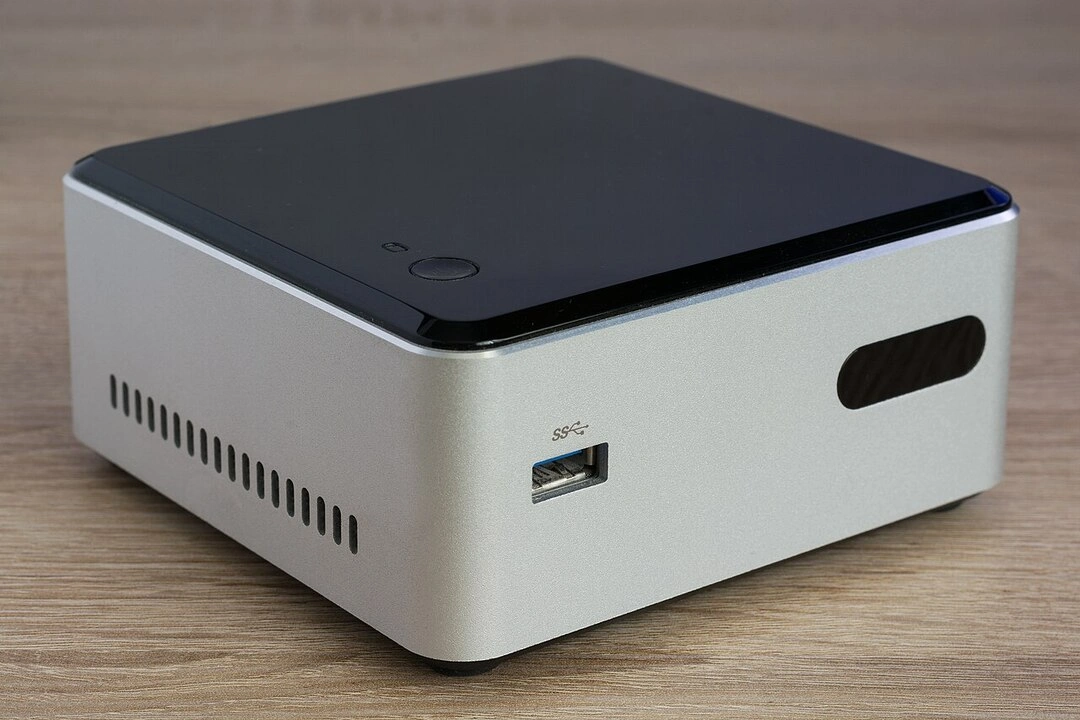
It may seem unusual to start with the Next Unit of Computing (NUC), as it is more of a brand than a standard. Further, when Intel unveiled NUC in 2013, it was technically late to the party. OEMs such as Shuttle had been churning out compact pre-built systems since the early 2000s.
Yet we cannot underestimate the impact of Intel’s reputation and marketing. The company primarily created NUC to fabricate a new market for its low-powered CPUs. Intel realized that if their offerings were good enough for budget laptop users, then they would be good enough for other audiences as well. It positioned the first generation of NUCs as white label kits or standalone motherboards for digital signage, kiosks, and media centers.
But many end users, enthusiasts, and B2B segments also embraced the compact system. NUC gradually diversified into workstations with more capable CPUs, and even gaming-focused models. The rest of the industry caught on. Millions of users could forgo the headroom offered by ATX or even its smaller derivatives; doubly so if it meant having a smaller and more affordable computer. But it was NUC that opened the floodgates for the headless laptops that we now call mini PCs.
Intel was eventually unable to keep up in the space it popularized. The company stopped developing NUC products in 2023 and licensed the brand to ASUS. Yet Intel’s imprint on this new “form factor” is so fundamental that some mini PC vendors still add “NUC” to their product names to this day.
While mini PCs are rapidly replacing ATX-based computers in desktop and certain B2B segments, there are of course significant and unique SFF niches that they cannot serve.
Thin Mini-ITX
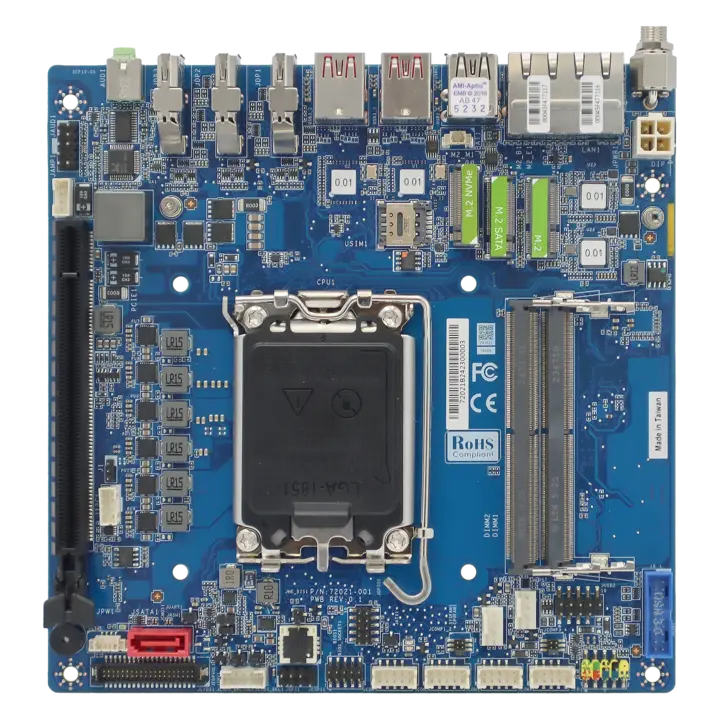
In 2001, computer manufacturer VIA Technologies released Mini-ITX, an open standard based on Intel’s ATX. Similar to what Intel had in mind with the NUC, VIA Technologies sought to create a low-powered computing form factor for industrial, entertainment, and other embedded applications. Not only has VIA successfully catered to its intended markets, Mini-ITX turned out to have a much wider appeal, including as a form factor for custom made PCs.
In a curious twist, Intel spun off VIA’s work and released the Thin Mini-ITX specification in 2012. As its name suggests, a Thin Mini-ITX motherboard has the same 17cm x 17cm (6.7”x 6.7”) width and length as a Mini-ITX board. But its height is restricted to around 20mm (~0.8”), compared to 46mm ( ~1.8”) for Mini-ITX.
Intel developed Thin Mini-ITX to fit in machines that have shallow cases, such as All-in-One PCs and medical appliances. In addition, Thin Mini-ITX motherboards have connectors and switch headers for built-in displays, further specifying the type of use cases that necessitated the standard.
Like its thicker predecessor, Thin Mini-ITX has become a common standard in embedded systems. Consumer-oriented motherboards and cases based on the standard have also been released.
Mini-STX

By 2015, NUC computers and mini PCs had become viable alternatives to full-sized desktops. Intel assumed that there was also a sizable market of users who wanted a compact system, but did not want to be stuck with the CPUs soldered in mini PCs. Thus the company developed Mini-STX, which put a CPU socket in a motherboard larger than a NUC board, yet smaller than a Mini-ITX motherboard.
Intel initially dubbed the new standard “5x5” to differentiate it from the NUC, which settled on a 4”x 4” (10.2cm x 10.2cm) motherboard. But the name did not stick, partly because it was not accurate: a Mini-STX motherboard is actually larger at 5.5”x 5.8” (14cm x 14.7cm).
Several vendors tried releasing boards based on Mini-STX, with ASRock being the most committed of them all. The computer manufacturer even came up with a proprietary variant called Micro-STX. It increased the board size to 5.8”x 7.4” to make room for an MXM expansion slot, since Mini-STX has no room for a PCIe expansion slot.
Unfortunately for these companies, Mini-STX has become another DTX. Both standards tried to replicate the success of mATX by offering a medium-sized option. But mATX offered significant reductions in size and price with little to no compromise for its intended audience. On the other hand, the advantages of Mini-STX and DTX have not proven compelling enough for customers to choose them over the established form factors that they squeezed into.
Computer-on-Module (COM)/System-on-Module (SOM)
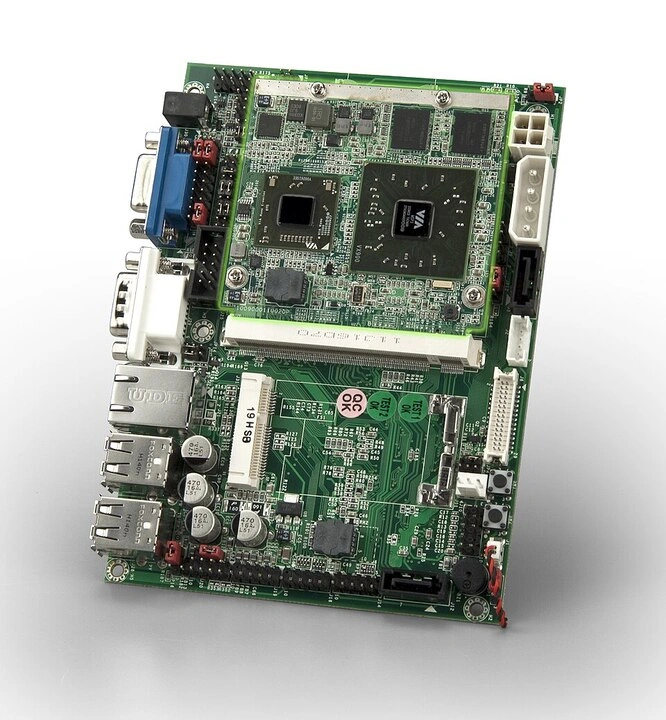
The form factor standards we have discussed so far designed their system boards to be installed directly into a case. But certain machines, such as those used in military, power, or aerospace facilities, are so rare and specialized that it would be inefficient to build each one’s embedded system from scratch. COM (and SOM) present a clever workaround to this dilemma.
COMs are not directly mounted or connected to the machine that they control. Instead, they are installed on a carrier board. The board can be customized to provide the exact components, connectivity, and power delivery that best fit a machine’s use case. This allows COMs to be standardized and mass-produced. Highly specialized machines can then benefit from technological improvements without requiring a total redesign or replacement every few years.
This modular approach actually predates all of the form factors we have tackled, including ATX. The lineage of COMs can be traced back to the PC104 standard, which was first released in 1987. Multiple PC104 modules are connected vertically using pin-and-socket ISA connectors. One module will have the CPU, another module handles power, another will have storage, and so on.
PC104 has since adopted newer interface standards and is still implemented to this day. Modern COMs on the other hand are based on a variety of standards, such as COM Express, SMARC, and Qseven. These standards prescribe varying module dimensions, power limits, connectors, and more. Unlike PC104 modules, modern COMs connect to carrier boards via edge connectors or board-to-board mezzanine style connectors.
Why numerous SFF standards exist
As industries transition to a digital and online world, computer manufacturers continue to develop designs that fit in smaller and smaller spaces: remote stations, counters, and within machines and vehicles. However, the environments and economics of these use cases are so varied that no single solution has been able to address them all equally well.
The physical constraints also make it harder for SFF standards to meet the needs of certain customers, even as computing performance and efficiency continue to improve. Thin Mini-ITX proved that the difference can sometimes come down to a literal inch. Yet reducing a system or its board’s dimensions often means compromising in other areas, from performance to price.
Operational conditions and the ideal lifecycle of a machine can also greatly affect hardware standards. For instance, certain systems that COMs control are meant to run continuously for a decade, if not longer. In such cases, reliability may be prioritized over serviceability. Hence, the COM in such systems is typically screwed onto the carrier board to secure its connection.
Why OpenSFF will co-exist with other SFF standards
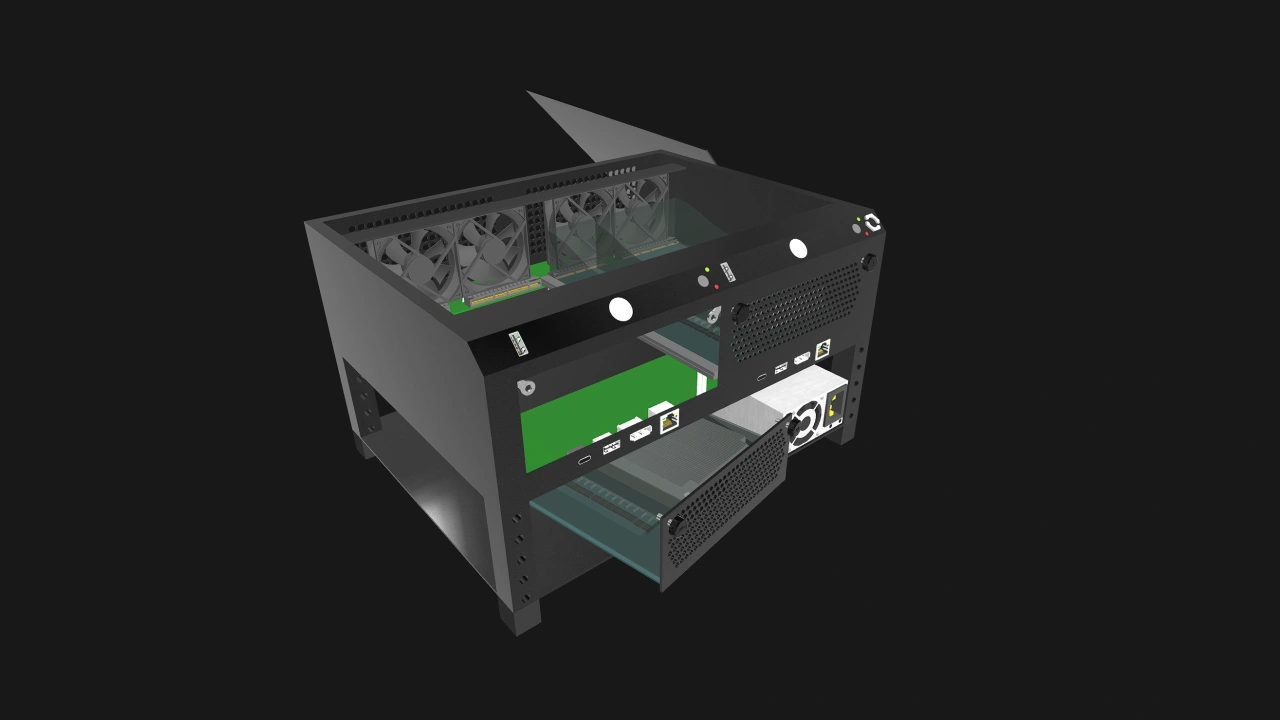
While the target markets of SFF implementations do overlap, our overview demonstrates that there can be sufficient demand for even highly specific combinations of size, performance, and modularity. We created OpenSFF for users like us who require multi-node systems, yet are stuck with either expensive proprietary solutions or crude and tangled DIY setups.
Just as we have seen how integral compact systems have become to the modern world, multi-node systems are increasingly becoming more useful and vital. This is why we opted to create an open standard inspired by blade servers. We define not only one component of a system, but an entire solution itself. We account for orchestration because it is a fundamental part of operating a multi-node system. The same can be said for our approach on power delivery and I/O.
Equally important, we believe that our use cases can have more sustainable and serviceable solutions without compromising on price or performance. Servers and certain edge devices do not necessarily have to be locked out of human intervention and maintenance. We strongly believe that manufacturers can afford to bring these benefits to single node devices using our standard. But OpenSFF’s potential will be maximized in creating interoperable multi-node systems.
Build with OpenSFF
Compact computers are far stranger and more diverse than their desktop counterparts. Vendors can rely on numerous standards to create optimal single node solutions. But multi-node systems also have distinct and persistent needs that have yet to be addressed at scale. OpenSFF provides an interoperable, scalable, and serviceable solution that benefits both manufacturers and users.
If you enjoyed reading this, we invite you to learn more about OpenSFF and our specifications. For technical clarifications, partnerships, and other inquiries, reach out to our development team at [email protected].
Other Articles

Meet OpenSFF: an open hardware standard that enables cross-vendor compatibility, modular systems, and sustainable hardware reuse.
August 11, 2025
We go over the rise of virtualization and the open software adopted by home server enthusiasts, as well as the current challenges and the future of the hobby.
September 06, 2025

Learn why OpenSFF adopted the SFF-TA-1002 connector standard and how it enables our vision.
September 18, 2025