Blog
Node Detached Storage: How OpenSFF can lead to better NAS appliances
Introduction
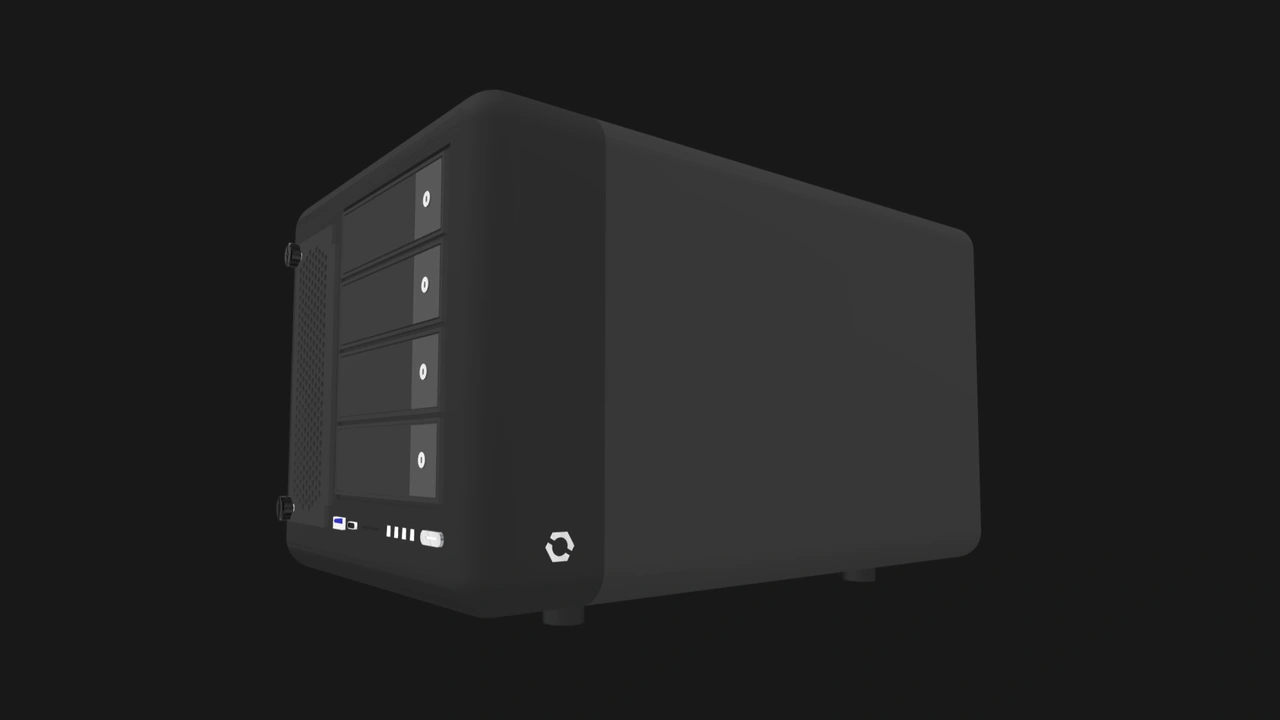
NAS appliances and storage servers have been shifting towards separate compute and storage configurations. Some designs allow for the two components to be replaced independently of each other, while some involve separate systems that allow users to mix and match vendor hardware. OpenSFF can lead to NAS systems that combine both advantages: a system that seamlessly integrates compute and storage in one chassis while remaining modular and vendor-agnostic.
In this article, we’re going to look at several examples of decoupled compute and storage setups in the SMB and prosumer NAS space. Then we’ll go over where they fall short and how our open standard can lead to more serviceable, space-efficient, and cost-effective solutions.
Existing solutions that decouple compute from storage
Minisforum’s N5 series gives us a glimpse of what a modular prosumer NAS appliance could look like. Its AMD Ryzen-powered board shares a single chassis with a 5-bay 3.5” hot-swap drive cage, but the board sits on a separate slide-out tray. This pseudo-modular design allows users to easily replace the compute’s boot NVMe SSD and RAM.
45Drives’ Storinator products may look like typical storage servers, but inside their custom steel chassis are server-grade components that users can still reliably source, such as a socketed AMD EPYC or Intel Xeon CPU. Customers are also free to request an OS other than 45Drives’ combination of Rocky Linux and the company’s Houston UI.
On the enterprise end, SAS JBOD and expander shelves such as Supermicro’s offerings do away with a single chassis in favor of a host server and a rack-mounted drive shelf connected over SAS. This setup allows users to mix and match systems from different vendors and have more control over their storage hardware.
DIY enthusiasts and budget-conscious home users often adopt this dual-device setup as well. In their case, they typically repurpose or purchase entry-level single-board computers, mini PCs, or even laptops as the host. They then mount their drives on a direct attached storage (DAS) device and use open-source software such as TrueNAS to manage their setup.
Where decoupled solutions fall short
In purpose-built NAS devices, the drive bay can easily outlast the compute. 45Drives’ Storinator is a great product precisely because it allows users to independently service or upgrade the motherboard, CPU, RAM, and boot drive. It is an exception in a market filled with static devices that require complete replacements should the compute fail or become obsolete. That includes Minisforum’s NAS appliances. Their board is not meant to be user-serviceable, and Minisforum does not offer standalone board replacements or upgrades.
These integrated devices also leave users at the mercy of the vendor’s security and support policies. In early 2025, Synology infamously updated its NAS software to limit crucial features such as storage pool creation and firmware updates to a set of rebranded first-party hard drives. It also added “At Risk” and “Warning” notifications on its storage manager that appeared for users who continued to use third-party drives on their Synology device. The understandable backlash forced the company to walk back its decision months later, but the risk remains for users reliant on Synology or any single vendor.
The fixed compute can also leave users with dead hardware even when their NAS appliance is still functional. In 2022, QNAP rightfully extended security updates and tech support for some of its end-of-life products in response to a surge in ransomware attacks. But when the OS, compute, and storage all come from the same company, the end of support on any of those components effectively kills the whole appliance.
Discrete storage devices bypass many of these pain points, but they are often not as space-efficient or convenient as integrated solutions.
How OpenSFF enables modular, vendor-agnostic NAS appliances
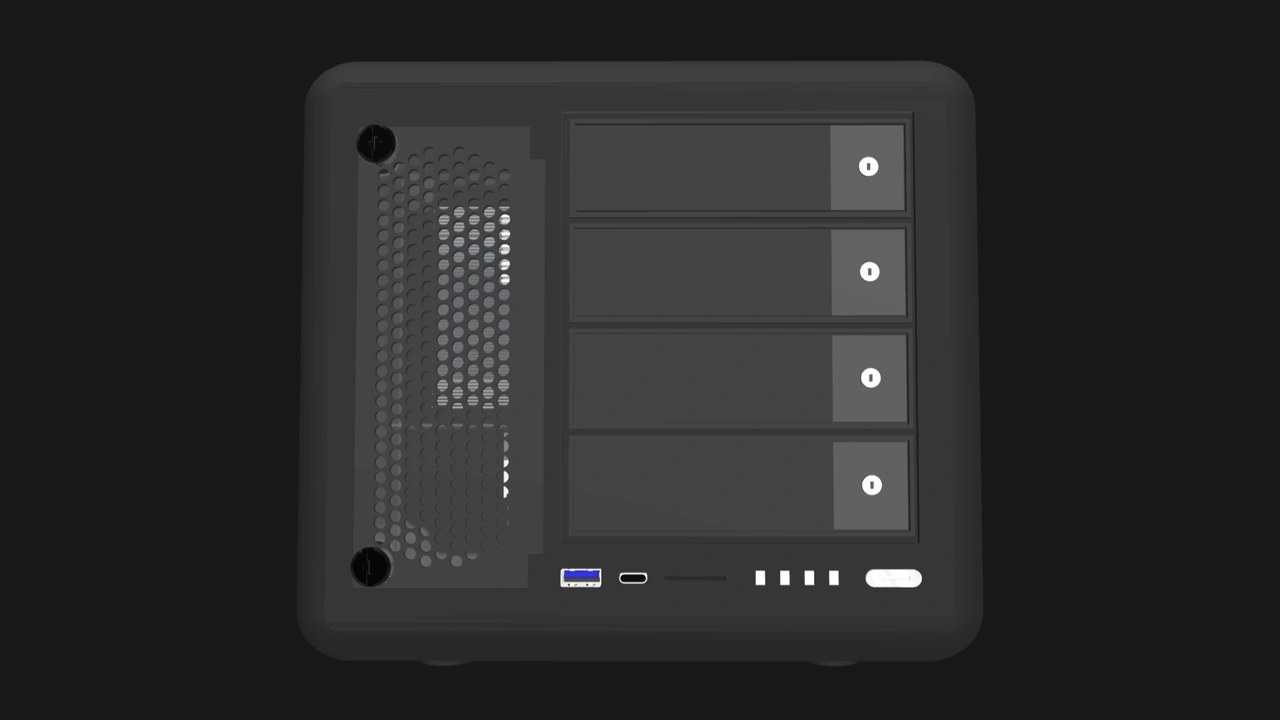
We’re developing open-source hardware specifications for modular computers, including NAS appliances and storage servers. We define the Compute Node, a self-contained computing unit, and the Enclosure, which provides power, cooling, and optionally, networking to one or more nodes. Compute Nodes connect to Enclosures using one or two SFF-TA-1002 4C+ connectors and are secured using only a pair of captive M4 thumbscrews.
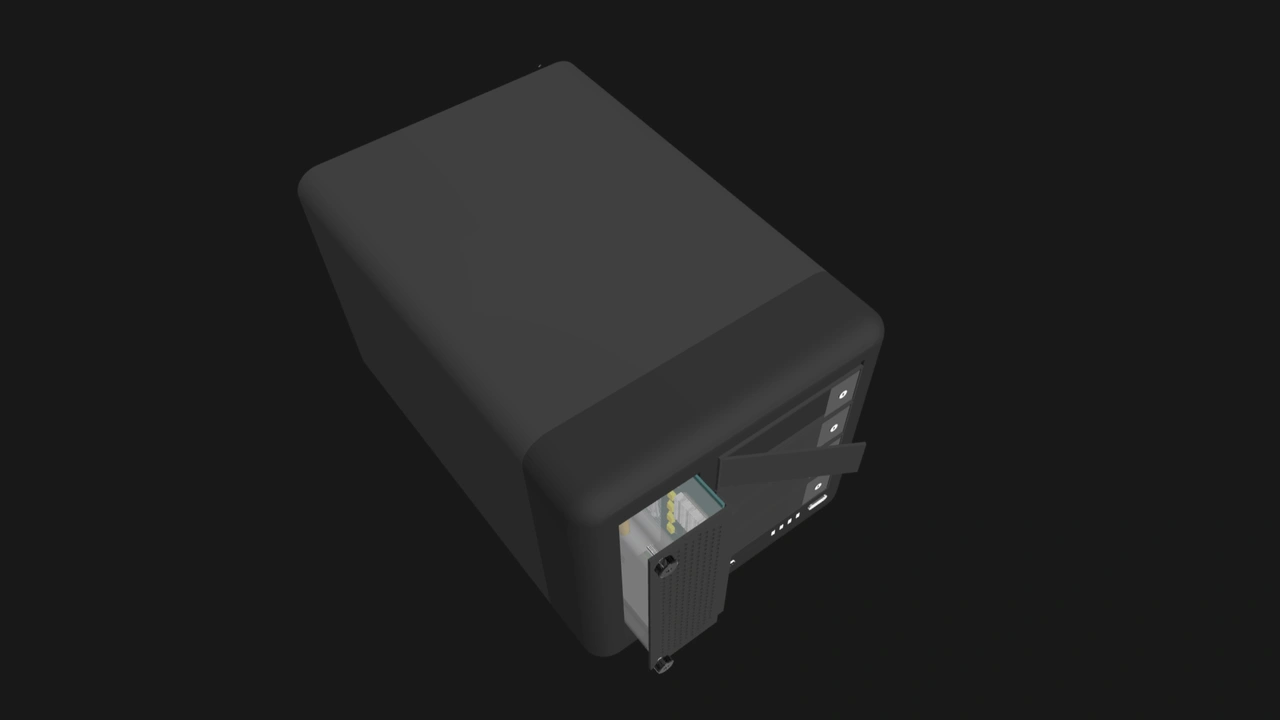
Any Compute Node will work with any Enclosure, regardless of their vendor or device categories. For instance, an ARM-powered Compute Node from Minisforum would work with a 45Drives Enclosure. A node from an OpenSFF-compatible workstation would be able to power an OpenSFF-compatible NAS device.
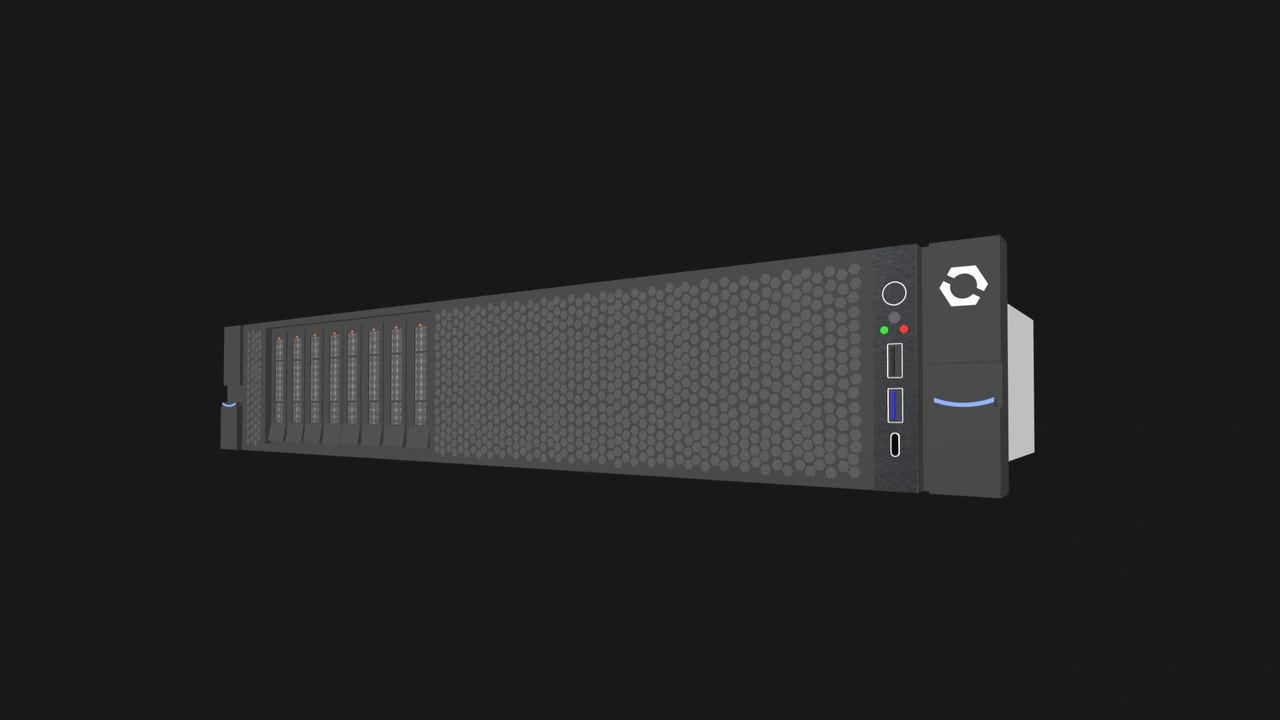
Our standard focuses on multi-node servers, workstations, and edge devices. It’s not designed to support as many drive bays as the leading SMB and prosumer devices do. Each Compute Node provides only one PCIe 4.0 x1 lane, which is enough for eight to ten SATA HDDs or three to four SATA SSDs.
In exchange, our standard enables vendors to create space-efficient yet truly modular NAS appliances. The node is independently serviceable from the Enclosure, and users do not have to be tied to a single vendor. This discourages lock-in practices and allows users to keep using their Enclosures after their node reaches the end of its lifecycle. Besides enabling modular and serviceable purpose-built systems, OpenSFF opens the door to new vendors who specialize only in NAS Enclosures, providing the market with more competition.
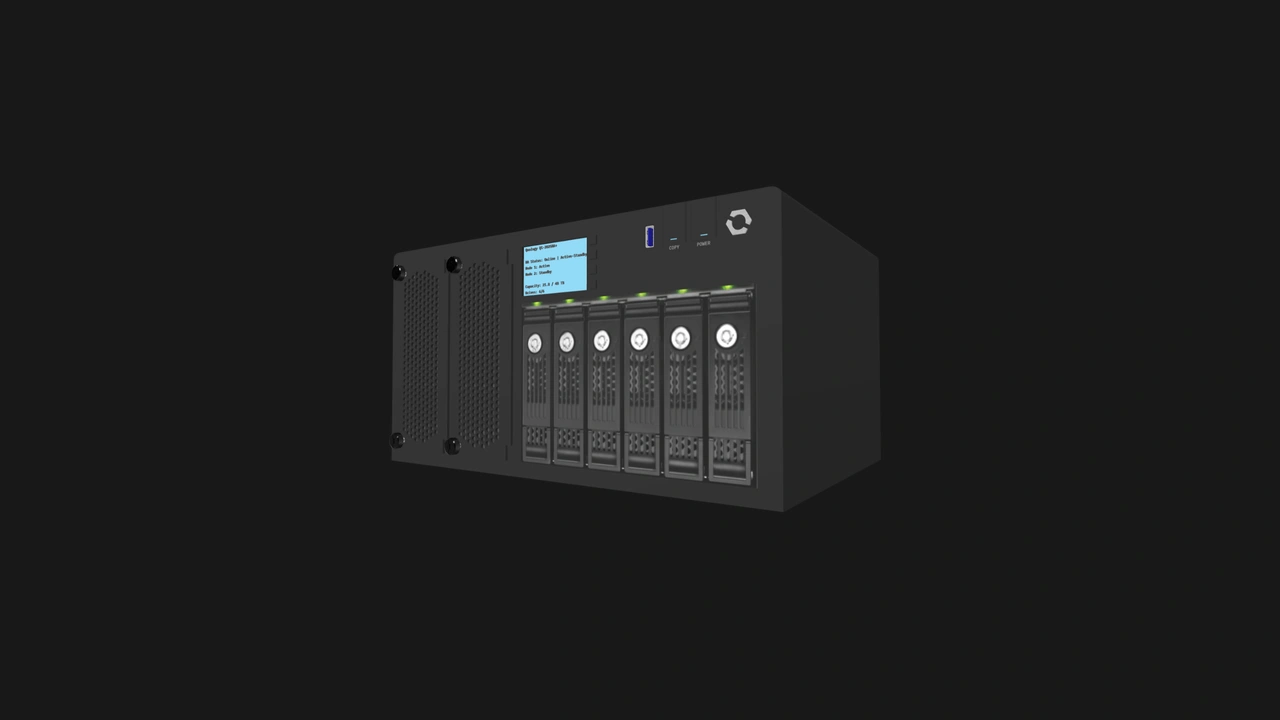
Our scalable approach also makes a unique NAS system possible: a high availability (HA) storage server in a single chassis. This dual-node OpenSFF-compatible system could be configured in active/active or active/passive mode for automated failover.
Build with OpenSFF
Both NAS appliance users and their vendors have long recognized the benefits of decoupling compute from storage. Our standard provides an open platform that takes that arrangement to another level, empowering users with more options for procurement, maintenance, and upgrades while allowing more vendors to join the market.
Help us work toward modular, vendor-neutral, and serviceable hardware by spreading the word about OpenSFF. We would also be grateful if you could encourage vendors to read our specifications. For technical clarifications, partnerships, and other inquiries, reach out to our development team at [email protected].
Other Articles

Meet OpenSFF: an open hardware standard that enables cross-vendor compatibility, modular systems, and sustainable hardware reuse.
August 11, 2025
We go over the rise of virtualization and the open software adopted by home server enthusiasts, as well as the current challenges and the future of the hobby.
September 06, 2025

Learn why OpenSFF adopted the SFF-TA-1002 connector standard and how it enables our vision.
September 18, 2025