Blog
How the Success of Maker Platforms Paved the Way for OpenSFF
Introduction
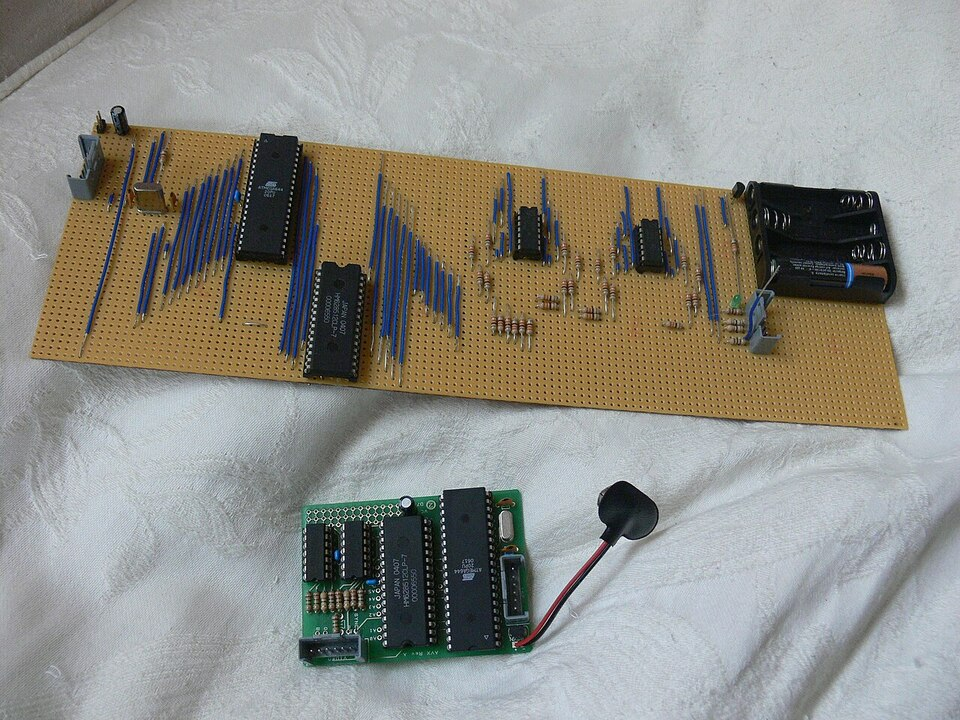
Twenty years ago, working with electronics required expensive equipment and prior knowledge about programming or computer engineering. These days, a $5 board and an Internet connection are more than enough to get started. This dramatic shift in accessibility is largely due to the efforts and success of three companies: Arduino, Adafruit Industries, and Raspberry Pi.
These businesses did not just create products. They proved that open hardware, or at least, open-source-friendly hardware, can be commercially successful. While OpenSFF is not a manufacturer or a vendor, the stories of Arduino, Adafruit Industries, and Raspberry Pi still offer blueprints for building a successful open hardware ecosystem.
In this article, we will go over the goals, strategies, and long-term success of these three companies and distill the lessons that OpenSFF can apply based on their experiences.
Origins
In their introduction to Brief History of Open Source Hardware Organizations and Definitions, the Open Source Hardware Association (OSHWA) summarized the environment that made it possible for the likes of Arduino, Adafruit Industries, and Raspberry Pi to flourish:
“Open-source hardware was preceded, influenced and shaped by several prominent cases in which important technologies were developed collaboratively and out in the open. Its historical antecedents include the open source and free software movements, from which it derived its principles, the Homebrew Computer Club and hacking traditions, which flourished when early computers were sold in kits or shipped with schematic diagrams, and the ham radio community, from which it inherited a long tradition of amateur engineering and knowledge-sharing practices.
Despite the deep roots of these legacies, open source hardware only became know[n] as such in the last decade. This was mostly due to the rise of the internet, which made sharing hardware designs possible, the commercial success of open source software, which gave it public visibility, and the decrease in cost of production tools, which made it feasible.”
We are inverting this narrative in today’s overview. It is true that the products of Arduino, Adafruit Industries, and Raspberry Pi would not have been feasible in the years prior to their establishment. Yet it is also impossible to learn from their stories without highlighting their founding motivations and principles. Their founders prioritized accessibility over profit, and growing their ecosystem over maintaining control or exclusivity. These principles would in turn become the key to their success.
Arduino

In 2002, software architect Massimo Banzi joined the Interaction Design Institute Ivrea (IDII) as an associate professor in interactive design. Part of his job was to help budding designers and artists incorporate electronics in their work. However, the popular tool at the time, the BASIC Stamp microcontroller, was barely up to the task.
The Stamp was not powerful enough, even for certain student projects, and it involved programming with BASIC. All of that was wrapped in a kit that could cost around $100. Banzi, along with fellow academics and students (particularly Hernando Barragán), worked together to create a better tool.
Roughly 3 years later, they came up with the answer: the first Arduino board. Powered by the ATmega8 chip, it was paired with software that leaned heavily on Barragán’s work to simplify microcontroller programming. Equally important, it cost only about $30.
Once the open-source community got its hands on the board, demand quickly grew. The newly formed company knew it would not be able to keep up for long. As fans of open-source software, Arduino’s co-founders decided that they would also open-source their designs and let other vendors grow the ecosystem.
Adafruit Industries
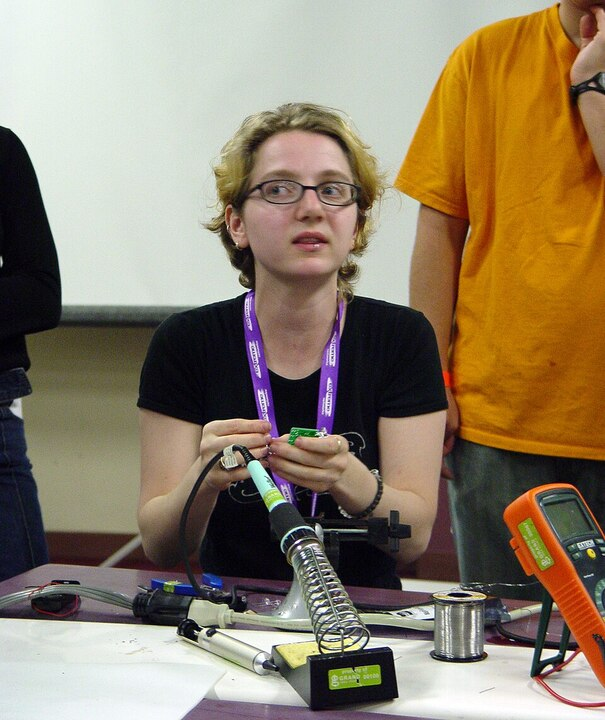
Around the time that Arduino first launched, Limor “Ladyada” Fried was taking her master’s degree in computer science and electrical engineering at MIT. One of her professors tasked her class to create personal websites to share what they were working on. Fried complied by showcasing the gadgets and toys she made out of custom-made parts and everyday objects.
She soon received emails asking her to sell kits based on her projects. Fried recognized right away that it would be a time-consuming endeavor and initially refused. But the emails kept coming. Thus, Fried found herself selling DIY kits mere months after starting her homework. She started Adafruit Industries in her dorm room, shipping packages to the post office next door.
As Fried’s tutorials and kits became more popular, so did the number of people reaching out for help. Amidst her studies and her new company, Fried remained active and visible in online platforms and continued to create text guides and videos. By 2010, Adafruit Industries had over $3 million in sales.
Raspberry Pi
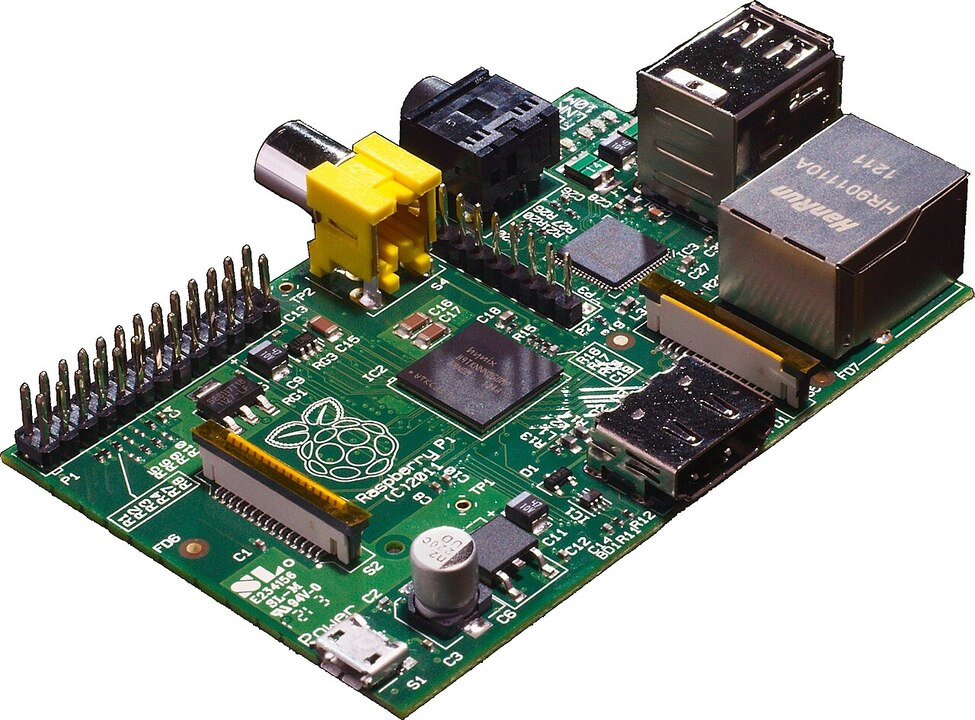
A year after Arduino and Adafruit Industries were founded, a Broadcom engineer named Eben Upton was appointed as Director of Studies in Computer Science at the University of Cambridge’s St. John’s College. Upton soon noticed that applications to the program were declining, and many freshmen came in with no programming skills at all.
Upton surmised that the decline in both interest and skills in computer science was partially due to the fact that children did not have easy access to computers. He on the other hand grew up at the dawn of home computing, and cut his teeth on the likes of his beloved BBC Micro.
To encourage children to get into programming, Upton and several other academics and engineers established the Raspberry Pi Foundation. Their goal was to create a computer that would, above all else, be cheap. No more than $35 to be exact. This was unimaginable in 2008, and would remain so for a couple of years more.
In 2011, after a couple of years of unpromising prototypes, Upton and fellow Foundation co-founder Pete Lomas learned about the Broadcom BCM2835, an ARM-based SoC. While the Foundation eventually still had to remove several original intended features and specs to reach their target price, the BCM2835’s balance of power and cost was crucial to making the first generation Raspberry Pi a reality.
When the BBC featured an early prototype of the Raspberry Pi, it became evident that there was a legitimate demand for the computer. Not from children or parents, but from hobbyists and enthusiasts. Still, the Foundation had modest expectations. For their first batch of production, they secured enough funding for only 10,000 units. This pessimistic decision would test the Foundation’s commitment to its cause.
The Foundation opened pre-orders for the Raspberry Pi Model B on February 29, 2012 through two distributors: Premier Farnell and RS Components. Around 100,000 orders were placed, with both outlets’ websites crashing due to the launch day traffic.
To resolve its enviable crisis, the Foundation decided to license the Model B’s design to their distributors, who in turn subcontracted the manufacturing to a third-party factory that could keep up with the demand. Speaking with Tech Republic in 2018, Upton said this about the licensing deal: “The thing I’m still proudest of is that change, because that was the thing that unlocked the value. That was the thing that let us grow.”
Their solid foundations
Arduino, Adafruit Industries, and Raspberry Pi were all born of their founders’ desire to make learning about electronics and programming more accessible, more immediate, and more fun. They wanted to help, not to make a profit. Even when it became clear that they could be incredibly successful and had once-in-a-lifetime products on their hands, they stuck to their principles and remained guided by their original goals.
Overwhelmed by orders in their nascent days, Arduino and Raspberry Pi could have kept their designs to themselves and sought capital to meet demand. When Adafruit Industries became a popular electronics store, Fried could have focused on executive or operational responsibilities, cut back on her content and outreach, or patented her designs. But all three companies prioritized growth to help as many people as possible. Not to lock in their user base, amass user data, or immediately aspire for big paydays through acquisition or going public.
Growth rooted in open-source principles
A strong start does not guarantee sustained success. Arduino, Adafruit Industries, and Raspberry Pi nurtured their organic momentum by continuing to support their original target audiences, investing in documentation, and forgoing the hype and sterility of traditional marketing and corporate communications.
Community
Arduino welcomed third-party libraries and programs, and neatly integrated them into the IDE so that beginners would have examples to look at and adopt as soon as they opened the application. Through Arduino Day, the company encourages communities across the globe to connect and share their Arduino-based creations.
Meanwhile, the Raspberry Pi Foundation funnels its earnings to youth-focused educational programs such as Picademy and Code Club, even though its subsidiary’s sales come mainly from hobbyists and enterprise customers.
As for Adafruit Industries, Fried is its ever-present face and voice. Perhaps the best showcase of her consistency is the company show Ask an Engineer, which she started in 2010 and co-hosts to this day. The company also sponsors CircuitPython, a programming language for beginners in microcontrollers and SBCs.
Documentation
Arduino, Adafruit Industries, and Raspberry Pi produce and maintain copious amounts of technical and support documentation. Arduino and Raspberry Pi both accept contributions to its documentation via Github, while Adafruit Industries showcases user-made guides alongside official ones on its website.
One could argue that documentation is Adafruit Industries’ main output. It gives away recipes and hopes that readers would purchase some of the ingredients from its store. Many of its product pages are dominated by links to related learning resources rather than marketing speak, fancy graphics, or endorsements. Its kits and gift bundles are accompanied by publicly accessible and detailed guides.
Authenticity and transparency
All three companies regularly showcase user-created content on their blogs, social media channels and other platforms, no matter how modest. Arduino opened up its circuit designs and codebase. This gave way to numerous clones, which resulted in the dilution of their brand and massive lost sales. Adafruit Industries on the other hand has over 800 OSHWA-certified projects. To this day, Fried tests and approves each item that goes on sale on Adafruit’s online store.
While Raspberry Pi’s computers are not fully open-source, their schematics are publicly available, along with the specifications for its microprocessors and HAT (PDF). The Foundation is also a regular contributor to the Linux kernel, and much of its software is open source. The Raspberry Pi OS itself started as a third-party effort that the Foundation endorsed, before fully taking over its development.
Long-term commitment and versatility
While Arduino and Raspberry Pi have since entered the B2B segment, they continue to support their original target audiences by keeping their prices low and maintaining their aforementioned documentation and communication efforts. Adafruit Industries continues Fried’s homework, churning out DIY kits and guides.
The first Adafruit Industries kits were for chargers and displays, and its NeoPixel line has become a synonym for RGB LEDs in the maker community. But the company has since diversified into wearable electronics, prototyping tools and sensors, along with hundreds of third-party products, including ones from Arduino and Raspberry Pi.
The two SBC makers have expanded at both ends of the price-performance spectrum. This October, Qualcomm announced that it had acquired Arduino. The announcement also revealed the Uno Q, a microcontroller and Linux computer in one board powered by a new Qualcomm SoC. The acquisition is of course a huge development in the company’s trajectory, and should help Arduino in its IoT and AI offerings. Yet it still has budget and DIY-friendly options such as the Nano Every.
As of April 2025, 80% of Raspberry Pi sales come from industrial and embedded systems customers. But like Arduino, it still offers products such as the $5 Pi Pico 2 and the Raspberry Pi 500+, which integrates the Raspberry Pi 5 into a mechanical keyboard.
Takeaways for OpenSFF’s unique journey
As a nonprofit organization developing a hardware standard and not the hardware itself, our success will be defined by vendor adoption and their implementations going to market. Our efforts to engage and grow our community are partially reliant on vendors’ and integrators’ outreach with their customers. Finally, we have no real control over the pricing, availability, and support for OpenSFF-compatible or certified hardware.
But there are still lessons and strategies from the stories of Arduino, Adafruit Industries, and Raspberry Pi that we are taking to heart.
Documentation is king
As our primary output, we must make sure that our specifications and supporting documentation offset the friction of a new standard. Practical examples of implementations, clear requirements, and an abundance of visual references will go a long way toward lowering the barriers for adoption. The same goes for our eventual certification processes.
Maximize online channels to build communities
While OpenSFF does not have financial targets to meet, our small team must overcome a significant and circular challenge. Users will not be able to get their hands on OpenSFF implementations without manufacturer adoption. But manufacturers and vendors will not implement our standard if they do not believe that there is a demand for it. We must take advantage of online platforms to gather support and give manufacturers confidence that our standard will result in commercially successful hardware.
Once our standard is adopted, we must maintain spaces for both vendors and users to share their OpenSFF systems, showcase compatible implementations, and highlight the success of partner vendors and integrators. We must also act as a bridge between our related but distinct audiences: enthusiasts, commercial users, retail and edge users, and more.
Embrace flexibility
OpenSFF is designed for interoperability and modularity. We must consistently emphasize these principles and encourage vendors and manufacturers to adopt this mindset. The same Compute Node can serve as the brains of systems with drastically different use cases. Enclosures have limitless room for differentiation and innovation. Our standard can allow vendors to enter previously untapped markets without significant investment in R&D.
Naturally, we must also keep these principles in mind as we refine our specifications and keep pace with evolutions in technology and user demands.
Commit to our core pillars
Interoperability, scalability, and serviceability must be non-negotiable for OpenSFF across all stages of our journey. We must resist pragmatic solutions or opportunities that undermine those principles. Technical audiences read between the lines exceptionally well. The support that we gather through organic outreach and commitment to ethical goals will vanish if we abandon our high standards.
Build with OpenSFF
We firmly believe that the technology, need, and demand for our standard already exists. Arduino, Adafruit Industries, and Raspberry Pi have proven that consistency, transparency, and adherence to the spirit of open source can lead to widespread and long-term adoption.
We encourage you to read our specifications, and we would be grateful if you help spread the word about OpenSFF. For technical clarifications, partnerships, and other inquiries, reach out to our development team at [email protected].
Other Articles

Meet OpenSFF: an open hardware standard that enables cross-vendor compatibility, modular systems, and sustainable hardware reuse.
August 11, 2025
We go over the rise of virtualization and the open software adopted by home server enthusiasts, as well as the current challenges and the future of the hobby.
September 06, 2025

Learn why OpenSFF adopted the SFF-TA-1002 connector standard and how it enables our vision.
September 18, 2025