Blog
Welcoming Data Back Home: The Resurgence of On-premise Servers
Introduction

The enterprise server landscape is experiencing a remarkable shift. After more than a decade of cloud-first approaches and digital transformation initiatives pushing workloads to public cloud providers, businesses are gradually yet decisively bringing computing back home. This is not a rejection of cloud computing. Rather, it is a strategic course correction based on real world operational experience and evolving business requirements.
Recent industry research reveals the scope of this trend. Liquid Web surveyed more than 1,000 IT professionals and discovered that in the last 12 months, 42% of them have migrated workloads from public cloud providers back to dedicated servers. Even more telling, Puppet dove into a 2024 Barclays survey involving more than 100 CIOs and found that 86% planned to repatriate data from public cloud providers to on-premise infrastructure or private cloud providers within the next 12 months.
This on-premise renaissance reflects mature thinking about data and workloads, driven by three main factors: cost, compliance, and performance. In addition, organizations have also been concerned about privacy, security, misconfiguration, and vendor lock-in regarding their public cloud arrangements. For business leaders evaluating their technology strategies, understanding this shift represents a significant competitive opportunity. For us, this is more validation that the world needs open and modular computing standards now more than ever.
Understanding the on-premise renaissance
Organizations are applying the costly and painful lessons they have learned from cloud migrations to make more nuanced infrastructure decisions based on the nature of their data, workloads, and requirements.
Cost
The most compelling motivation for cloud repatriation is its financial benefits. According to the Uptime Institute, 42% of organizations that recently migrated production applications from the cloud cited cost as their primary reason.
37signals, the company behind Basecamp and HEY, saved $1 million after just one year of migrating most of their infrastructure to a managed data center, with projected savings of $10 million over the next 5 years.
On the other hand, GEICO saw their cloud expenses increase by 250% in the span of a decade, yet failed to realize their mass migration’s promise of simplicity, integration, and improved performance.
Hidden costs compound these challenges. For instance, public cloud providers impose data egress fees when customers move data out of their systems. These charges can account for up to 15% of their total cloud expenses. These “cloud taxes” are operational expenses that dedicated or managed infrastructure can eliminate.
Compliance
Regulatory complexity increasingly favors infrastructure models that provide direct control over the location and processing of data. Digital data sovereignty and access laws are proliferating globally, creating compliance challenges for organizations storing data across distributed cloud systems.
These regulations pose difficult questions for organizations that are heavily reliant on public cloud providers, where an organization’s (or its customer’s) data is not necessarily stored in their home country. Which governments can access your data? Which ones can control access? Who bears responsibility during security breaches? How do you navigate conflicting requirements? How can customers provide meaningful consent if they do not know where their data resides?
Even within single jurisdictions like the United States, regulations such as HIPAA impose complex requirements that many organizations would most likely find easier to address through direct control of their infrastructure rather than sharing responsibility with public cloud providers.
Performance
Modern businesses increasingly require performance that cloud computing has struggled to deliver consistently. On-premise infrastructure can be tailored to an organization’s specific needs, often reducing costs while improving results in the process.
Dropbox is a particularly compelling example of performance-driven repatriation. In 2016, the company announced that it moved 90% of its customers’ data from AWS to custom infrastructure consisting of in-house regional storage systems. Akhil Gupta, Dropbox’s Vice-President of Engineering at the time, said, “There were a couple reasons behind this decision. First, one of our key product differentiators is performance. Bringing storage in-house allows us to customize the entire stack end-to-end and improve performance for our particular use case. Second, as one of the world’s leading providers of cloud services, our use case for block storage is unique. We can leverage our scale and particular use case to customize both the hardware and software, resulting in better unit economics.”
The rapid advancements and bullish market surrounding artificial intelligence are also proving to be a considerable challenge to public cloud providers. While they are acquiring more powerful and specialized GPUs for AI workloads, memory bandwidth remains a significant bottleneck. On-premise infrastructure can address this more effectively through custom configurations and high-speed networking.
Privacy and security
Organizations that use multiple proprietary cloud security tools often find it difficult to manage and implement their security policies. The shared responsibility inherent in cloud models also creates gaps that some businesses no longer find acceptable.
Military, finance, research, and other sectors handling highly sensitive data also prefer on-premise infrastructure to maintain complete control over their physical security measures, including personnel access, environmental monitoring, and comprehensive audits.
Misconfiguration
Some companies are using cloud repatriation not just to improve their finances but also as a chance to correct their established workflows. Going back to GEICO’s failed cloud migration, the company moved away from dedicated servers because they saw it as expensive and complex, but they ended up with reduced availability and hundreds of legacy applications siloed from each other, all while watching their cloud expenses steadily increase.
Vendor lock-in
The aforementioned egress fees often means that the longer a company stays with a public cloud provider, the harder it is to move away from them. Organizations may end up having limited options for software and management, and remain heavily dependent on the strength of their public cloud provider’s infrastructure and security.
Technologies enabling modern on-premise computing
Businesses looking to go back to on-premise infrastructure can benefit from a couple of technological advances that address the limitations of its previous incarnation while preserving its strengths in terms of control, performance, and centralized management.
Edge computing is projected to grow 37% annually through 2033, based on the projections of research and consulting firm Grand View Research. This is driven by increasing demand for faster data processing, reduced latency, and real-time insights across a variety of industries, from manufacturing to healthcare.
Composable infrastructure is another advancement that can help organizations move more data back to on-site servers. Companies such as Liqid use virtualization to combine the dynamic allocation capabilities of public clouds with the customization options of private infrastructure, including for GPU-heavy workloads such as AI and ML.
How OpenSFF can support the on-premise resurgence
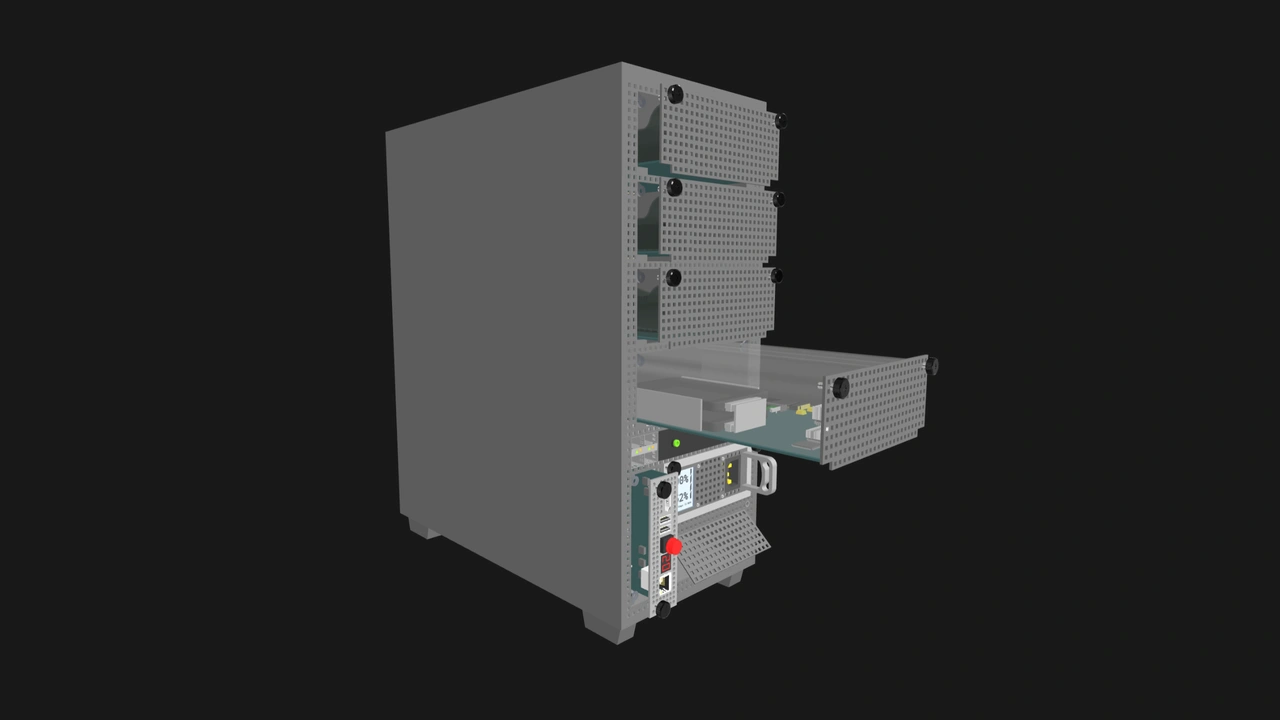
Our open and modular computing standard directly addresses some of the challenges that drove organizations toward cloud repatriation, while supporting modern technologies that make on-premise infrastructure more viable than ever.
Cost optimization
OpenSFF’s specifications are specifically developed to create a vendor-neutral ecosystem. This should enable organizations to enjoy competitive prices when sourcing. Our adoption of standardized interfaces also supports hardware reuse, potentially extending equipment lifecycles and reducing replacement costs. When upgrades become necessary, our modular designs enable incremental improvements rather than wholesale replacements.
In a world with OpenSFF, capital and operational expenses can be significantly reduced.
Flexibility without complexity
Modular components enable maintenance and upgrades with minimal downtime, while standardized form factors and interfaces should reduce training requirements and operational overhead.
Organizations can start with OpenSFF systems that have minimal configurations and expand incrementally as requirements evolve. They can adapt their infrastructure without being constrained by proprietary interfaces or vendor-specific dependencies. This forward-looking flexibility is particularly valuable for hybrid architectures that optimize workload placement across on-premise, edge, and cloud resources, since OpenSFF systems can be tailored for all three models.
Migrate to a hybrid future with OpenSFF
The public cloud is here to stay. It remains valuable for variable workloads, development environments and specialized services. But organizations that move large amounts of data and require fast processing may eventually settle on a hybrid strategy to leverage the strengths of cloud, on-premise, and edge computing while mitigating their respective limitations.
It is up to business leaders to carefully analyze their workloads and objectives to figure out the best solution for their context. OpenSFF can help businesses capitalize on this opportunity while avoiding the vendor lock-in, high cost, and wasteful servicing of previous on-premise generations.
We invite you to read our specifications to learn more about our standard. For technical clarifications, partnerships, and other inquiries, reach out to our development team at [email protected].
Other Articles

Meet OpenSFF: an open hardware standard that enables cross-vendor compatibility, modular systems, and sustainable hardware reuse.
August 11, 2025
We go over the rise of virtualization and the open software adopted by home server enthusiasts, as well as the current challenges and the future of the hobby.
September 06, 2025

Learn why OpenSFF adopted the SFF-TA-1002 connector standard and how it enables our vision.
September 18, 2025