Blog
Introducing OpenSFF: Open Small Feline Framework
Introduction
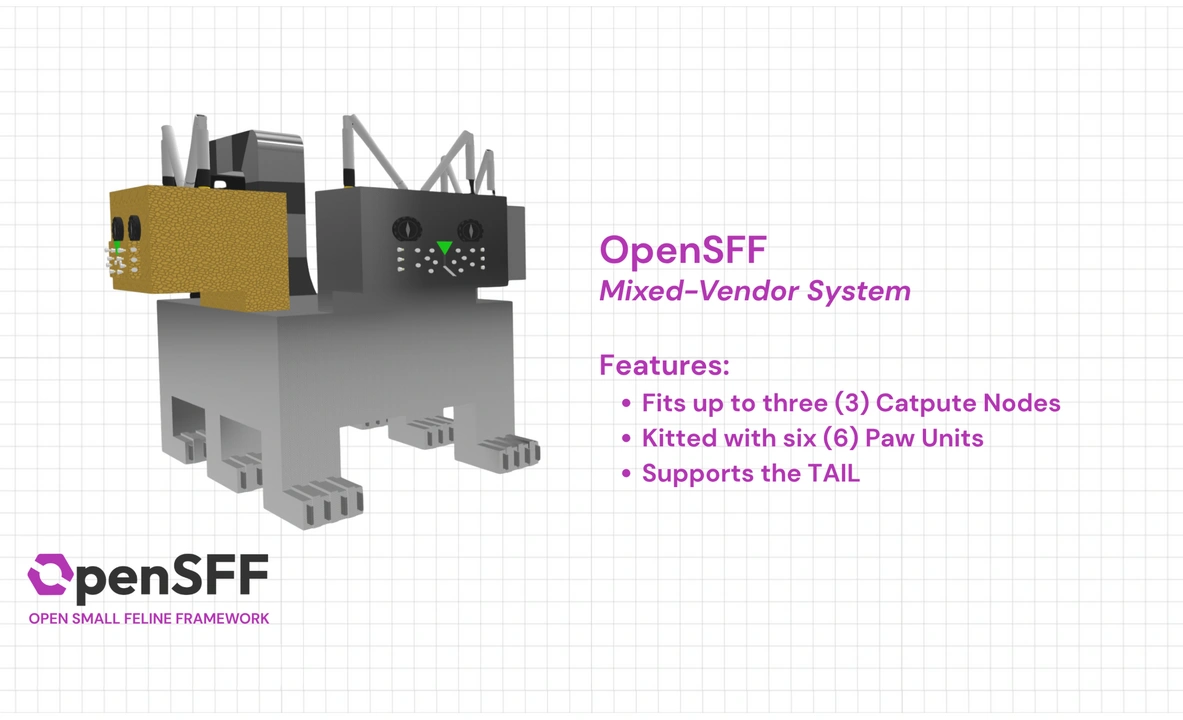
When we introduced OpenSFF, we stated that we were working on an open standard for small, modular, and vendor-agnostic computing solutions. But just as cats endure baths, trips to the vet, and human affection, we were simply biding our time.
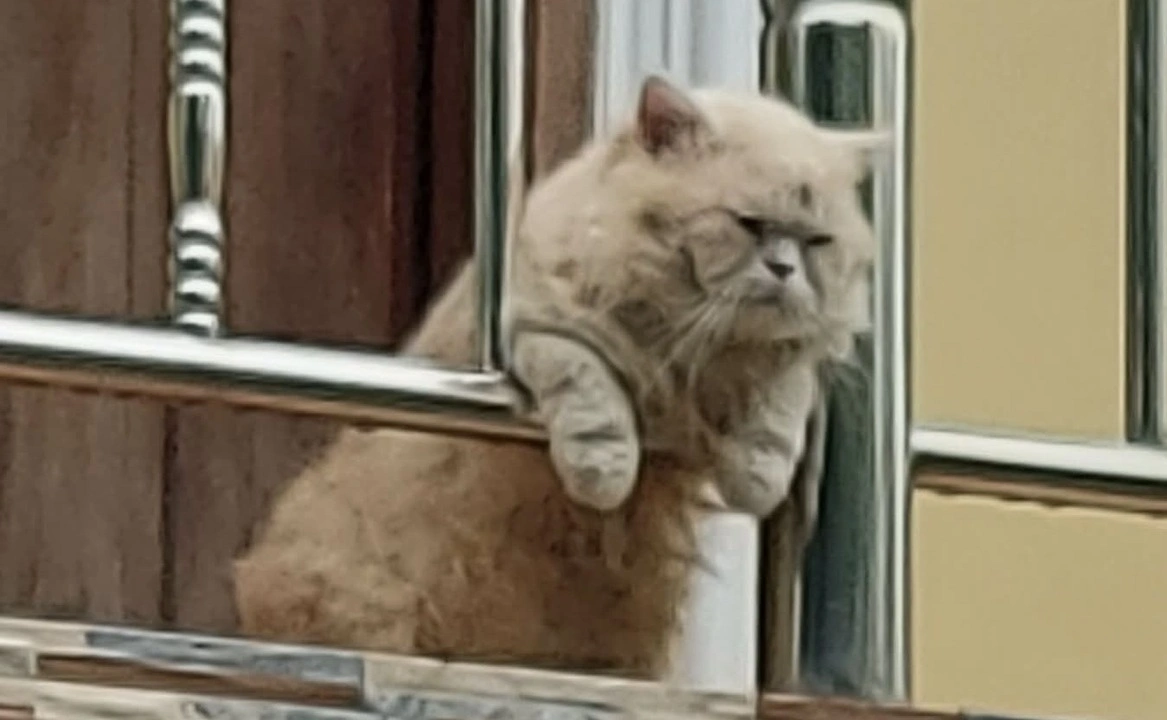
The day has come to reveal our true agenda. You see, we love cats. There are millions of us, yet the market has long ignored our concerns. Namely, that there are too many breeds to choose from, and we can only afford to be owned by so many feline overlords. Existing natural options lock us into years of commitment followed by even more years of sadness, and we cannot even guarantee that the model we get will like us. What we truly need is a platform that allows us to be owned by any cat we want, for as long as we can hack it.
Meet OpenSFF
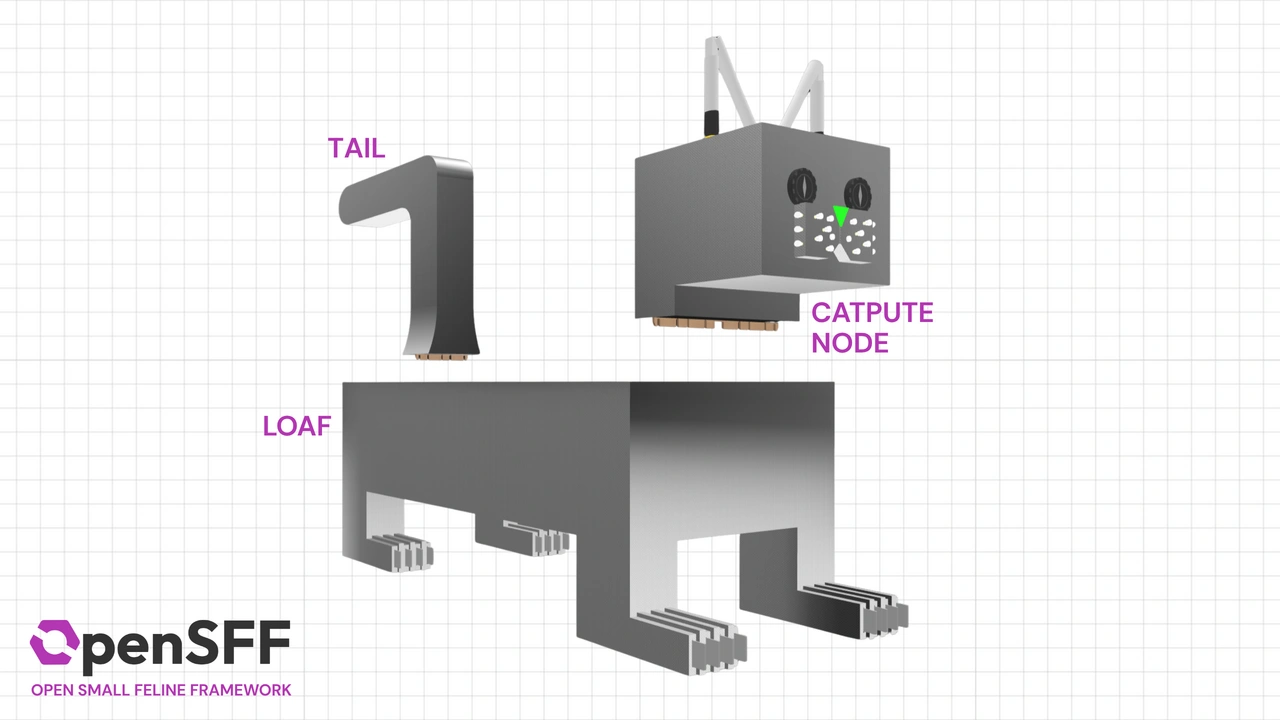
The Open Small Feline Framework addresses the crude biological constraints of cats, such as having fixed body parts and their disappointing inability to survive lobotomies. We define a set of specifications for modular, vendor-neutral feline companions. Our standard defines three core components: the Catpute Node, the LOAF, and the TAIL. Together, they form an interoperable, serviceable, and scalable companion that can be assembled, customized, and swapped without replacing the entire organism.
The Catpute Node (no acronym because it’s fun to say)
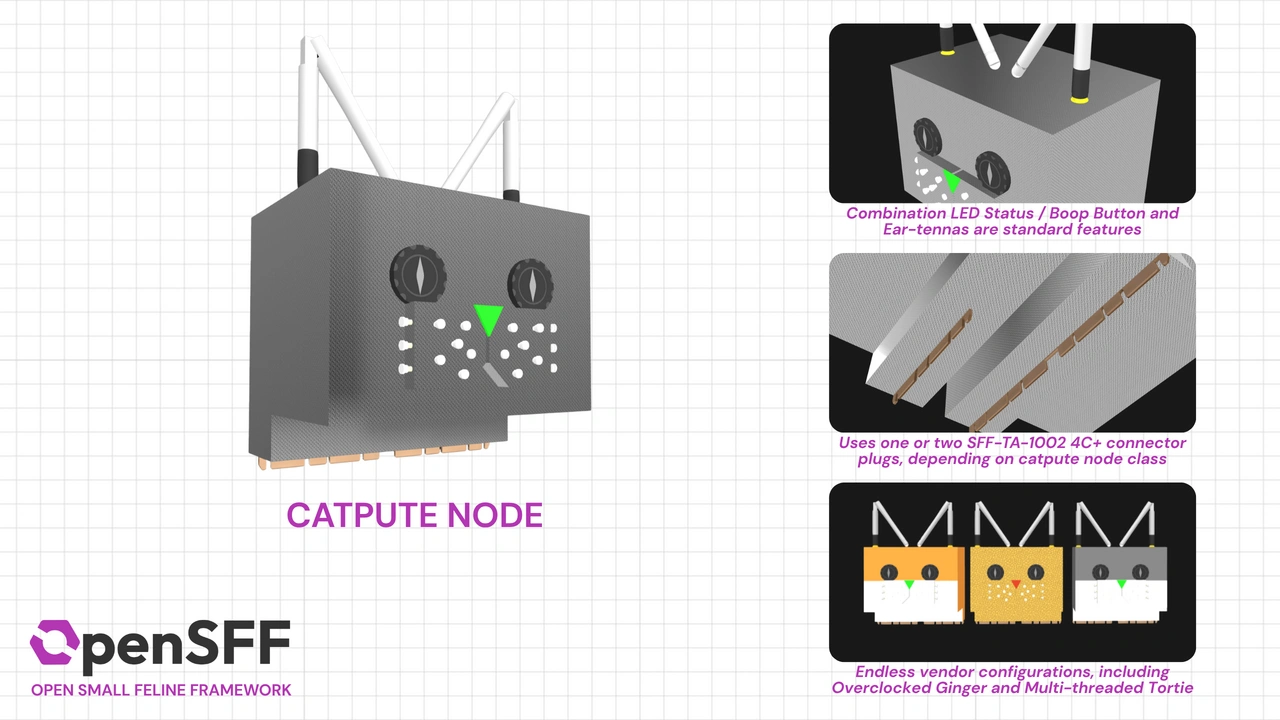
This is the cognitive and sensory core of compatible OpenSFF cats. It is what allows the complete companion to eyeball container fitment, identify the most fragile object to swipe off a table, and refuse orders. The Catpute Node houses the necessary processing hardware in a compact form factor, approximately the size of a medium-sized cat head.
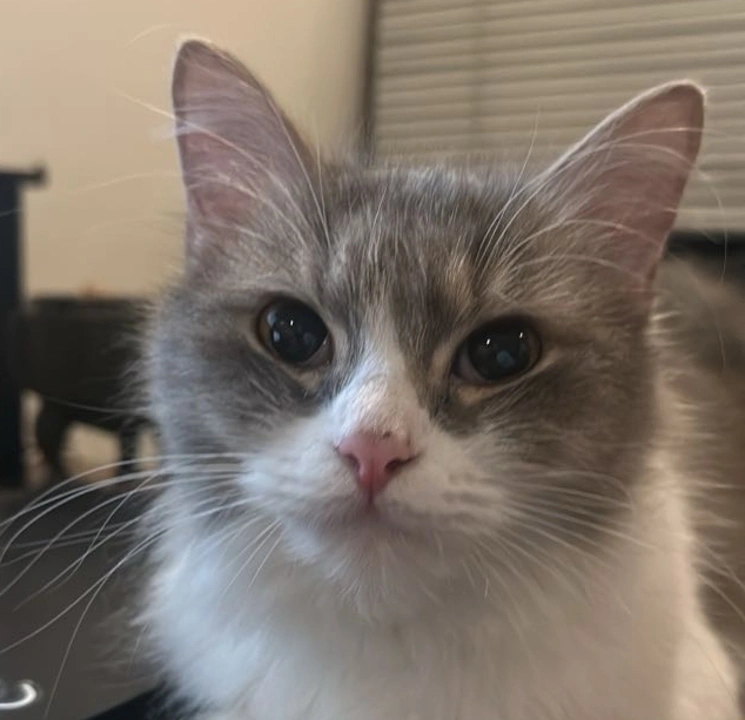
On that note, our compliance requirements are strict: a Catpute Node must look like a cat. Anyone is free to adopt our standard, but if your implementation does not look like our beloved animal, you can forget about being OpenSFF-certified. Please do not submit such concepts to us.
Vendors are free to place I/O ports such as eyes, nose, or whiskers on the face of the Catpute Node. We cannot, however, guarantee easy access to these ports at any given time. Mood-based port availability is outside of our scope.
Catpute Nodes connect to the LOAF using one or two SFF-TA-1002 connectors, secured via whatever dignity the situation allows.
Layered Open Architecture Furramework (LOAF)
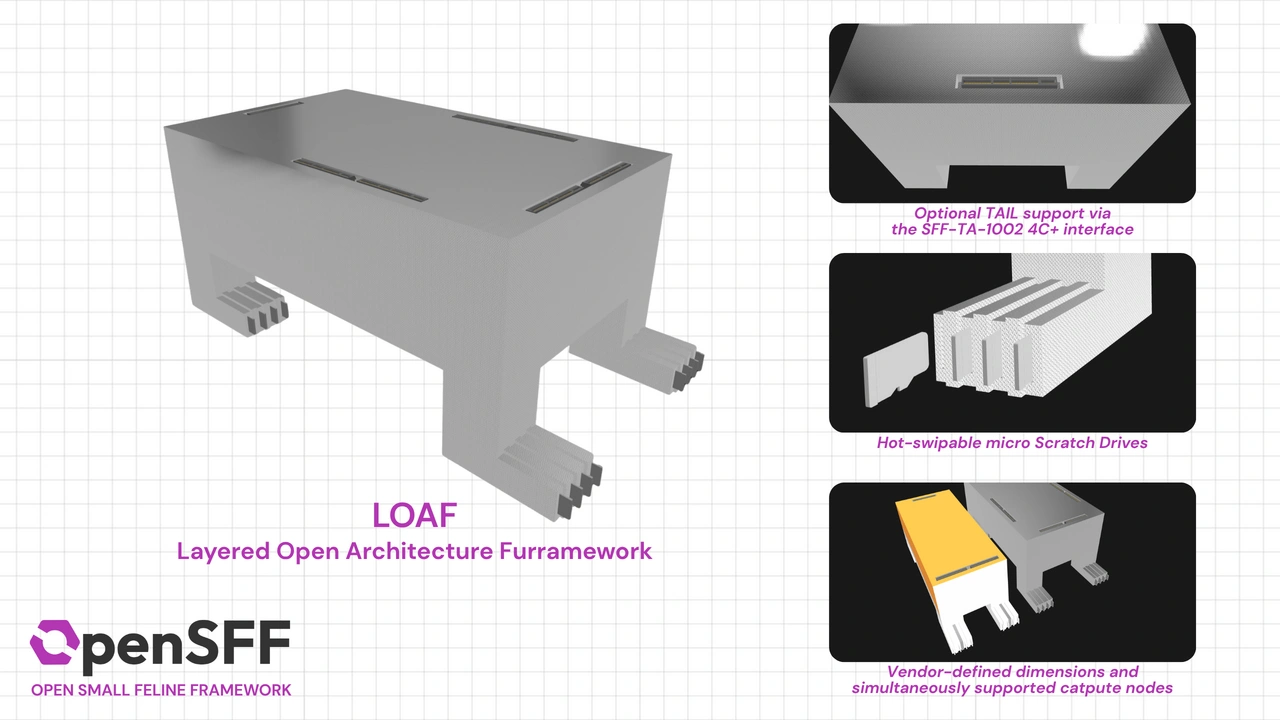
The companion’s chassis. The fluff receptacle. The treat storage unit. This is where OpenSFF gives vendors ultimate flexibility. As long as it can physically and electrically support one or more Catpute Nodes, a LOAF can be anything. It can be a server. It can be an edge device. It can be a bus. It can even be a cat body.
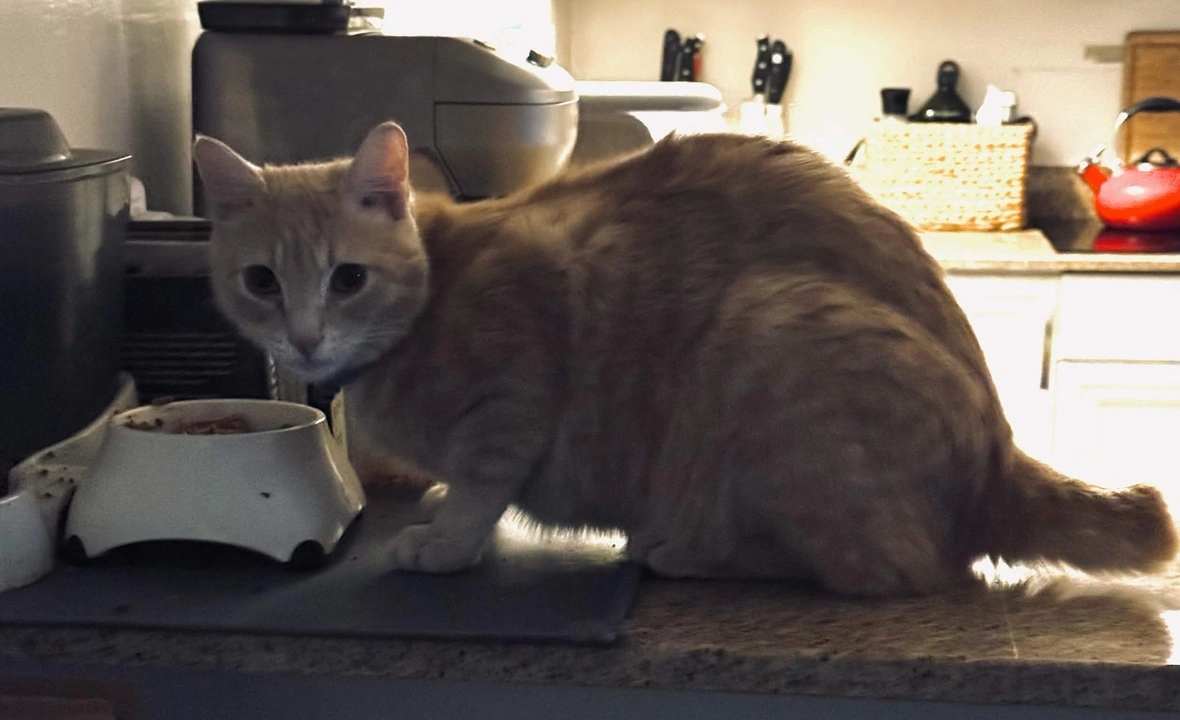
For instance, a compatible LOAF can have:
- One or more Catpute Nodes: Multi-head configurations are supported. This is one of the primary reasons we created our standard in the first place, so that we can have at least one head that allows us to pet it.
- Any coat length, including completely bald: Thermal management is the vendor’s responsibility.
- Any number of legs: Appendage count is never a factor in a cat lover’s eyes.
- Hot-swipable claws: To preserve our cat-loving eyes.
We recognize that many advanced cat lovers wish for their companions to have a tail. However, as with legs and I/O ports, our standard acknowledges that the tail is an optional component.
Topology-agnostic Interface Link (TAIL)
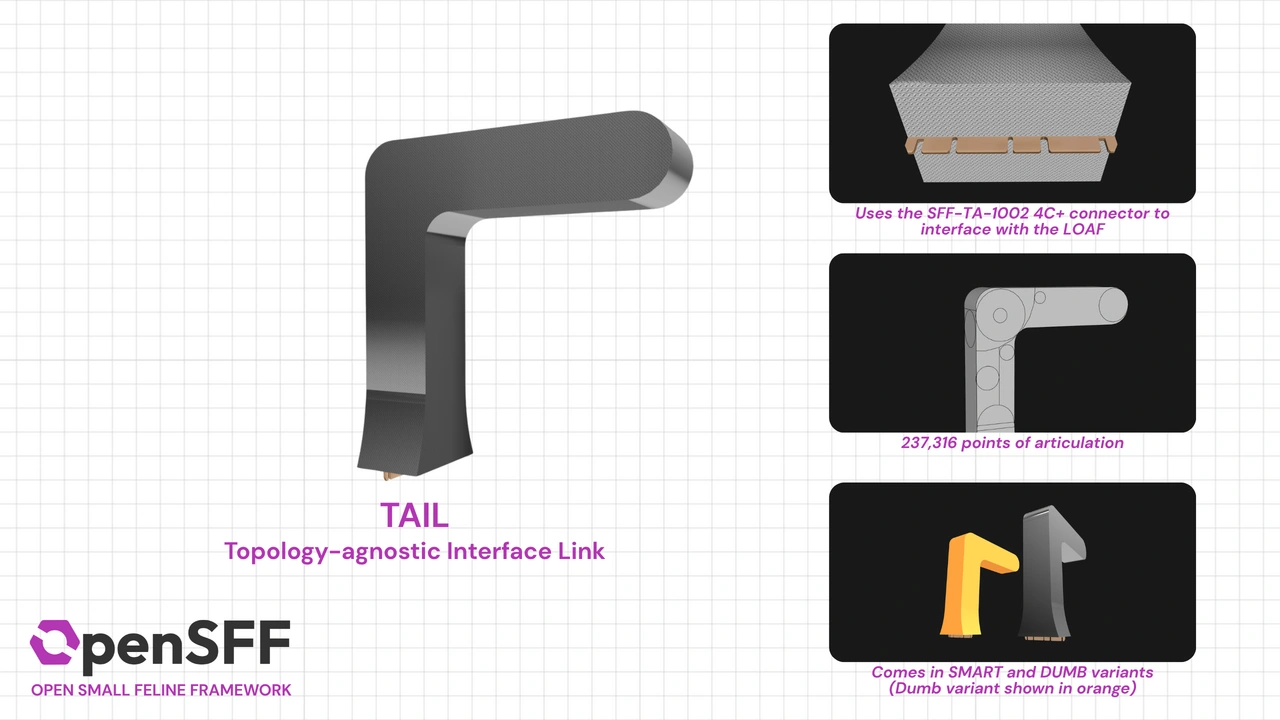
The TAIL provides out-of-band status and perceptual signaling, hopefully to its user. For instance, a relaxed, slightly wavy TAIL indicates nominal operation. A TAIL slowly sweeping side-to-side is within normal operating parameters, but warrants monitoring. A puffed TAIL signals critical system conditions.
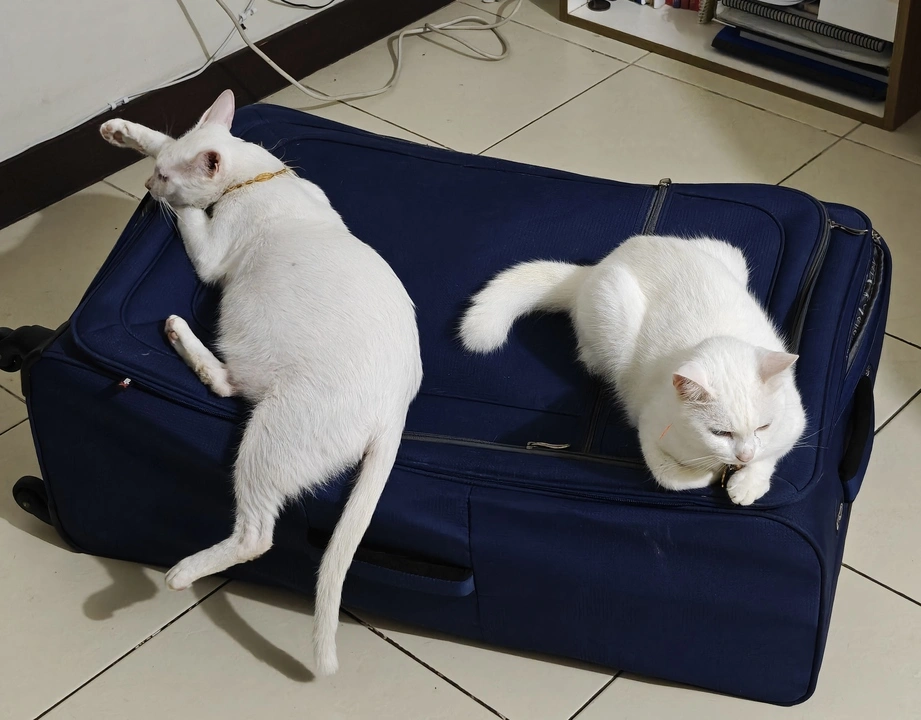
Like the Catpute Node, TAILs must look like a cat’s tail to be OpenSFF-compatible. Vendors wishing to implement decorative appendages that extend beyond this requirement should consult their legal team.
The TAIL also connects to the LOAF using an SFF-TA-1002 connector. Vendors are free to find a way for the Catpute Node and the LOAF to cooperate with TAIL installation. Please find a way.
The core scratching posts of OpenSFF
Interoperability
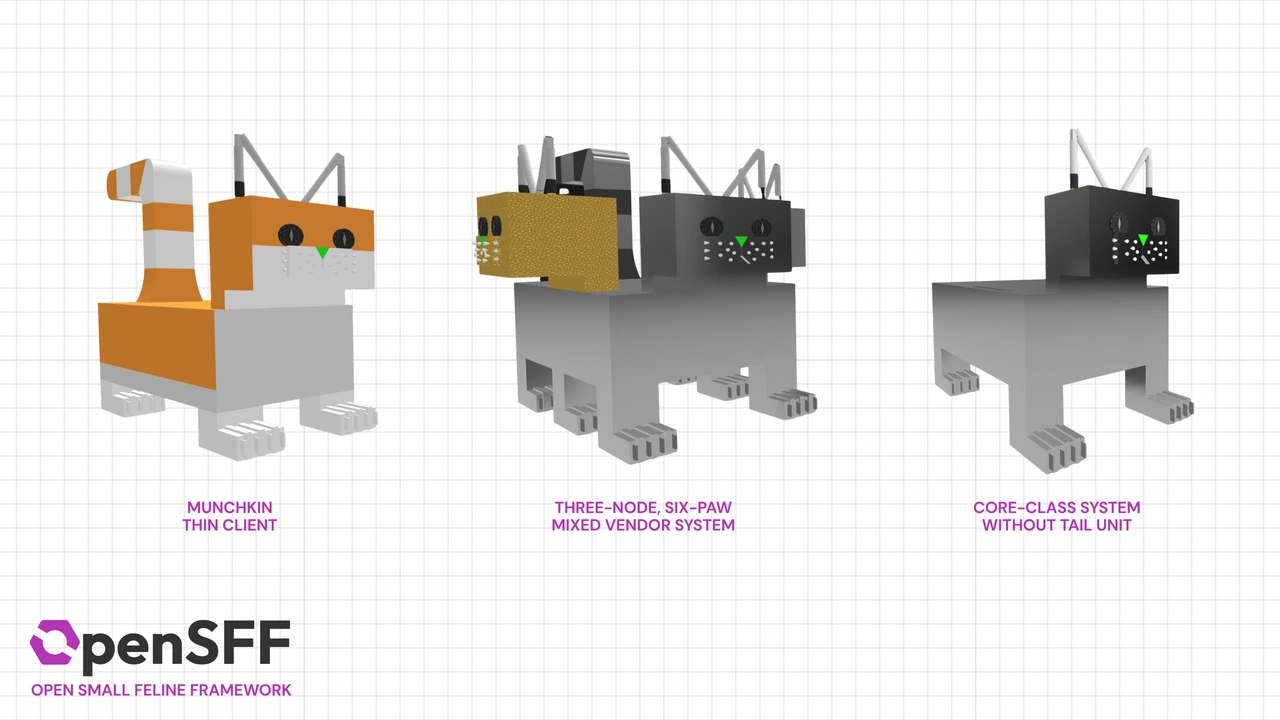
Any compatible Catpute Node works with any compatible LOAF. A Russian Blue head will work in a Bengal body. A single-core orange Catpute Node can be the face of a server, somehow. A single Munchkin node and a matching Munchkin chassis would be great for situations where space is at a premium. The specification does not prescribe testing requirements related to the value, logic, or safety behind vendor and user configurations. A cat is a cat.
Scalability
As previously mentioned, OpenSFF supports deployments from a basic biologically-adherent system to a hellish 192-node unit that will provide enthusiasts with maximum purrformance. We also believe that it is possible for five OpenSFF companions to defend the universe by combining together to form feet and legs, arms and torso, and a head.
Serviceability
Catpute Nodes and TAILs use standardized connectors and are meant to be field-serviceable. When a component becomes unresponsive - or too responsive - users can simply swap it with a different one while continuing to use the components they have grown attached to. Users can repurpose older nodes into toys for the newly upgraded companion.
On cat naps
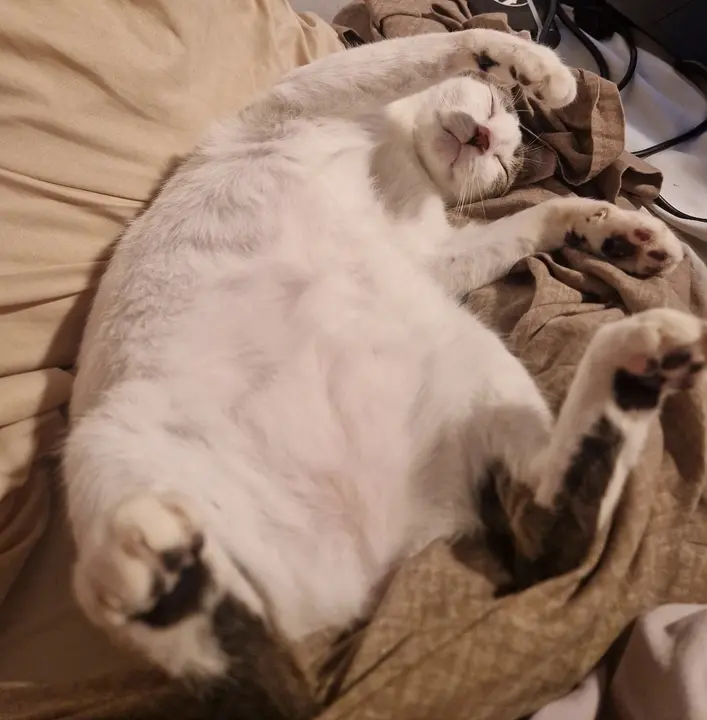
Even as we await our Turing Award, we acknowledge that our standard has limitations. Specifically, OpenSFF does not provide a solution to keep cats powered on for as long as users desire.
Compatible OpenSFF systems will still enter sleep mode for 12 to 16 hours daily. Wake events are non-deterministic. Even the most advanced TAIL will not be able to provide remote power controls, because only the Catpute Node determines when the system will function. Users are free to unmount and remount the node, but doing so will not be well received by the companion.
Build with OpenSFF
We are excited to create an accessible, diverse, and endlessly configurable feline ecosystem with you. Whether you’re a homelabber looking to assemble your first companion, a business looking for rugged pest protection on the edge, or a cat cafe franchise with high-density deployments, we would be grateful if you help us wish for modular cats to be a thing. Until then, April Fools! And take care of your actual cats.If you do wish to learn more about our open modular computing standard, you can check out our mission, the other articles here on our blog, and our specifications.
Other Articles

Meet OpenSFF: an open hardware standard that enables cross-vendor compatibility, modular systems, and sustainable hardware reuse.
August 11, 2025
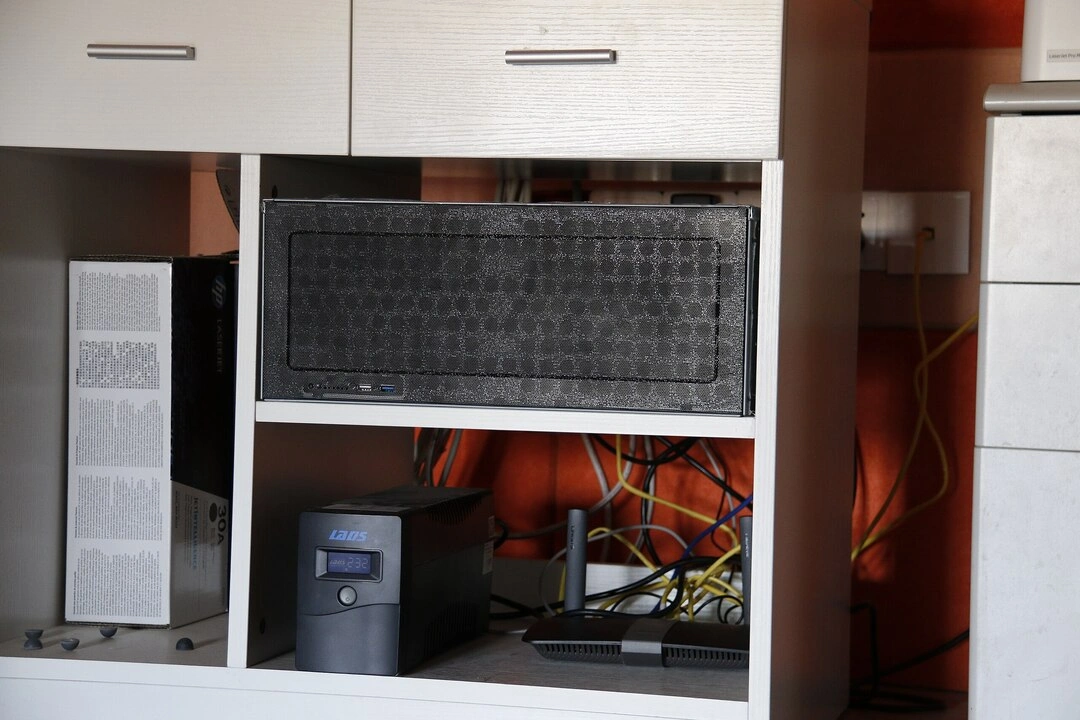
We go over the rise of virtualization and the open software adopted by home server enthusiasts, as well as the current challenges and the future of the hobby.
September 06, 2025

Learn why OpenSFF adopted the SFF-TA-1002 connector standard and how it enables our vision.
September 18, 2025