Blog
A Brief History of Home Servers, Part 1: From BBS to Broadband
Introduction
It’s easy to think that the story of home servers is tied only to developments in computing and networking technology. But the driving force of home servers and homelabbing has always been the people behind them.
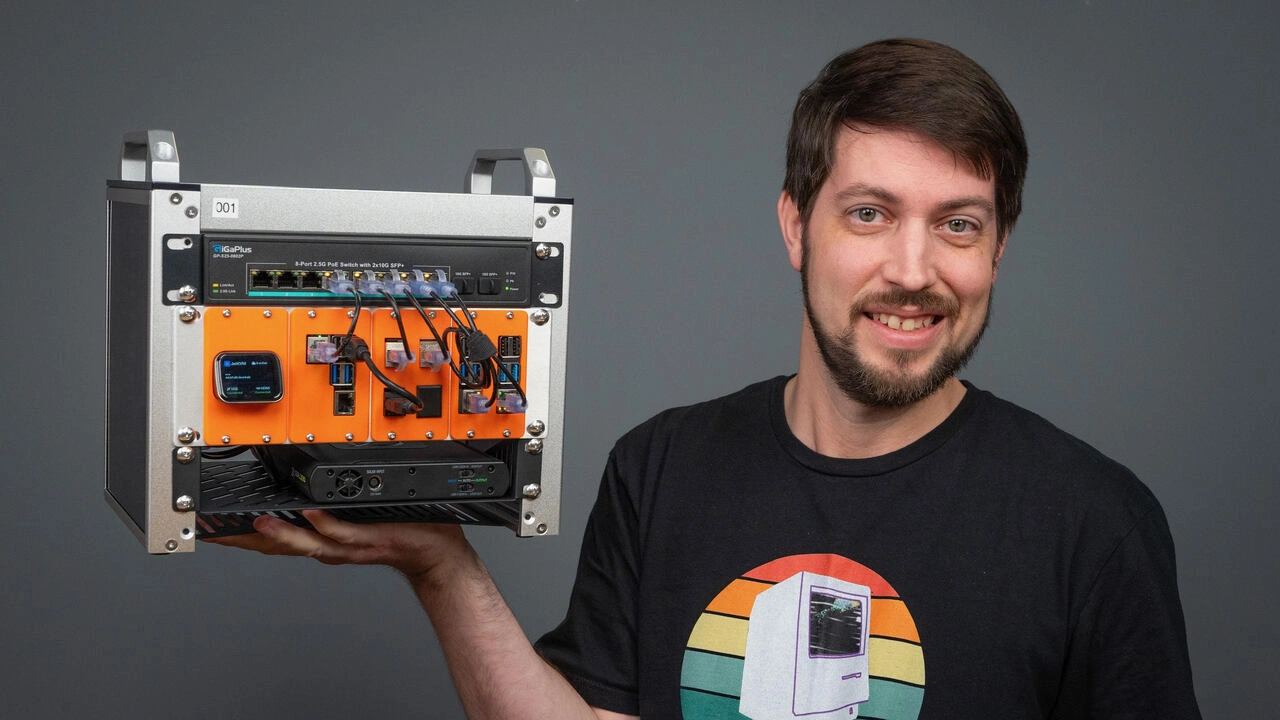
Hosting a BBS on your Commodore 64 in the 80’s. Setting up an FTP server on a Pentium PC in the mid-90’s. Cementing your reputation as your family’s IT wizard when you conjured a media center in the early 2000s. The truth that a server is just a PC, with or without fancy networking, never stopped enthusiasts from coming up with ways to communicate, protect and preserve digital libraries, and have fun while learning.
This is the first of our two-part look at the history of home servers and homelabs. It’s a story about how we got from bulletin board systems to virtualized clusters. Now, we’re keenly aware that our community likes to get facts straight, so we would like to apologize in advance for any oversight. This isn't an exhaustive historical account, but a nostalgic journey through the milestones that shaped the hobby that we know and love.
The Pioneers of Self-Hosting: 1980s to 1990s
When modems were the Internet
Long before broadband internet made always-on connectivity commonplace, home servers were already taking root. Enthusiasts hosted BBSes, usually from an Apple II or Commodore 64. Accessible through the sysop’s phone number, these servers didn’t just host message boards. They also acted as news aggregators, file-sharing platforms, and doors to text-based games.
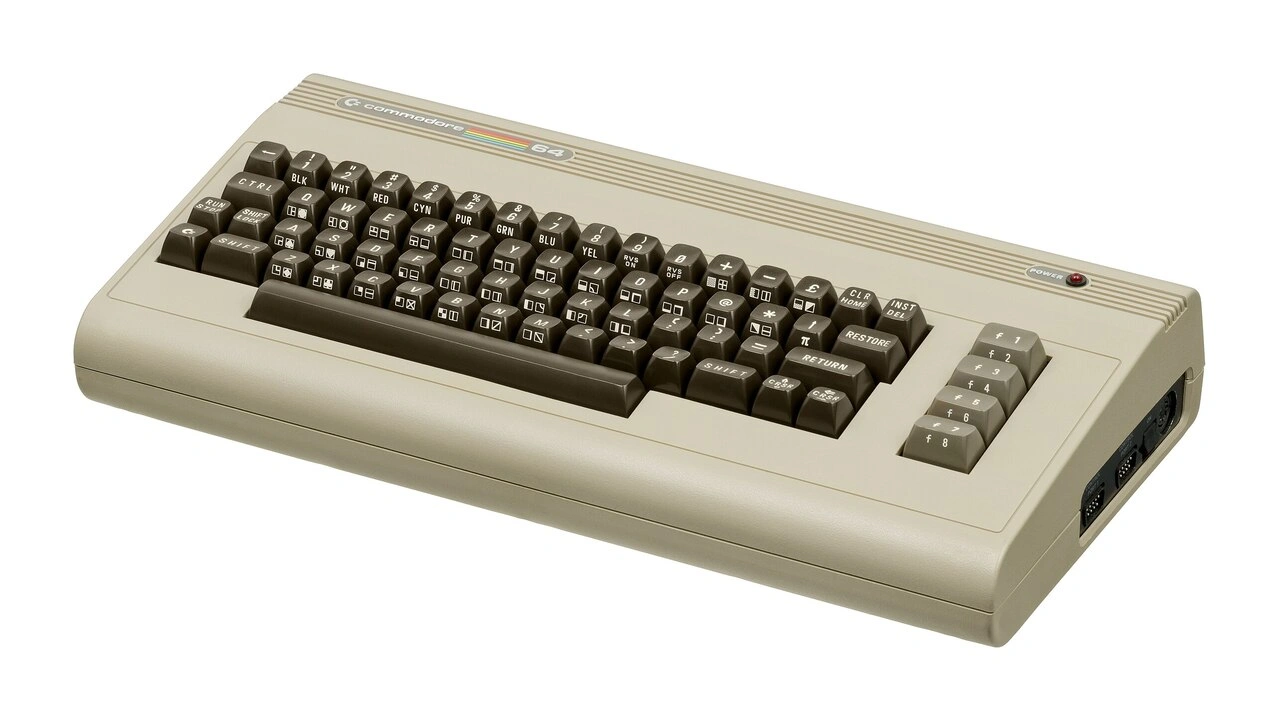
The technical and financial constraints back then are undoubtedly severe by today’s standards, both for operators and users dialing in. BBSes could only handle one user at a time, unless the sysop invested in multiple phone lines. Running a popular BBS meant you could barely use your phone for calls. But for many operators, it was worth it, if only because they got to spend more time with their computers, which at the time were still mysterious marvels to the public at large.
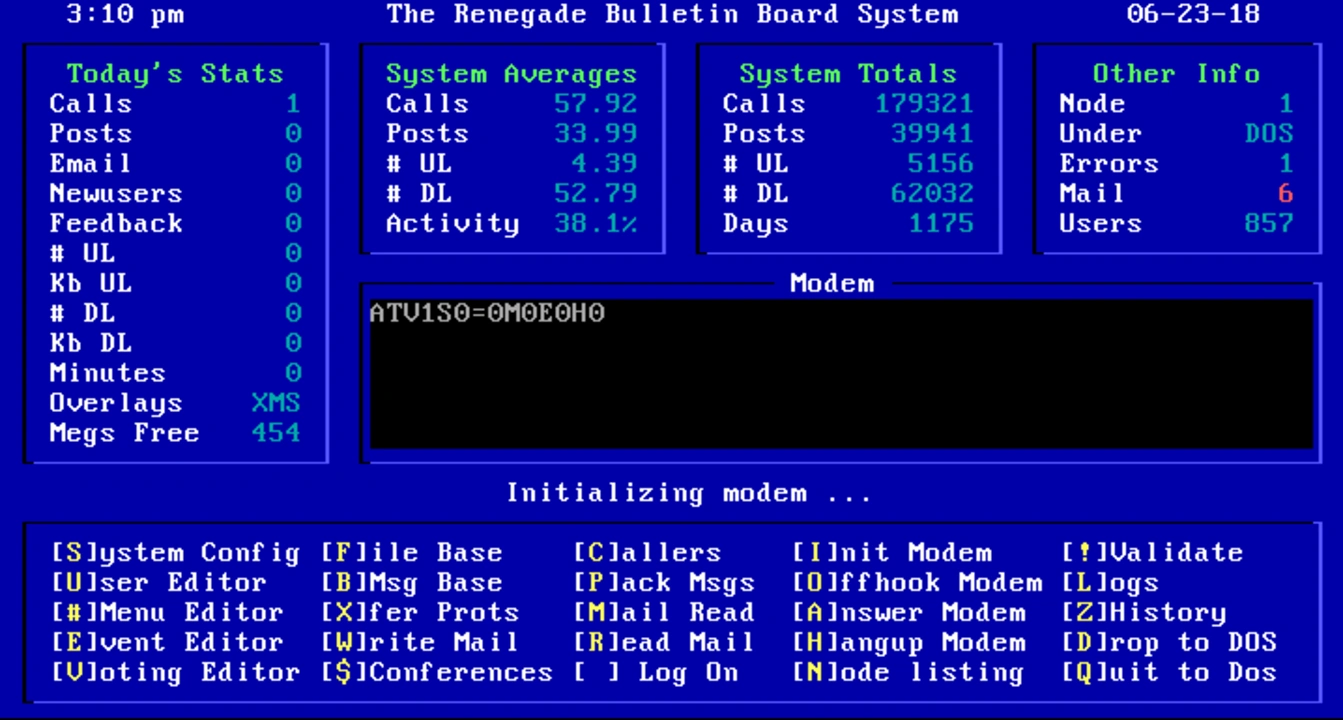
IBM PCs and compatible computers became more affordable starting in the mid-1980s. Naturally, software evolved to take advantage of the more powerful hardware. BBS applications for MS-DOS such as Fido, Renegade, and Wildcat! could support multiple phone lines, more sophisticated messaging systems, and larger file libraries.
Early FTP servers often ran on the same machines that handled BBS duties, foreshadowing the multipurpose home servers of today. By the 90's, FTP servers would become easier to set up, thanks to software such as WS_FTP and improvements in network connectivity.
They dug before we crawled
While BBSes reigned during the dial-up era, another protocol was establishing the foundation of distributed user-hosted content, and it did so with a strictly utilitarian approach. Launched in 1991, Gopher provided a straightforward way to organize and share documents (including links to other gopher sites) across networks. More importantly for home server enthusiasts, it was easy to set up a Gopher server.
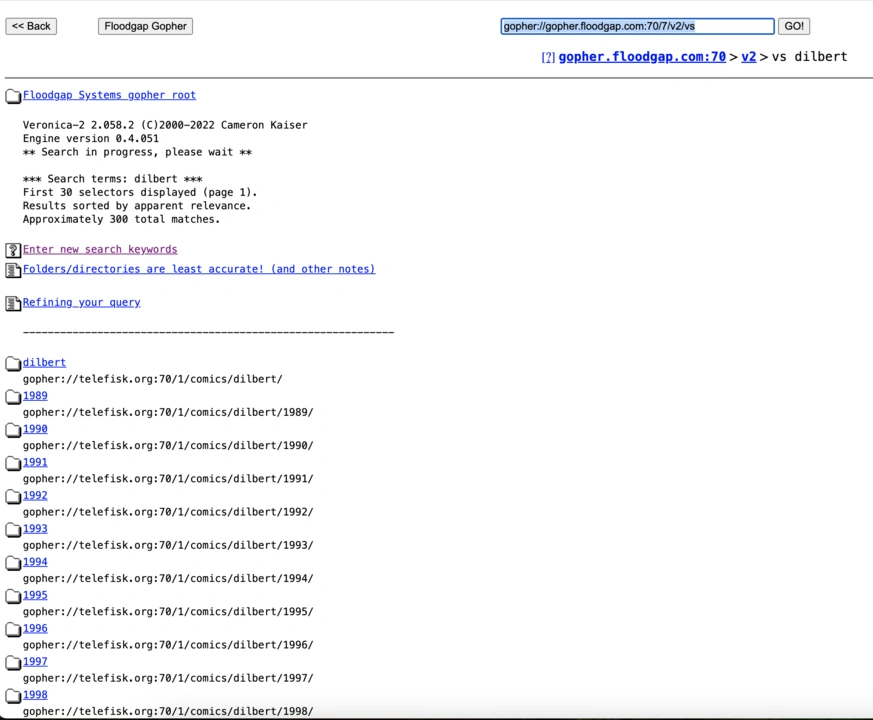
Gopher servers ran perfectly fine even on modest hardware, which helped lead to a wide variety of content being shared. Much like today’s Web, Gopherspace had everything from English literature to entertainment industry gossip.
Those darn cables
If you hate networking today, imagine (or remember) what it was like during the early 1990s. Home networks from the 1980s up until the mid-90's often relied on 10BASE2 Ethernet. It used coaxial cables, which were quite stiff and worked with only a single conductor circuit, limiting their maximum supported speed to only 10Mbps.
Then came 10BASE-T Ethernet, which introduced the twisted-pair cables we still use today. Those cables are more flexible and easier to troubleshoot. 10BASE-T also capped out at 10Mbps, but twisted-pair cables do support the high-speed connections defined in newer Ethernet standards.
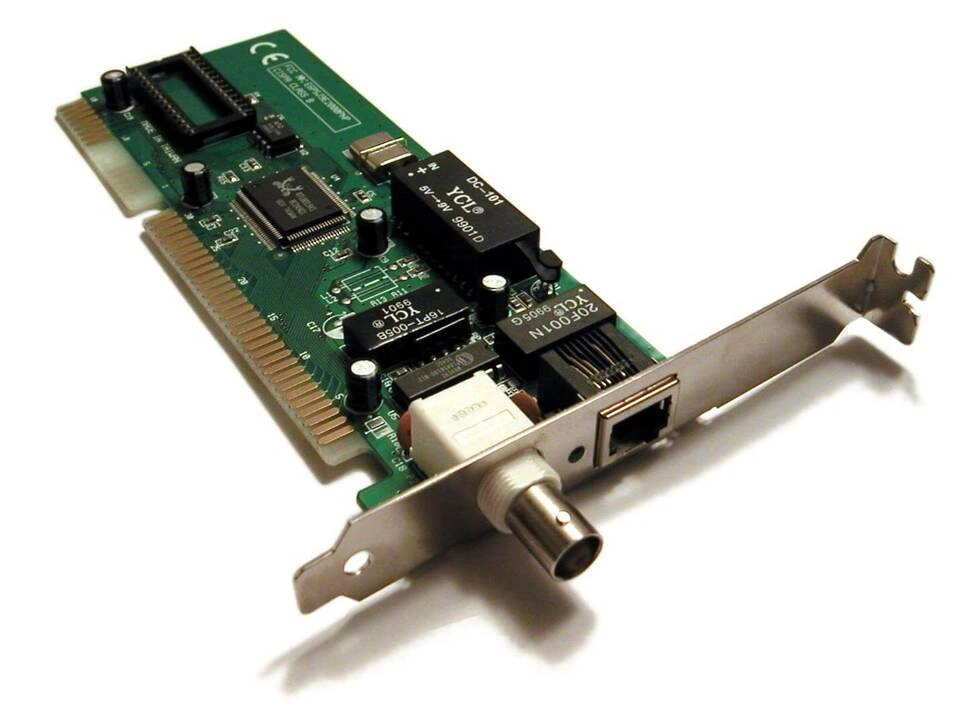
The lucky few who had multiple computers mainly created their home networks to share access to other expensive resources: printers, hard drives, and of course Internet access. But it also allowed them to set up a dedicated server and have another PC for daily use. This delegation came at just the right time, because things were about to get hectic for home servers.
The Broadband Revolution: The 2000s
Always-on…
The arrival of broadband Internet in 2000 is a significant milestone in the home server space. DSL and cable modem connections weren’t just faster than dial-up. They provided 24/7 connectivity that propelled self-hosting from the purview of a handful of experts to a viable hobby for a sizable community.
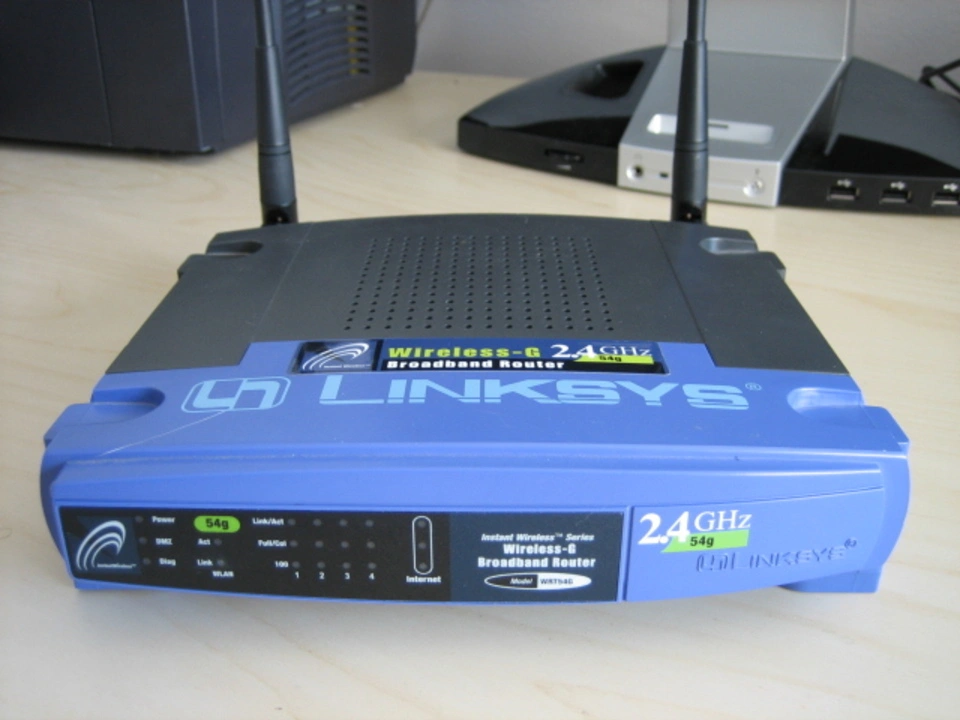
For the first time, home servers became accessible from anywhere in the world. Files could be hosted without hogging the family phone. Email servers could receive messages 24/7 (Your scientists were so preoccupied…).
Dynamic DNS services also started to become available around this time, allowing home servers to have stable domain names even on residential Internet connections.
…Never dead
As computers became more powerful and affordable, enthusiasts began repurposing older machines as dedicated servers. As is the case these days, gaming PCs were often reincarnated for this purpose.
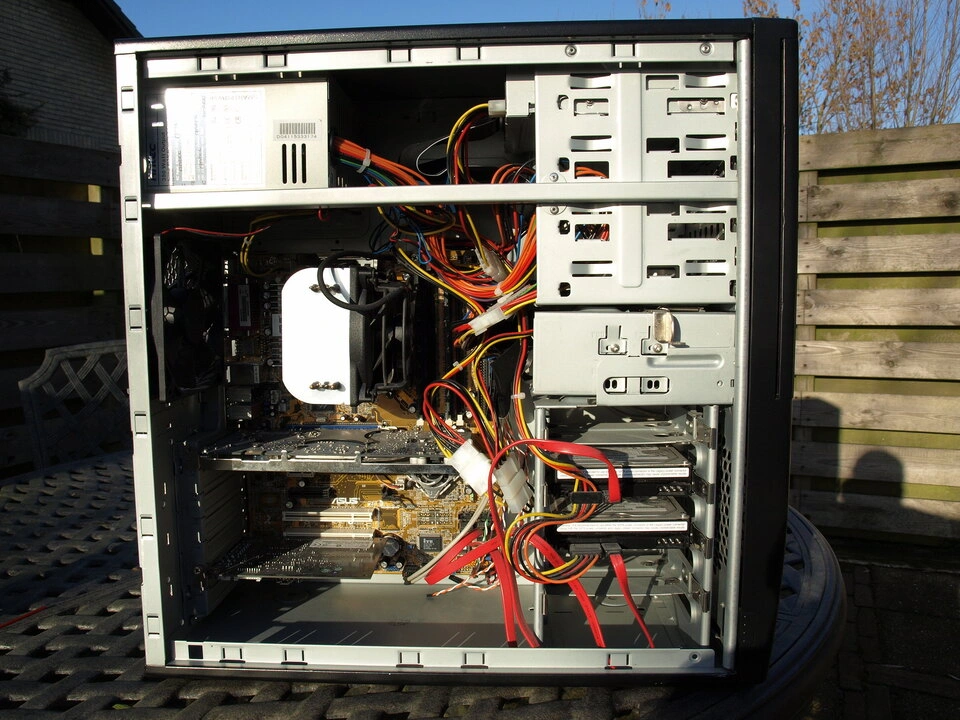
Speaking of video games, modern game servers also emerged in the 2000s. Private servers for hit titles such as Quake, Counter-Strike, and later on World of Warcraft became common if not de facto ways to play, and remain crucial to these games’ enduring popularity.
Many music enthusiasts also joined the home server community. The advent of CD ripping and digital music players convinced many hobbyists to set up home servers to store, share, and stream music. In 2001, a startup called Slim Devices released SlimServer, an open source music server software. It was originally intended to be used with the company’s SliMP3 and Squeeze lines of music players, but ended up being a popular tool for hosting music in general. The application is still actively supported by contributors, but is now known as Lyrion Music Server.
OpenSFF developer Jon Choi recalls building his first home server in the mid-2000s: “I cobbled together a Frankenstein JBOD enclosure filled with a mix of old PATA drives and a couple of new (at the time) SATA ones. It wasn't elegant, but it gave me more storage than anything I've used up to that point. That box became my media server, feeding music and movies across the house through none other than a Linksys WRT54G. That router was iconic, especially when flashed with custom firmware like DD-WRT.”
The industry takes notice
While hobbyists continued their efforts, purpose-built consumer solutions began to emerge. 2005 saw the launch of both the Buffalo LinkStation and Infrant ReadyNAS series. Both lines of NAS devices continue today, though the latter was promptly absorbed by Netgear in 2007. That same year, we would see the most ambitious attempt to take home servers mainstream: Windows Home Server.
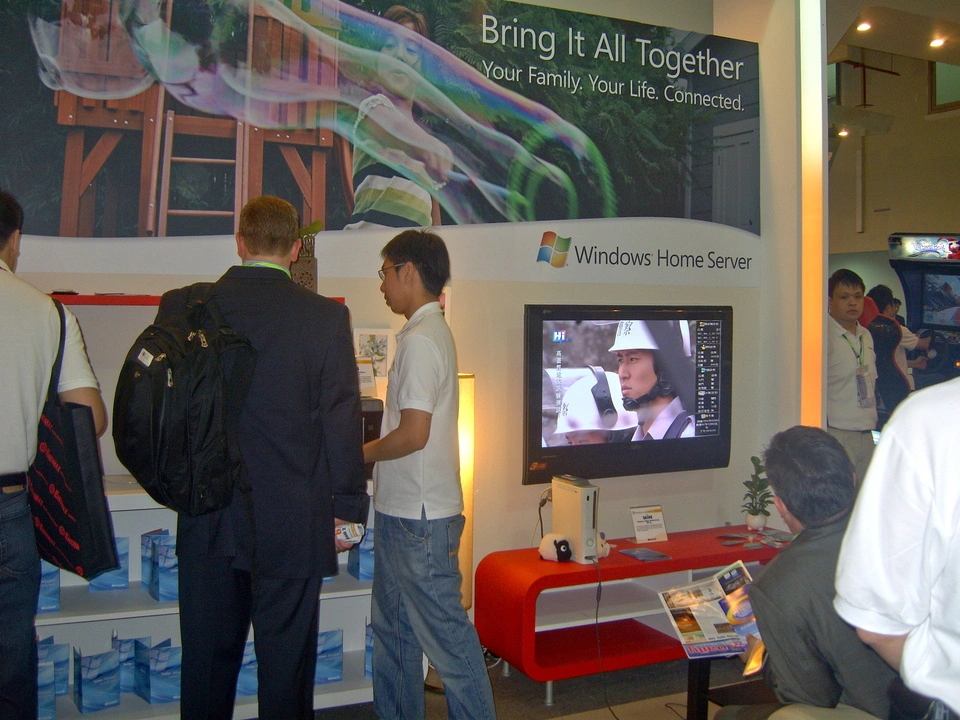
Based on the enterprise-oriented Windows Server 2003, Windows Home Server simplified tasks such as backups, file sharing, and remote access, and dressed them up in the operating system’s familiar UI. It received positive reviews at launch, but we know now that things didn’t work out as Microsoft had hoped.
Despite the mixed results, these products symbolize the remarkable progress of home servers. Vendors were beginning to realize that home servers can be useful not just for enthusiasts but for a broader audience. However, they also highlight the tension between capability and convenience that still exists in many pre-built options today.
Welcome to the neighborhood
Amidst the torrent of developments, large online communities of home server and home networking hobbyists began to form. The likes of HardForum’s legendary HP ProLiant thread became hubs for sharing configuration tips, shopping recommendations, and painful and humorous tales of projects gone wrong.
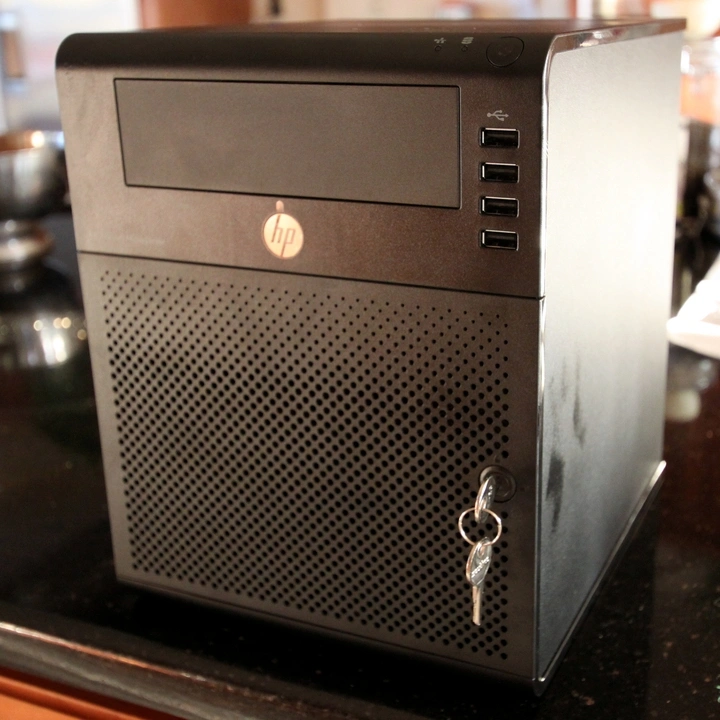
We sometimes take this for granted these days, but these communities were crucial for home servers’ explosive growth in the past two decades. Technology was indeed advancing in the hobby’s favor, but documentation was often scattered, if it existed at all. Many enthusiasts learned how to configure their first RAID arrays, VPNs, and home networks through these informal channels.
With the help of the Internet, this collaborative spirit quickly extended beyond sharing knowledge. Many community members set up group buys for enterprise hardware, shared development servers, and of course worked together on software projects.
Conclusion
By the end of the 2000s, home servers had evolved from rare (albeit influential) wonders to an essential infrastructure for many enthusiasts. The stage was set for the explosion of innovation that would define the 2010s. Virtualization, containerization, and miniaturization would make it possible to run sophisticated home servers even on minimal financial and power budgets.
We’ll go over that in the second part of this piece, where we’ll explore the state of the modern home server, including the challenges and opportunities that define the hobby today.
If you enjoyed reading this, we invite you to learn more about OpenSFF and our specifications for multi-node systems. For technical clarifications, partnerships, and other inquiries, reach out to our development team at [email protected].
Other Articles
Meet OpenSFF: an open hardware standard that enables cross-vendor compatibility, modular systems, and sustainable hardware reuse.
August 11, 2025
We go over the rise of virtualization and the open software adopted by home server enthusiasts, as well as the current challenges and the future of the hobby.
September 06, 2025

Learn why OpenSFF adopted the SFF-TA-1002 connector standard and how it enables our vision.
September 18, 2025